• About Me
  • Writer’s Corner

Elizabeth Fais

~ Where awesome begins…

Elizabeth Fais

Tag Archives: Elizabeth Fais

My Best Mistake

20 Sunday Aug 2017

Posted by Elizabeth Fais in Baseball, Inspiration, Middle Grade

≈ Leave a comment

Tags

Baseball, Bobby Sox Softball, Elizabeth Fais, first base, fly ball, Inspiration, junior high, Middle Grade, My Best Mistake, outfield, pop fly, Southern California, sports, summertime

We’ve all made mistakes. But if we’re lucky, we have at least one mistake that turned out right, a favorite mistake. My best mistake happened during a Bobby Sox Softball playoff game when I was 13.

baseball glove and ball

The mistake that won the game

My older sister was an ace at softball, one of the best first base players in the Bobby Sox Softball league in our small, Southern California farming town. She played on the team that made it to the All Stars the previous season, and my parents suggested (more like insisted) that I play softball too. On the same team.

That was the beginning of a season-long mistake. Don’t get me wrong. I didn’t totally suck at softball.

I was pretty good hitter, and a fair infielder. I was not All Stars material, though. When you join a team of that caliber, you have to prove yourself. Which is why they put me in the outfield. Unfortunately, I had a depth perception problem at night games. On top of that, the fly balls kept disappearing against the banks of bright white lights and swarms of bugs as big as my shoe. I missed every fly ball hit my way in the outfield. Game, after game, after game.

In spite of the public humiliation, I made every practice and played every game. The team needed a certain number of players to stay in the league, and by showing up I kept them in the running. I ‘took one for the team’…every week. Amazingly enough, even with my outfield fails our team still ended up tied for first place in the league.

On the night of the playoff game, the coach kept me on the bench until the last possible moment. Each player had to play at least one inning in every game, so he waited until it was safe for me to go in. We were ahead by a two runs. We just had to hold our lead. How hard could that be? Apparently, very…with my luck.

The other team was pumped, and got a run before we knew what fly ball at night gamehappened. Not long after, the bases were loaded with two outs. That’s when they brought in their best hitter. I prayed for mercy, but she was on break. When this girl connected with the ball, the crack resonated across two counties. A blur came whizzing straight at me. A line drive to my face. I didn’t have time to blink. I put my mitt up to protect myself. I wish I could say I tried to catch the ball. But no. Putting the mitt in front of my face was pure self-defense. The ball slammed into my hand with a burning thud and I clamped the mitt shut.

I caught the ball that won the game and the league championship…by mistake!

That was the only ball I caught the entire season. I’m glad it was one that saved the game…even if it was by mistake.


Total solar eclipse & its influence on fiction

05 Saturday Aug 2017

Posted by Elizabeth Fais in Fiction, Moon, Story

≈ Leave a comment

Tags

A Connecticut Yankee in King Arthur's Court, Astronomy, Boleslaw Prus, Dolores Claiborne, Eclipse, Eclipse of the Sun, Elizabeth Fais, Fiction, Gerald's Game, Isaac Asimov, John Banville, King Lear, Mark Twain, Nightfall, Peter Weir, Pharaoh, Phil Whitaker, Robert Silverberg, SAO, Shakespeare, Shroud, Smithsonian, Smithsonian Astrophysical Observatory, solar eclipse, Stephen King, total solar eclipse, Witness

The primal fear effect

A total solar eclipse is when the moon passes between the sun and earth, and blocks all or part of the sun for up to about three hours from a given location.

Today, a total solar eclipse is an astronomical rarity, an event to be recorded and studied. That was not always the case. It wasn’t all that long ago (in the grand scheme of things) that the sun and sky going dark caused mass hysteria. Which is not a totally irrational response. It triggers a primal fear, because we depend on the sun’s energy for life. Without it, our world would be uninhabitable.

It’s no surprise that a total solar eclipse continues to have a strong effect on us even now, as is evident in fiction: books, film, and television. Stories that resonate most deeply with the human psyche are primal, and survival is about as primal as it gets.

Fictional total eclipses

The earliest known fictional solar eclipse is in Homer‘s Odyssey, which scholars believe was composed near the end of the 8th century BC. There’s probably lesser known fictional references to solar eclipses between the 8th century BC and 1608, when Shakespeare’s tragic play, King Lear was first published, but let’s jump to King Lear’s famous quote:

O insupportable! O heavy hour! / Methinks it should be now a huge eclipse / Of sun and moon; and that the affrighted globe / Should yawn at alteration…

Following Shakespeare, the better known fictional works that feature solar eclipses were published in the late 19th century:

  • A Connecticut Yankee in King Arthur’s Court, by Mark Twain (1889), where the protagonist predicts a solar eclipse in 528 AD.
  • Pharaoh, by Bolesław Prus (1895), a historical novel that culminated in a solar eclipse at the fall of Egypt’s 20th Dynasty, (1085 BC).

You might think that the paranormal intrigue surrounding a total solar eclipse would wane as we entered the 20th century, but no. In fiction, film, and television, it increased. The following are just a few of the works by the more prominent authors:

  • Two Stephen King novels have a murder committed during an eclipse: Dolores Claiborne and Gerald’s Game.
  • Nightfall, by Isaac Asimov and Robert Silverberg (1990 novel based on Asimov’s 1941 short story of the same name).
  • Eclipse of the Sun, by Phil Whitaker (1997), is set in India and centered around a public viewing of the Solar eclipse of October 24, 1995.
  • Eclipse (2000) and Shroud (2002), by John Banville, two interlinked novels that are both set against the backdrop of a solar eclipse.

The list of film and television shows that include solar eclipses in their story is more extensive than in books. For a complete list of title for both fiction, film, and television, go here.

1984 eclipse in Witness

It’s interesting that while filming Witness (1985) in Pennsylvania’s Amish region, a partial solar eclipse occurred on May 30, 1984 (at his location). Director Peter Weir filmed the actors in costume, responding to the eclipse. However, these scenes never made it into the publicly released version of the film.

August 21, 2017 ~ total solar eclipse

August 21, 2017 will be the first total solar eclipse that can be seen in the United States in 38 years, the last one being in 1979. For the 2017 solar eclipse, the longest period the moon completely blocks the sun—from any given location along the path—will be about two minutes and 40 seconds.

If you’re interested in following the solar eclipse as it happens, even if you won’t be in the direct viewing path, check out the Smithsonian Solar Eclipse app from the Smithsonian Astrophysical Observatory (SAO). The app allows you to watch a live NASA stream of the eclipse as it travels across the continental United States. You can calculate your view with their interactive eclipse map, and get a virtual view in our eclipse simulator. Super cool!


Mary Poppins gets a spoonful of Google Translate!

22 Saturday Jul 2017

Posted by Elizabeth Fais in Humor, Movies, Music

≈ 5 Comments

Tags

A Spoonful of Sugar, Brian Hull, Chim Chim Cheree, Elizabeth Fais, Feed the Birds, Google Translate, Humor, Jolly Holiday, Malinda Kathleen Reese, Mary Poppins, Musicals, Step in Time, Supercalifragilisticexpialidocious, Walt Disney, Walt Disney Pictures, Walt Disney Studios

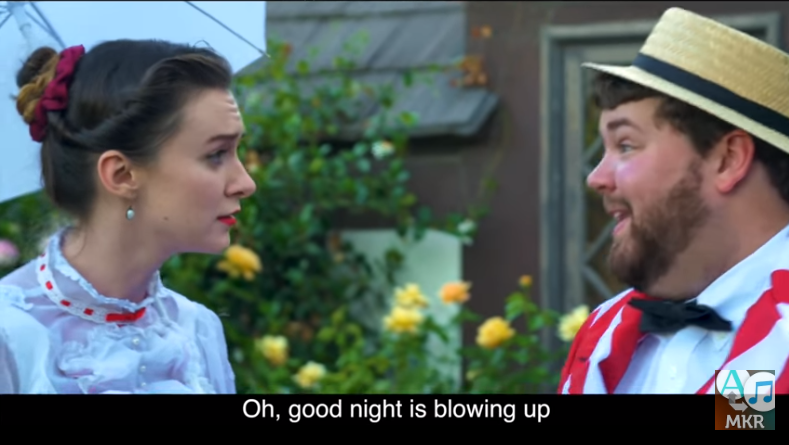
The Walt Disney classic film, Mary Poppins, has been translated into 20 languages. Now Google Translate makes for 21. Don’t get me wrong. Google Translate is an amazing tool! But the translation algorithms have somehow managed to develop a language all their own, that no one else quite understands.

Most everyone can recognize at least one of the Mary Poppins songs in the following medley. Many know the words by heart. But even if you’re not an MP aficionado, you’ll pick up on the oh-so unique (!) Google Translate interpretation of the lyrics.

Mary Poppins and Bert in Jolly Holiday

Compare the original lyrics to the songs (in the banner above the window) with the Google Translate version (in subtitles below), and have a jolly good time watching the brilliant video clip. In the words of Google Translate, “Oh, good night is blowing up!”

Sing it again Google Translate … or maybe not


The Library Express ~ When bookmobiles had hooves

01 Saturday Jul 2017

Posted by Elizabeth Fais in Books, Reading

≈ Leave a comment

Tags

bookmobile, Elizabeth Fais, England, Fairfax County, Great Depression, Kentucky, librarians, library, Library Express, mobile library, New Deal, Pack Horse Librarians, Pack Horse Plan, Pony Express, Virginia, Warrington, Work Progress Administration, WPA

We might think of the bus-like bookmobiles as modern inventions, but they were not the first mobile libraries…not by a long shot. The first bookmobiles were little more than carts powered by hooves. There has even been a Pony Express style book delivery program known as the Pack Horse Librarians.Pony express rider

Horse-drawn libraries

The first documented mobile libraries were carts filled with books drawn by horses. Preambulating library Warrington England 1859The perambulating libraries operated in rural England as early as 1857. Warrington, England introduced a horse-drawn van in 1858 that was operated by the Warrington Mechanics’ Institute, to increase the lending of its books. [PC: Wikipedia]

In 1890, Fairfax County, Virginia got on the mobile library wagon (literally) in the northwestern part of their county. But one of the most memorable mobile libraries was a product of the Great Depression.

The library express

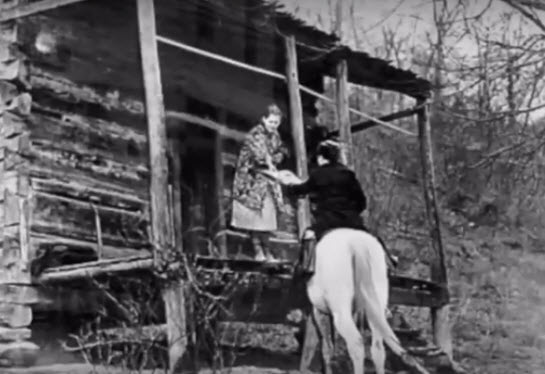
Pack Horse LibrarianThe Great Depression threw the entire nation into poverty, and the already poor rural areas suffered the worst. Kentucky was one of the states hardest hit by the paralyzed economy.

We humans seem to show our best when things are at their worst. Such was the case with the first Pack Horse Library, formed by the Work Progress Administration (WPA) in Leslie county, Kentucky. This new project brought reading materials to those who lived in the remote rural areas of Eastern Kentucky, an area with little electricity and fewer roads.

Unlike most New Deal programs, the Pack Horse Plan was fueled by the support ofPack Horse Librarian local communities. The only way to get books to the people living in the remote mountain areas was on horseback, and the Kentucky women didn’t shy away from the challenge. The Pack Horse Librarians mounted mules and horses with panniers filled with books and headed out into the hills.

Each Librarian made deliveries at least twice a month, covering over 100 miles a week on horseback. The Librarians took their jobs as seriously as the mail carriers, riding miles through inclement weather, across backwoods wilderness terrain.

I could go on and on about the great work done by the Pack Horse Librarians, but you’ll enjoy watching the following mini (approx. 3 min.) documentary much more.

Pack Horse Librarians


Nonfiction fun ~ When the truth is more fantastic than fiction!

07 Wednesday Jun 2017

Posted by Elizabeth Fais in Nonfiction, Writing, Young Adult

≈ 2 Comments

Tags

Abraham Lincoln, atomic bomb, Bomb, crime thriller, Elizabeth Fais, Lincoln's Grave Robbers, Nonfiction, Reading, SCBWI, Secret Service, Society of Children's Book Writers and Illustrators, Steve Sheinkin, WWII

Do you have a young reader who isn’t into fiction, yet wants books that are fun? Or perhaps there’s a summer reading requirement looming, and it’d be easier to hog tie the Hulk than to get your kids to read over vacation?

Well…put away the lasso and forget about the Hulk. Your kids will be begging for more, and you’ll want to read these books too. Yes. They’re that good! Thank me later.

kids reading

I discovered Steve Sheinkin’s work at a Society of Children’s Book Writers and Illustrators (SCBWI) summer conference a few years ago. Sheinkin is a master of finding the fun in history, and narrating the facts in an engaging voice and at a thrilling pace. If there were history books like these when I was in middle school or high school, it’s all I would’ve read.

Lincoln’s Grave Robbers, by Steve Sheinkin

This may sound like a crime thriller, because it is. But trust me, it’s not fiction. Someone actually stole President Lincoln’s body, and this fast-paced recounting of the events will have you on the edge of your seat, turning the pages until you’re done.

On October 20, 1875 Secret Service raid the Illinois workshop of master counterfeiter Benjamin Boyd and arrest him. Soon after Boyd is hauled off to prison, members of his counterfeiting ring gather and devise a plan to get Boyd back: steal Abraham Lincoln’s body from its tomb, stash it in a secret location, and demand as ransom, the release of Boyd—and $200,000.00 in cash. 

The action of this true crime thriller alternates among the conspirators, the Secret Service agents on their trail, and the undercover double agent moving back and forth between the two groups. Along the way, we get a glimpse into the inner workings of counterfeiting, grave robbing, detective work, and the early days of the Secret Service. The story races toward a wild climax as robbers and lawmen converge at Lincoln’s tomb on election night, 1876. [Jacket flap]

Bomb, by Steve Sheinkin

This story is close to my heart, because I graduated from a university that played an important—top-secret—part in the race to develop America’s atomic bomb. I didn’t find this out until long after I graduated, and I can’t say I’m proud of the fact. However, this book helped me to reconcile some of my feelings about the United States’ development and use of this deadly weapon. If not us, someone else would have done the same and with potentially more horrific results.

BombNo matter your viewpoint, this telling of the events leading to the creation of the first atomic bomb will keep you spellbound until the last page is turned.

In December of 1938, a chemist in a German laboratory made a shocking discovery: When placed next to radioactive material, a uranium atom split in two.

That simple discovery, dealing with the tiniest of particles, launched a cut-throat race that would span three continents. The players were the greatest scientists, the most expert spies, hardened military commandos, and some of the most ruthless dictators who ever lived. The prize: military dominance over the entire world. 

This is the story of the plotting, the risk-taking, the deceit, and genius that created the world’s most formidable weapon. This is the story of the atomic bomb. [Jacket flap]


Get that Half-Baked Story Out of the Oven!

17 Monday Apr 2017

Posted by Elizabeth Fais in Story, Writing

≈ Leave a comment

Tags

Am Writing, Amie Kaufman, don't give up, Elizabeth Fais, Fiction, Gemina, half baked, Illuminae, Jay Kristoff, Joss Whedon, novel, Story, writer's life, Writing, writing recipe

Writing Recipe for Success

Toddler chefIt happens to every writer. At least once. We start a project, excited and inspired by the sparkly new idea. We run with it, fleshing out characters, working magic with dialog, setting, and plot. Then something happens. Our inspiration dissipates, like air from a hot air balloon. We’re slugging forward through molasses, when once we soared.

It’s easy to get discouraged, or possibly even give up on that great idea at this point. I’m here to tell you…

DO NOT GIVE UP!

Writing a novel is a lot like baking a cake. You carefully organize and mix the ingredients, select and prepare the pan, then put it in the oven to bake at the right temperature for the perfect amount of time. Unlike the cake, a creative oven requires our input for the heat, and the time it takes to fully bake is not always in our favor. Deadliness be damned. Unfortunately, half-baked is only half there.

The good news is that you got the story into the oven. Here’s a few strategies on how you can get it out…fully baked.

Turning Up the Heat

We get stuck in our writing for lots of reasons. The best way to get unstuck is to shake things up, take a new approach, do something totally different. The unexpected has a way of jump starting creativity. Here’s few suggestions:

  • Go someplace you’ve always wanted to, but haven’t. A change of scenery, especially a place that elicits intrigue, works wonders.
  • Watch A LOT of movies and TV shows. Joss Whedon would watch four or five movies in a row (in one day) to study story. You never know what will provide the boost you need for your story.
  • Read A LOT of different things, both magazines and books. Read outside your comfort zone. Change is good. Embrace it.
  • Talk to people who have cool jobs, or who’ve had very different life experiences than your own. This is one of the things Amie Kauffman, co-author of Illuminae and Gemina, does to get new ideas.
  • Go to a public place and people watch. Imagine where they’re going and what they’ll do when they get there. Have fun creating stories without the pressure of an outcome.
  • Start a totally different project in a completely different genre, just for you. Published authors confess to doing this when they’ve been paralyzed under a deadline. TheFemail chef illustration story they started “for themselves” got them excited about writing again and they made their deadline. Those stories later became wildly popular books too. A win-win.
  • Brainstorm with other writers. Especially if you’re under deadline. Screenwriters work this way a lot.
  • Write stuff. Then write more stuff.
  • Fire your internal editor and keep going until you reach The End.

You’re doing great!


Hooking Reluctant Readers with Poetry & Picture Books

14 Tuesday Mar 2017

Posted by Elizabeth Fais in Picture Books, poetry, Reading

≈ Leave a comment

Tags

Booked, Elizabeth Fais, Ellen Hopkins, Emilie Buchwald, Frederick Douglass, Kepler's Books, Kwame Alexander, Picture Books, poetry, Randy Preston, read aloud, Reading, reluctant reader, Surf's Up, The Crank Series, The Crossover

Words have power. Words open doors and change the world. Your world. Which is why reading is so important. Frederick Douglass said it best:

Once you learn to read, you will be forever free.

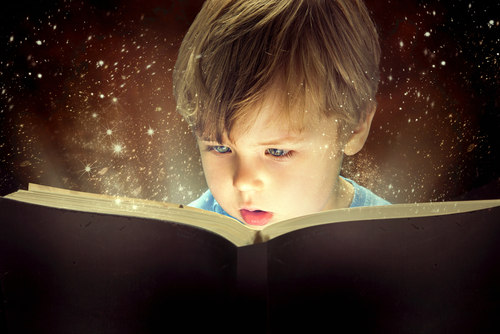
Boy's imagination while reading

Those who acquire the love of reading revel in the freedom it brings every time we open a book.

Girl reading a bookWhat about those who have yet to discover the wonder of reading, how can we get them hooked?

I’m sure dissertations have been written on this topic,Boy reading a book backed with data from scientific studies.

I’m no expert. But the following suggestions have worked well for hooking reluctant readers.

Hook ‘Em with Poetry … Yes, Poetry

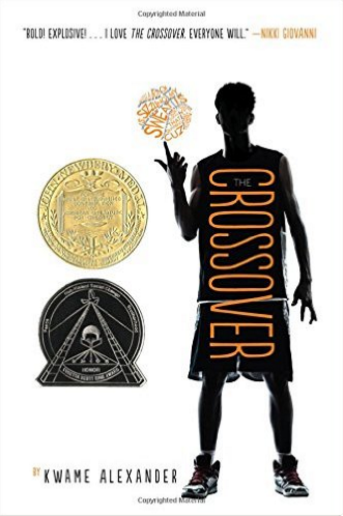
I didn’t realize poetry was a significant gateway for reluctant readers until I heard Kwame Alexander speak at Kepler’s Books. He was there to promote The Playbook: 52 Crossover coverRules To Aim, Shoot, and Score in This Game Called Life.

During the course of the evening, Kwame related his winning experiences at getting “at risk” youth excited about reading … using poetry. He explained that poetry hooks reluctant readers, because it’s short and easy to read. Once youngsters feel the satisfaction of finishing a book, they are quicker to pick up the next one.

Kwame Alexander’s Newberry Award winning book, The Crossover, is written entirely in verse and has hooked hundreds (if not thousands) of kids on reading. Kwame followed that success with Booked, a novel in verse about a star soccer player who is also a reluctant reader. Another winner for converting real-life reluctant readers.

Ellen Hopkins‘ immensely popular Crank Series is written entirely in verse, as well. Crank, the first book of the series, is required reading in many high schools. However, this series is for a more mature audience due to its focus on drug addiction.

The Power of Picture Books … Read Aloud

Reading to children when they are young is the best way to hook them on reading. Picture books provide a wonderful interactive forum for storytelling. For children that are too young to read, they can be engaged in the story, which inspires the desire to be able to read on their own one day.

As Emilie Buchwald said:

Children are made readers on the laps of their parents.

However, reading in blanket forts works its own special magic.

The magic factor for reading is “fun”. Make story time a fun activity and children will fall in love with reading…for life. If you don’t know “what” to read for a particular age group, ask your local librarian. Librarians have a wealth of knowledge they are happy to share.

Kwame Alexander supersized the fun with audience participation and musical accompaniment (by Randy Preston) as he read from his picture book Surf’s Up at Kepler’s Books. Appropriately enough, Surf’s Up is a delightful story about two frogs, an adventure, and falling in love with reading.


“THE PLAYBOOK” of Positivity

27 Monday Feb 2017

Posted by Elizabeth Fais in Author, Inspiration, Writing

≈ Leave a comment

Tags

ball, basketball, Elizabeth Fais, game, Humor, Inspiration, Kepler's Books, Kwame Alexander, New York Times best-seller, Newberry Medal, playbook, poetry, rules for life, Thai Neave, The Crossover, The Playbook, verse, We Need Diverse Books, WNDB, Writing

52 Rules to Aim, Shoot, and Score in this Game Called Life

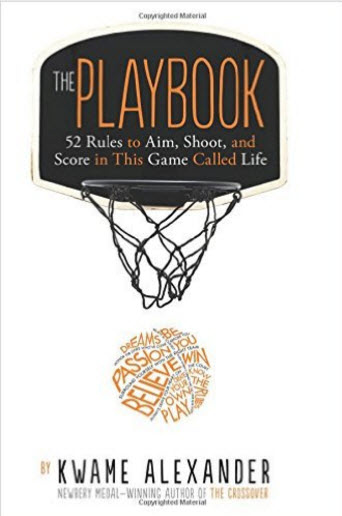
Playbook coverYou gotta know the rules to play the game. Ball is life. Take it to the hoop. Soar. What can we imagine for our lives? What if we were the star players, moving and grooving through the game of life? What if we had our own basketball rules to help us get what we want, what we aspire to, what will enrich our lives? 

The Playbook by Kwame Alexander was inspired by his Newberry Medal-winning and New York Times best-selling novel The Crossover. The Playbook is filled with uplifting stories … from favorite sports figures … and 52 rules to follow both on and off the court. Kwame Alexander shares his own … stories of overcoming obstacles and winning games. All illustrated with stunning photographs by Thai Neave.

Say Yes! to life

I heard Kwame talk at Kepler’s Books, and can say straight up that The Playbook is a direct reflection Kwame. He’s a fountain of positivity. And it’s contagious. Kwame Alexander walks the talk. Throughout the evening, he shared lessons from his life on being open to possibility.

The most important rule I’ve learned is that when you are presented with an opportunity that may seem different or challenging or unknown, sometimes you’ve got to summon the courage to trust yourself and SAY YES!

That’s exactly what Kwame did when he was asked to teach students how to professionally publish a (print) book of their poetry … in one day!

Kwame Alexander reading from The CrossoverHe initially designed a two-week workshop. During that time the kids would learn how to design, edit, and layout a book. Then, negotiate with printers, define a marketing plan, and arrange for distribution. As life would have it, the school’s schedule shrunk to a one day window. One day! A seemingly impossible task, especially considering the ages of the children he’d be working with.

Yet, Kwame said Yes!

The workshop started at 7:30 in the morning, and by 4:30 that afternoon the kids had their book of poetry on the way to the printer. Kwame’s wife suggested that he take the program to other schools, and he did. He traveled around the country teaching children how to professionally publish a book of their poetry.

Don’t let other people’s NOs define you

Just as important as saying YES to possibility is not listening to other people’s NOs!. Again, Kwame is proof of the wisdom behind these words. The Crossover is a shining example.

The Crossover is the story about 12 year-old twins who are Kwane Alexander reading from The Playbookawesome on the basketball court, and how they come to realize that breaking the rules comes with serious stakes. Kwame’s game is poetry, and The Crossover is entirely in verse.

Poetry…for middle grade readers, targeted for boys no less.

The Crossover was rejected by the first publisher Kwame submitted it to. So he went back and revised the manuscript, only to get rejections from subsequent submissions to other publishers. He kept at it, revising and submitting. After five years, he’d accumulated 20 rejections.

Most people would’ve given up after the first two or three rejections. Not Kwame, because he knew the power poetry had in changing lives. In the poems he wrote to his mother and daughter, and the “alternative school” students in which poetry inspired a lifetime love of reading. Kwame believed in his work. He didn’t listen to other people’s NOs. Thank goodness.

One publisher finally said YES! The rest is history for the Newberry Award winning, New York Times best-selling novel, The Crossover.


LOVE ~ Fiction’s Greatest Common Denominator

14 Tuesday Feb 2017

Posted by Elizabeth Fais in Love, Story, Writing

≈ Leave a comment

Tags

Blake Snyder, Cassandra Clare, City of Heavenly Fire, Elizabeth Fais, Fiction, Hallmark, Hamlet, Harry Potter, Hollywood, Jane Austen, Katherine Applegate, Love, Macbeth, Mortal Instruments, opera, Othello, Rom-Com, Romantic Comedy, Romeo and Juliet, Rossini, Save the Cat!, Severus Snape, Shadowhunter Chronicles, Shakespeare, The One And Only Ivan, Valentine's Day

I love you heart❤️ It’s Valentine’s Day ❤️ 

Love is in the air, whether you adore the holiday or not.

Many bemoan the grandiose expectations the holiday puts on…well…everyone.

Don’t blame Hallmark.

Instead, look to fiction for insights into why this holiday has become a national obsession.

Love … Has Everything to Do With It

As Blake Snyder, Mr. Save the Cat!, used to say, “The motivating force of a story has color heart lightto be primal.” And nothing is more primal than love. I’d go so far as to say that love is fiction’s greatest common denominator, that the roots of every story are based in love.

Whether it’s seeking love, giving love, protecting love, grieving for love, or the ugliness that springs from lack of love or unrequited love.

Shakespeare’s Romeo and Juliet is one of the most popular stories of all time, because it resonates with humanity’s innermost core. Love.

Love’s Joyful Eccentricities

The romantic comedy (rom-com) is the popular love story of today. Shakespeare was the first to make that particular story type popular, though. Shakespeare wrote a total of 16 romantic comedies, earning him the title as the original Rom-Com King. Rossini, and other composers, carried the romantic comedy into the opera houses with great success. Later, Hollywood was quick to spin the romantic comedy into a film genre.

In children’s literature, the net of love stretches to include other species. For example, TheOneAndOnlyIvan_coverin The One and Only Ivan, by Katherine Applegate, a young girl’s compassionate love for Ivan, the shopping mall gorilla, is the catalyst for his freedom.

Likewise, Ivan’s love for the elephants who are also trapped in the roadside shopping mall attraction sparks his imagination and fuels his actions that provide the means for the young girl to help them.

Spanning centuries, artistic mediums, and species…the love story has touched the hearts of audiences everywhere. To such a great extent, it has permeated the fabric of our consciousness. Such is the power of love. Because it’s primal.

Love’s Darker Faces

The primal motivating force of a character always comes back to love. “Even the villain?” you ask. Yes. Severus Snape, in J.K. Rowling‘s Harry Potter series, is a perfect example of denied love giving the character a villainous face.

City of Heavenly Fire coverShakespeare’s dramatic plays reflect the darker facets of love, such as Hamlet, Macbeth, and Othello. Jane Austen, thought by many to be the Queen of Romance in fiction, touches the sadder sides of love in her works, such as Persuasion.

Cassandra Clare‘s Mortal Instruments series is woven through with characters’ experiences and expressions of the grimmer facets of love, that sometimes grow so dark as to perpetuate murder. However, the main theme revolving throughout the series is self-acceptance.

The characters come to see and understand that the choices they make and the consequences that follow are a reflection of their level of self-love. This realization leads some through their darkness, to where they can embrace the healing power of love.


Be Your Own Muse

31 Tuesday Jan 2017

Posted by Elizabeth Fais in Story, Writing

≈ Leave a comment

Tags

Andrew Smith, consciousness, creative writing, Elizabeth Fais, Gretchen McNeil, Jessica Brody, Mariko Tamaki, muse, myth, Neal Shusterman, On Writing, On Writing - A Memoir of the Craft, Robert Frost, science of creativity, Stacey Lee, Stephen King, Story, writer, Writing

The Myth of the Muse

Muse ~ a person, or personified force, who is the source of inspiration for a creative artist.

A muse

For centuries, there have been accounts of writers and artists who looked to muses to spark imagination and fuel creativity. I hate to throw shade on anyone’s creative process, but creativity and imagination are not something you can get from something or someone else. The truth is…

There’s No Magic Feather … or Genie

That’s the bad news. Nothing, and no one, can magically imbue you with creativity. Grow up. It’s just not going to happen.

Creative mindIn Stephen King‘s book, On Writing – A Memoir of the Craft, he says just that: “There’s no magic feather” that will make you a good writer (or artist). It takes a certain amount of innate talent combined with a serious amount of hard work.

The good news is, you don’t need anything outside of yourself to be amazingly creative. You have a vast storehouse of creativity inside you. You just have to know how to access the limitless supply of ideas and raw imagination.

It’s like having your very own Idea Store…inside your head. You just might have temporarily misplaced the key that unlocks the door. Studies of consciousness and the science of creativity (yes, it’s a thing) show there is a Fort-Knox treasure of creativity inside us…just waiting to be tapped.

Activating Your Inner Muse

It’s great knowing you have a wealth of creativity at your beck and call, but you have to know the number. Here’s a few ways to find yours.

I’ve used the following methods, and (from my personal experience) they activate my inner muse. These approaches to unleashing creativity are also listed in the Forbes magazine article Science Continues to Show Us How to Be More Creative.

  • Performing routine tasks, such as housework or walking, allow the mind to wander so creative ideas flow in.
  • Being painfully bored also opens the floodgates of creative thinking. For example, having to wait for long stretches of time, like long airplane flights without a book to read or waiting in line at the DMV.
  • Having a regular meditation practice has shown to improve creativity. Meditation helps slow down the mind, which in turn opens the creative centers of the brain.

At a recent YA (young adult) novel conference, a young writer asked the panel of published authors how they get their creative ideas. Here’s how a few of the authors responded:

  • Gretchen McNeil — blow drying her hair
  • Stacey Lee — walking or dancing
  • Jessica Brody — staying off the internet and meditating before writing
  • Mariko Tamaki — listening to music or running
  • Andrew Smith — running
  • Neal Shusterman — traveling

Inspiration is Contagious

Why is inspired creativity important for writers? Because a writer’s emotions are woven throughout the tapestry of their stories. As Robert Frost said so succinctly:

No tears in the writer, no tears in the reader. No surprise in the writer, no surprise in the reader.

When a story is infused with imagination, the reader is swept up in the fictional world and carried away. I think we’ve all had that magnificent feeling when reading a good book, becoming the characters and our real world drops away. That quality of writing can create a lifetime love of reading. And to me, that is an author’s true measure of success.

Boy's imagination while reading


← Older posts
Newer posts →

Calendar

January 2026
M T W T F S S
 1234
567891011
12131415161718
19202122232425
262728293031  
« Nov    

Enter your email address to have new posts sent directly to your inbox.

Join 236 other subscribers

It's really me!

  • Elizabeth Fais's avatar Elizabeth Fais

Life is Tweet

Follow @elizabethfais

Recent Posts

  • The true POWER of stories
  • Wisdom of Richard Peck ~ Writing for young readers
  • The Writer and Rabbit Who Saved the Countryside
  • 3 TREE-rific Informational Picture Books
  • Musings from the Writing Cave
  • MG Review ~ HOW I BECAME A SPY
  • The “Creative High” is real!

Past Posts

Officially SCBWI

Reading Fun

Advice for Writers

I Write for Apples

Author Photos

Olivia Marshall

Categories

Amazing but true! Animals Animation Blake Snyder Book Reviews Books Cats Character Dancing Disneyland Elizabeth Fais Fiction Fun Facts Funny Videos Giveaway Giving Back Holiday Humor Inspiration Middle Grade Movies Music Mystery Nonfiction Paranormal Reading Romance SCBWI Shakespeare Story Supernatural Thriller Uncategorized Winner! Writing YA YAppiest Young Adult Zombies

Blog at WordPress.com.

  • Subscribe Subscribed
    • Elizabeth Fais
    • Join 236 other subscribers
    • Already have a WordPress.com account? Log in now.
    • Elizabeth Fais
    • Subscribe Subscribed
    • Sign up
    • Log in
    • Report this content
    • View site in Reader
    • Manage subscriptions
    • Collapse this bar
 

Loading Comments...