• About Me
  • Writer’s Corner

Elizabeth Fais

~ Where awesome begins…

Elizabeth Fais

Category Archives: Writing

The Quirky Quotient ~ The Secret Ingredient of Memorable Characters

07 Saturday Feb 2015

Posted by Elizabeth Fais in Story, Writing

≈ 11 Comments

Tags

Aidan Quinn, Benny & Joon, Buster Keaton, Character development, Character traits, Elizabeth Fais, I'm Gonna Be (500 Miles), Johnny Depp, Mary Stuart Masterson, Mediator series, Meg Cabot, Princess Diaries, Quirky Quotient, The Proclaimers, Vanished series

I’m in the “first-draft phase” of my current project, so I thought it would be a good idea to blog about the process. To create a log of reminders for myself when the next project rolls along, and hopefully benefit others who are blazing through their first-draft.

For me, the first draft of a novel is as much about discovering the characters as it is about formalizing the plot. Don’t get me wrong, before I write the first sentence I have a list of each character’s traits and flaws. But that’s only a two-dimensional view of the person. Their wholeness comes to life in the writing.

Quirky = interesting

BandJ1The discovering the wholeness of my characters is a process of revealing their quirks. Those little idiosyncrasies that make each character unique.

A person’s quirks are what endear us to them, and make them memorable. Quirks can show up in how they dress, unusual habits, and how they interact with others.

A character’s quirks can affect the choices they make, and indirectly the outcome of the story.

At the beginning of a project,  coming up with new and unique traits for each character can be a bit overwhelming. So I start with one simple rule:

Don’t be boring.

Quirks that Delight and Deepen Character and Story

For fictional characters to not be boring, they have to stretch beyond our every day patterns. To start the idea mill churning, it helps me to review stories where characters surprised and delighted me, and analyse what and how they created that affect.

If you’re looking for an author, Meg Cabot is the queen of quirky characters, secondary as well as main characters. Her Princess Diaries series is classic, as are her Vanished and Mediator series. But don’t stop with just books. Films are also a great resource for character studies.
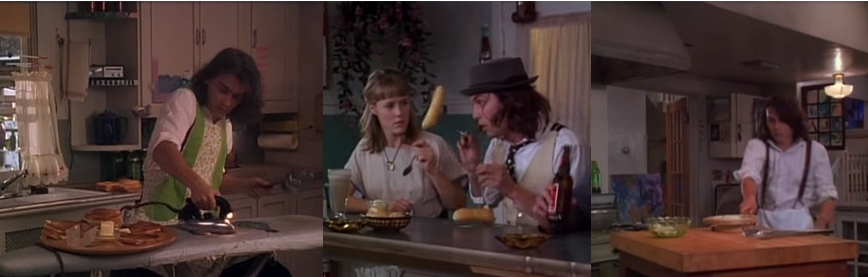
BennyJoonCollage

One of my favorite films for quirky characters is the 90’s comedy/drama Benny & Joon. It’s a story about Benny, an older brother (Aidan Quinn) who cares for his mentally disturbed younger sister, Joon (Mary Stuart Masterson). Doesn’t sound like a good time, does it? But wait. Enter eccentric young Sam (Johnny Depp), who models himself after Buster Keaton, and the story lights with genius.

Sam dresses like Buster Keaton and imitates the comedian’s classic sketches, but his BandJ4quirks are much more than a “Keaton copy”.
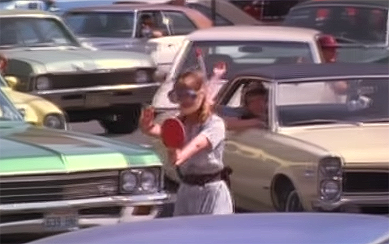
Sam uses a steam iron to make grilled cheese sandwiches and a tennis racket to mashed potatoes (wish I’d thought of both of those quirks!).

His quirky habits endear him to Joon, helping her break out of her extreme dysfunction that often manifested in alarming ways.

The video below (featuring the song by the Proclaimers) includes some of the classic scenes from Benny & Joon. Johnny Depp’s physical comedy is hilarious.

Making It Fresh

Analyzing the successful quirkiness of characters in other stories is a jumping off point to brainstorming ideas for my own characters. The goal is to make my character’s quirkiness fresh and real. Here’s a few tricks:

  • Turn a trait on its head or switch it around. Do what’s least obvious. Johnny Depp’s impersonation of the pirate captain, Jack Sparrow, is a great example of turning typical pirate traits on their head.
  • Give a character a hobby that clashes with society’s view of their trade or line of work. For example, a welder who creates his own line of feminine bath products under an assumed name, or a concert musician who competes in monster truck rallies.
  • Combine unexpected character traits. Such as a Navy Seal who’s afraid of spiders, but wrestling with bears is a rollicking good time.
  • Cast against type. This comes from the film industry, and is shorthand for “give us something unexpected.” Such as a mail man who’ s actually a recruiter for an intergalactic assassin agency.
  • Get wacky. Have fun with it!
I’m Gonna Be (500 Miles) ~ The Proclaimers


What Sparks the Romance of Writing?

15 Monday Dec 2014

Posted by Elizabeth Fais in Romance, Story, Writing

≈ 5 Comments

Tags

Elizabeth Fais, Joss Whedon, Liv Rancourt, Romance, Santa Claus, Story, The Santa Drag, Umberto Eco, Writing

The force behind the creative process…

JossWhedonQuote2What compels writers to subject ourselves to endless hours of isolation, the nagging weight of self-doubt, and endless abuse from our inner critics? Not the lure of millions, I dare say.

Yes, there are writers who hit the bestseller lottery. But if you asked them “why” they write, I would bet many reasons would come before the mention of money.

Umberto Eco summed elegantly up the source of the writer’s creative spark when he said, “To survive we must tell stories.”

Joss Whedon (creator of Buffy the Vampire Slayer) explained how writing is tangible therapy, a way to face and overcome weaknesses, fears, and insecurities.

And then there are writers, like Liv Rancourt, who embrace their craft out of the sheer love of the stories they create. Through the process they become the characters and live vicariously through them, experiencing their hopes, dreams, heartaches and joys.

Liv Rancourt on Romance and Writing

Liv Rancourt, is a paranormal romance author with a flair for witty dialog, quirky characters, and stories that resonate with the heart. I’m reposting an excerpt she wrote about why she writes fiction woven with romantic themes, because I can’t think of a better topic for the holiday season. Because everything is more magical when love is in the air

So, why romance? Yesterday I had a couple hours of downtime and spent it in the company of Aidan, Krys, Mirren, Lucy & their friends while reading the novel Redemption by Susannah Sandlin. Okay, there were vampires involved, but the love story rocked and I thoroughly enjoyed myself.

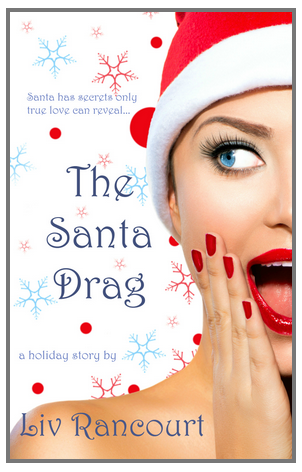
That just about sums it up. Write a love story that’s grounded in reality (or some The Santa Drag coverparanormal version thereof), involving well-drawn characters and genuine conflict, and you will have me eating out of the palm of your hand…though that’s probably not an image we want to dwell on. Instead, know that I read to have fun, and good romances are almost always fun.

If I want real-world conflict (read: sadness & pain), I’ll go to work. Sometimes I don’t even have to go that far; conflict comes to me, invading my personal space. That’s how life is. When I read, I want the assurance that the characters are going to end up happy, which is one of the hallmarks of the romance novel.

And then there’s the whole falling-in-love thing. Like most people of the human persuasion, I love to fall in love. However, after seventeen years of marriage, pretty much the only falling I get to do these days is in the pages of a book. My husband is an awesome guy, but our infatuation days were a LOOOONNGGG time ago. With a romance novel, I can experience a little vicarious infatuation stretched out over two or three days, and almost always get dinner to the table on time.

It gets even better when I write my own. I have a whole thumb-drive full of crushes. My ideal romantic heroes are often tough guys with hard fists and soft hearts. Well, except for Joe, from my short story The Santa Drag. He’s an actor, and the heroine Mackenzie describes him as the Robert Downey Jr. type: good-looking, charming and just a little bit naughty. He’s turned up in a couple of my short stories now, flashing his “yep, I’m handsome” grin and driving Mack crazy.

To read an excerpt of The Santa Drag, go here.

The Santa Drag is available exclusively from Amazon [Kindle Edition] for only $0.99. You can buy it here.

Connect with Liv!

I can be found on-line at all hours of the day and night:

  • My website & blog: livrancourt.com
  • Facebook: liv.rancourt
  • Twitter: @LivRancourt

Stop by. We’ll have fun!


Crazy Colloquialisms: More expressions that make you go, “Huh?”

30 Tuesday Sep 2014

Posted by Elizabeth Fais in English, Fun Facts, Writing

≈ 8 Comments

Tags

brass tacks, cat's pajamas, colloquialism, doornail, Elizabeth Fais, English, hell or high water, idioms, language, Tad Dorgan, Universal Studios

Anyone who learns English as a second language is a hero in my book. Seriously. There are so many rules that only apply half the time. And then there are the wacky phrases that get tossed about at whim, that have little or nothing to do with what is actually meant. I was confused by these colloquialism when I was young, and English is my first language.

So here’s a few more translations for idiotic idioms…

The Cat’s Pajamas ~ wonderful, remarkable

Cat in pajamas snuggling a teddy bearThe Cat’s Pajamas is one of the sillier colloquial conundrums. I first heard this expression when I was in grade school, while watching a black-and-white movie from the 1930’s. It’s disturbed me ever since.

The cat’s pajamas describes someone or something that is wonderful or remarkable. The American cartoonist, Thomas Aloysius “Tad” Dorgan, is credited with creating this whimsical phrase. The hipsters in the 1920’s used this expression to describe a person who is the best at what they do, or a person who was fun to be with. More recently it was popularized by the movie The School of Rock, starring Jack Black.

The cat’s pajamas is one of a handful of slang animal-centric expressions that came out of the 1920s. Others include the Bee’s knees, the canary’s tusks, and the flea’s eyebrows. Don’t worry. I won’t go there. (c) Can Stock Photo

Come Hell or High Water ~ a great difficulty or obstacle

Anyone determined to accomplish a task no matter what, will do it “come hell or high water”. It doesn’t matter how hard the task, or the odds against their success. They will get it done. Stubborn to the point of stupidity, but always in their favor.

This is an American expression, yet no one has discovered a clear derivation. Some think it may be an outgrowth of “the devil and the deep blue sea”. But that seems like a stretch, if you ask me.

Flooding street of a old West town, Universal Studios, CA

The earliest reference of “come hell or high water” was in the Iowa newspaper, The Burlington Weekly Hawk Eye, on May 1882. This seems fitting, as the saying rings with hardy Midwestern spirit.

The phrase became popular in movies in the early twentieth century, especially in Westerns. Cattle drives often involved crossing rivers and the large expanses of dry dusty plains. [Photo by moi: Western movie set, Universal Studios (CA) backlot]

Get Down to Brass Tacks ~ hard facts

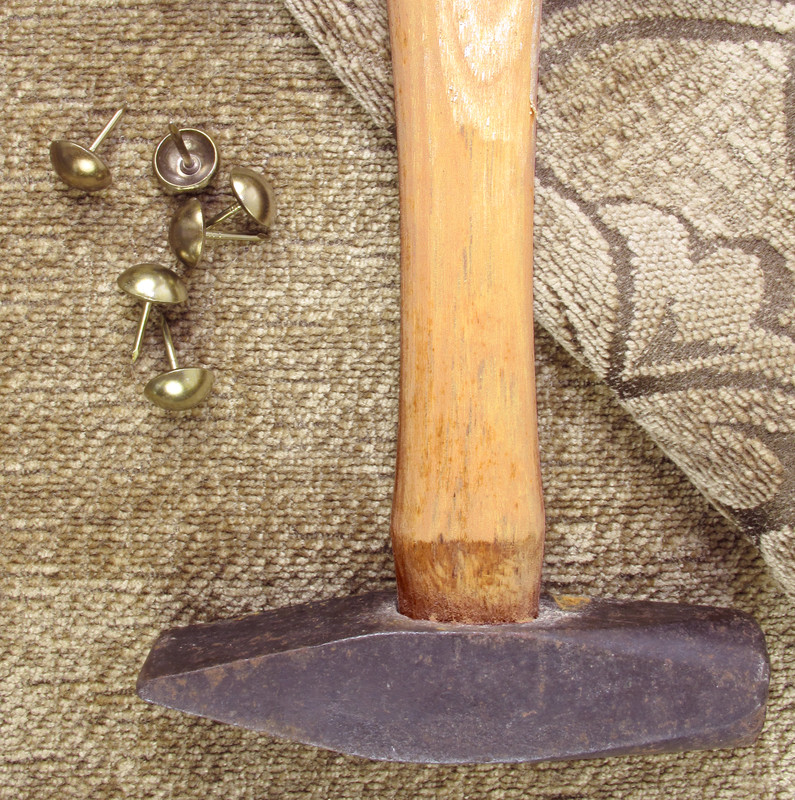
BrassTacksThis phrase dates back to the turn of the nineteenth century, with its first appearance in January 1863 in a Texas newspaper. Other early occurrences are also from Texas, so it’s assumed that’s its place of origin. There are a couple of possible derivations for the phrase, and both refer to actual brass tacks.

The first theorizes that the brass tacks are the ones used in upholstery. Brass tacks have long been used in making furniture, due to their aesthetic appeal and ability to withstand rust. But that’s as far as the explanation for that theory goes. There’s no logical explanation that relates the meaning of the phrase to the brass tacks used in upholstering.

The most reasonable theory is about the brass tacks used as a measuring device for selling lengths of material in the old haberdashery trade. Measuring fabric by arm length wasn’t very exact. So to be more accurate, shopkeepers inserted brass tacks along the edge of their counters. When a customer purchased fabric, the cloth was measured along the counter using the distance between the brass tacks to determine the price. Hence the phrase, getting down to brass tacks.  (c) Can Stock Photo

Dead as a Doornail ~ devoid of life, unusable

This expression always bothered me. Of all things to compare death to, why a doornail? It made no sense. If it had to be a nail, why not a coffin nail?

Amazingly enough, the first reference of this phrase dates back to 1350. It appears in both the The Vision of Piers Plowman, and a translation by William Langland of the French poem Guillaume de Palerne. By the 16th century, the expression had become popular in England thanks to the lines Shakespeare gave the rebel leader Jack Cade in King Henry VI. Dickens kept the popularity growing by using the phrase in A Christmas Carol.

You will therefore permit me to repeat, emphatically, that Marley was as dead as a door-nail.

close up of an old wooden door with a knocker

Doornails are large-headed studs that, in much earlier times, were used for strength instead of decoration. The practice was to hammer the nail through, and then bend the protruding end over to secure it. This process is called clenching, and is probably why a doornail can be considered dead. After a doornail is clenched it can’t be used again. Sounds true to me. How about you?  (c) Can Stock Photo

What goes around, comes around ~ Stories that come back again & again…

24 Sunday Aug 2014

Posted by Elizabeth Fais in Reading, Story, Writing

≈ 2 Comments

Tags

1984, Anne Rice, Blade Runner, Bram Stoker, Buffy the Vampire Slayer, Catching Fire, Divergent, Dracula, Dystopian, Elizabeth Fais, George Orwell, Hero, Horror, Hunger Games, Interview with a Vampire, Joss Whedon, Paranormal, Road Warrior, Stephenie Meyer, supernatural, Suzanne Collins, Tim Kane, Twilight, Under the Never Sky, Vampire, Veronica Rossi, Veronica Roth

Girl sitting on the grass reading a bookSome things are destined to return: the seasons, fashion trends, and certain types of stories.

As a race, we have an inherent need for stories. They come from a deep place in our psyche, and shape our lives.

Science is now able to prove that stories affect our psychological make up. The New York Times article, Your Brain on Fiction, by Annie Murphy Paul, shows how reading fiction affects the way we react in social encounters in real life. The ability to internalize the emotions and actions of fictional characters, actually helps us cope with our own world in a more positive way. [image: morguefile.com]

Reading … enlarges and improves us as human beings. Brain science shows this claim is truer than we imagined.

Joseph Campbell’s interviews with Bill Moyers on The Power of the Myth discussed the universality of stories (myths), and the similarities in the types of stories told from cultures around the world.

Why We Need Certain Stories

You could write an exhaustive doctorate’s thesis on this topic. You’ll be glad to know I’m not. I was thinking about the recent vampire craze, and wondered  “why” certain story types keep coming back, each time with a huge social impact.

The following is some of my reasoning, totally unsupported by any research whatsoever. Your comments on the topic are welcome and appreciated!

Paranormal: Vampires

Vampires existed in folklore for centuries, and became world-renowned in the 19th Vampirecentury. Bram Stoker’s “Dracula” (1897) was one of the first novels in the vampire craze. In recent decades, “Interview with a Vampire” by Anne Rice, “Twilight” by Stephenie Meyer, and Buffy the Vampire Slayer created by Joss Whedon, boosted the vampire pop culture phenomena.

Why the mass market fascination with blood sucking immortals? I think immortal is the operative word, with the monster factor playing a close second. [image: morguefile.com]

We are afraid of the unknown, and what happens after death is one of life’s biggest mysteries—one that makes us face our worst fear, extinction. We idolize vampires, because of their beatific immortality. They have been glamorized to such an extent that we overlook the fact that they are blood sucking monsters. In recent fiction, some vampires sparkle in sunlight and are portrayed as humanitarian—the Twilight series, for example.

In truth, vampires are at best monsters who enjoy the glamour of killing. Why do we crave stories about monsters? It’s kind of sick, if you think about it.

Or, maybe not…

I wrote an earlier blog post on this topic, titled Monsters We Love to Hate. To put it simply, we need something horrible onto which we can project our fear of the unknown—a monster that can be destroyed. The ability to vanquish monsters in a story, gives us a sense of control over our fears and conquering the unknown.

For an in-depth study of vampires in pop culture, check out “The Changing Vampire in Film and Television: A Critical Study of the Growth of a Genre” by Tim Kane.

Dystopian

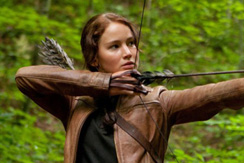
Hunger GamesThe dystopian story—post apocalyptic, degenerated society—provides a venue for managing another type of fear. The primal fear of survival.

Survival is the crux of a dystopian story. Surviving under the worst possible conditions.

Dystopian stories are usually characterized by dehumanization (“1984” by George Orwell, and the 1980’s films Road Warrior and Blade Runner), totalitarian governments “(The Hunger Games” by Suzanne Collins, “Divergent” by Veronica Roth), environmental disaster (“Under the Never Sky” by Veronica Rossi), and other characteristics associated with a severe decline in society.

The hero in a dystopian tale give us courage by showing us how to survive at all costs. How they cope with and overcome the hardships in their brutal world, helps us to face and overcome our own battles for survival, both real and imagined. In essence, dystopian stories teach us how to be our own hero. Everyone needs that type of encouragement at one time or another. There’s nothing more empowering than knowing you can save yourself. [image: The Hunger Games (movie)]


What are the stories you can’t get enough of?


Confounding Colloquialisms: Expressions that make you go, “What?”

28 Monday Jul 2014

Posted by Elizabeth Fais in Fun Facts, Humor, Writing

≈ 5 Comments

Tags

Americanism, Bite the dust, colloquialism, Elizabeth Fais, Independent as a hog on ice, informal expressions, Till the cows come home, Two shakes of a lamb's tail, Writing

A colloquialism is a word, phrase or other form used in informal language.

Parents can say some pretty weird things. My father grew up in Iowa, the heart of the Midwest, so some of the things he said seemed weirder than normal to us California-kids. Like the time he scolded my sister at the dinner table, saying she was “As independent as a hog on ice.”

Our reaction: “Huh?” (Could’ve been, “WTF?” but we weren’t allowed to swear.)

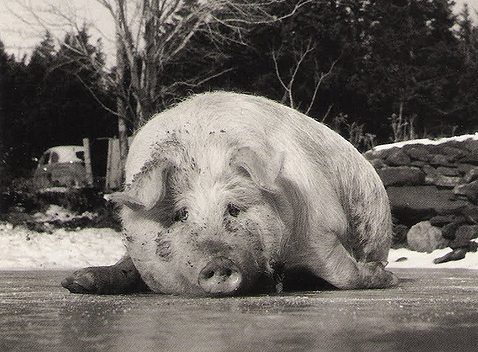
Hog on ice

Seriously. We’d lived in Southern California all our lives and had never seen ice or hogs in real life. We just stared. He took our stunned silence for acceptance and compliance, which was probably a good thing. For a lot of years, I assumed the hog-on-ice thing was an my dad’s own home-grown Iowanism. That is, until I started on my writing journey.

When I started writing, I started to notice all the odd informal sayings we used every day. I knew the implied meanings from the context in which they were used. But the meaning itself? Not so much.  That’s why I decided to take on a handful of these oddball sayings…

“As independent as a hog on ice” Flailing about

Strangely enough, I’m not the only one who has been confused by this saying. This phrase has been baffling people for decades. Yes, decades! Etymologists started searching for an explanation from the time it first appeared in the mid 19th century. In 1948 Charles Earle Funk titled his first book of word origins “A Hog on Ice”. His foreword contains a seven (7!) page narrative of his inconclusive quest for the roots of this phrase.

The Oxford English Dictionary defines the phrase as “denoting independence, awkwardness, or insecurity.” That about sums it up for a hog that’s slip-n-sliding across the ice, much like Thumper and Bambi in the Disney animated feature. “You’re doing it your way, and making a mess of it,” was what my father meant by his independent-as-a-hog-on-ice speech.

Time magazine usage in 1948, “They like to think of themselves as independents … independent as a hog on ice.”

“In two shakes of a lamb’s tail” Fast, really fast

In general usage, it is easy to infer that this phrase means “a very short period of time”.LambsTail

But why a lamb’s tail, of all things, to measure time by? Seriously. A little historical sleuthing uncovered that this is phrase is a distinct Americanism that dates back to the early 1800’s.

Apparently, a lamb can shake its tail pretty darn fast, much faster than other animals. Who knew? The term crossed “the pond” during the World War I, and became popular as British army slang.

“Bite the dust” ~ To die

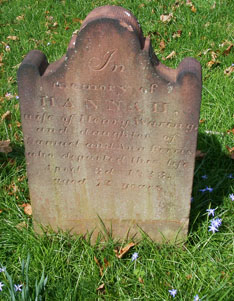
Tomb stoneI always associated this phrase with westerns. So I was not too surprised to discover that it was made popular by American westerns of the 1930’s. Picture a cowboy falling to the ground after being shot, and quite literally biting the dust when he lands face down. Because of its association with westerns, I was completely taken aback that the phrase actually dates  back thousands of years before, to Homer’s Iliad. The following  translation was made by American poet, William Cullen Bryant, in 1870:

His fellow warriors, many a one, fall around him to the earth and bite the dust.

Some might say that Bryant introduced the phrase in his interpretation of Homer.  But I’m not going to argue that point. It works for m.

The phrase also appeared in the mid 1700’s in Tobias Smollett’s translation of Alain-Rene Lesage’s novel “Gil Blas (1715-1745):

…we make two of them bite the dust.

Again, the accuracy of the translation could be open to debate. However, I think it’s interesting that traces of the phrase date so far back.

“Till the cows come home” ~ A very long time

If you grew up in a city with no exposure to cows or farm life, this phrase makes absolutely no sense whatsoever. That’s because the expression alludes to cows’ fondness for extended leisure time out at pasture where there is lots of green grass to munch on. The cows would only rush back to the barn when their udders hurt and needed milking.

The phrase originated back in the late 1500s to early 1600s. But again, it was the cinema of the 1930s that made the expression popular. Groucho Marx used it in Duck Soup (1933) when he said to Margaret Dumont,

I could dance with you till the cows come home. Better still, I’ll dance with the cows till you come home.

Cows in a green pasture

Images: morguefile.com


What’s your favorite confounding colloquialism?


Staging and Props ~ Building Character and Depth Into a Story

07 Monday Jul 2014

Posted by Elizabeth Fais in Film, Story, Writing

≈ 2 Comments

Tags

Elizabeth Fais, Film, Hollywood, Props, Staging, Story, Universal Studios, VIP Tour, Writing

Props for Props

Creating a believable set for film and television is similar to creating believable settings in fiction. It’s all about staging and props. To be honest, I didn’t realize how much time and attention went into building and dressing a set until I took the Universal Studios VIP Tour. Who knew there’s an entire warehouse filled with every type of prop you can imagine? Seriously.

Universal Studios LA props department

The VIP Tour provides an intimate behind-the-scenes view of how they create television and movie magic. An amazing treat, since I love films. But I was surprised that it also gave me insights into how to craft stories with more character and depth. [photos by moi, Universal Studios Hollywood]

Establishing the Setting

Sound Stage 44 on Universal Studios back lot is where the television show, Parenthood, a NBC family dramedy, is filmed. I learned that it took one day, 12 hours for a team of carpenters to build out the entire set.

Set for Parenthood, Universal Studios, LA

The Craftsman bungalow in Parenthood is set in Berkeley, California. The architecture and location establish the mood and tone of a story, as well as setting expectations for the family that lives there. Their morals, values, even their environmental and political beliefs. If it was a ranch house in Texas, we’d project an entirely different set of expectations on the family. When a setting is fully developed it becomes a character in the story, such as the graveyard in Neil Gaiman’s “The Graveyard Book”.

Dressing the Set

Dressing a set is the process of making it believable, giving it depth that reflects the characters. The Parenthood set took a skilled set designer six weeks to fully dress. The furniture, draperies, books on the bookshelves, pictures on the walls, and the knickknacks were all chosen to reflect the personalities of the people who inhabit the house. Subliminally, those items convey personality and quirks without having to say a word.

Inside the set of Parenthood, Universal Studios, LA

Props are also used to hint at a plot thread or character trait, such as items that are in a bedroom closet, or on display around the room. In an episode of Glee one character was going to enlist in the service, and the set was dressed with patriotic props.

Patriotic props used in an episode of Glee

In fiction, we’re always told “show, don’t tell”. What they fail to say as often is that “what” we show is just important. Too much detail slows a story down. A smattering of well-chosen detail—describing items that convey character and give their personality depth—moves the story forward while keeping the reader engaged.

Staging and props are a craft focus for me in my current project. So, I guess this post is a reminder to myself more than anything.


How do you approach staging and props in your stories?


Who’s Your Yoda?

05 Thursday Jun 2014

Posted by Elizabeth Fais in Animation, Inspiration, Writing

≈ 8 Comments

Tags

Animation, computer animation, Elizabeth Fais, Frank Thomas, mentor, Star Wars, Walt Disney Studios, Writing, Yoda

The Magic of a Mentor

YodaI used to believe that I had do everything on my own. If I didn’t, then I couldn’t take credit for the results. Luckily, I met someone who clued me in on an insider secret of the successful:

If you want to be successful at anything, apprentice yourself to someone who’s mastered the art.

Kind of like Yoda, the little green guy from Stars Wars with the pointy ears. Without Yoda mentoring him, Luke Skywalker never would’ve become a Jedi.

I’ll be straight up honest. I didn’t go looking for a mentor. I kinda sorta just bumped into him. By accident. It was one of those serendipitous meetings that changed your life. I wish I could say  that over a few short months I became a shining success in my area of study. But that would be a flat out lie.

The reality took a whole lot longer, and turned out to be better than anything I ever could have imagined. At the time, I wanted to become a computer animator—back when the industry was in its infancy. Along the way, I discovered my passion for writing for young people. Sometimes the wrong path brings you to the right place. And it was my mentor who paved the way for that transition through the (snail mail) letters we exchanged over the years.

The magic of the written word ~ Letters from Frank

I met my mentor, Frank Thomas, in 1983 at a glitzy computer graphics symposium at UCLA. I wandered up to the tradeshow area after one of the panel discussions, and ended up standing next to an old man. I overheard him telling the young woman demonstrating one product that he’d worked at Walt Disney Studios as an animator. He looked pretty old (ancient to a twenty-something-year-old), so I asked, “Did you know Walt?”

“Yes,” he replied. “If he were alive today this is where he’d be”

Me, to myself: You’re my new best friend.

At the time, I didn’t know that Frank Thomas had joined The Walt Disney Company in 1934 as employee number 224. Or that he had animated dozens of animated Frank and Jeanette Thomasfeatures and shorts, including The Brave Little Taylor, Bambi, Lady and the Tramp, Sleeping Beauty, 101 Dalmatians, to name a few. I knew he worked with Walt, and that was good enough for me. Our 21 year conversation started with a single handwritten letter that I sent to Frank, care of the Walt Disney Studios in Burbank.

Over the years, I continued to pursue computer animation, and worked on projects with Silicon Graphics and Dreamworks. Through it all, I  exchanged letters with Frank, and came to  meet his lovely, and amazing wife Jeanette. In a sense, they became like family.

Frank was generous in his letters with his expertise in traditional animation, as well as what he was learning about applying that knowledge to new technology. But it was the “storytelling style” of Frank’s letters that made the biggest impact on me. Early on, I realized I couldn’t write just anything in a letter to him. I had to write a story. I worked to make my letters as entertaining as the ones Frank always sent. He was teaching me about story structure and humor, without realizing it.

Tips on stalking a mentor

If you think “a successful person would never want to help me”, you’re wrong. Not everyone may be as accommodating as Frank Thomas, but if you have a genuine passion for their field and show an enthusiasm for learning, your mentor-of-choice will most likely take you under their wing.

FACT: People like to talk about their passion with others who share their enthusiasm.

Here are a few guidelines you might want to follow:

  • Call to ask for an “informational interview”. This works especially well for high school and college students.
  • Or, write a letter (yes, on paper) stating your purpose and why you chose them a your hero. You can include an email address as a convenience for a return reply.
  • Always be polite and courteous of their time.
  • Be professional (in accordance with industry standards) in dress and speech.
  • If they do meet with you, follow-up with a thank you letter (on paper) expressing an appreciation for their time.
  • If you want to continue working with a mentor, always bring something of interest, such as information about the industry they might not know. Anything that *shows them* you are actively working toward attaining your goal.

Have you Ever worked with a mentor?


0.000000 0.000000

A First-Draft Mad Dash ~ And the Not-So-Pretty Truth

20 Thursday Mar 2014

Posted by Elizabeth Fais in Fiction, Perspective, Writing

≈ 9 Comments

Tags

Disney animation, Elizabeth Fais, First Draft, Frank Thomas, Goals, running of the bulls

The one thing I have to accomplish—or I won’t be able to live with myself—is to be a traditionally published author. I know. It makes no sense in so many ways. Yet this is the rainbow bridge of my dreams.

Rainbow Bridge

Because life isn’t always about making sense. It’s about living without regrets.

I came close to my goal with the book I queried late last year.  But close isn’t good enough. I realized a little (?) too late that the story, while good, wasn’t unique enough for a debut author. No worries. I’ve heard of a number of now-published authors who didn’t make it out of the gate with their first book. Then when they sold their second book, the first was sold too. That’s the success scenario I choose to believe in.

So…  Now it’s time to kick up my game with a new project that has a unique concept. It’s time to dig in and get serious with the infamous First Draft.

First Draft ~ Fact and Fiction

Pounding out a first draft is different for every author. For some,  the words flow out of their fingers like milk and honey in the promised land. Yeah, right. So. Not. Me.

For me, a  first draft is all-consuming. It’s when the characters blossom to life in my head, transforming into three-dimensional people. Usually with a healthy dose of attitude. Story wrinkles slap me in the face—plot pits big enough to swallow a T-Rex whole—I didn’t foresee in the initial planning phase. It’s a fictional wrestling match and dance party rolled into one, an oxymoronic medely of inspiration, frustration, and a high flying creative dopamine rush.

Yes, folks. The writer’s high is real. And it’s free for anyone crazy enough to venture down this path.

I’d like you to think that my First Draft Dash is as fluid as an Olympian going for the gold. But let’s be real. My first draft process looks a lot more like this…

Running of the bulls in Arizona

In the race to keep the momentum flowing, real-life stuff falls off the truck, only to be trampled beneath the hooves of those bulls.

Dust, dishes, and laundry be damned… and the better part of social media too.

Ready…Set…Go!

Starting lineThe good new is, first drafts don’t last forever. In fact, this is going to be a relatively short sprint.

Head down and fingers to the keyboard on March 21st.

Crossing the deadline finish line on June 21st.

Meanwhile, back at the ranch…

Yeah… about this blog…

During the first draft dash, I won’t have the bandwidth to come up with thought-provoking posts on a regular basis. In February, when I was plotting out the new project, I did Zip. Zero. Zilch blog posts.

I didn’t want this blog to go dark for the next three months, so I’m bringing out a series I’ve been thinking about for some time. It will be based on a series of letters written to me by legendary Disney animator Frank Thomas over a number of years. The correspondence originated out of my love of animation and computer graphics, but ultimately brought me to the path of writing fiction for young readers.

Coming up next:
“Letters from Frank ~ Insights on Animation, Computers, and Elephants”


WAnt to share your First Draft process?


0.000000 0.000000

Be Your Own Hero

17 Monday Mar 2014

Posted by Elizabeth Fais in Hero, Inspiration, Writing

≈ 8 Comments

Tags

Aragprm, Carrie Anne Moss, Elizabeth Fais, Hero, hero's journey, Hugh Jackman, Joan of Arc, Keanu Reeves, live the dream, Lord of the Rings, Neo, The Matrix, Trinity, Wolverine

It’s amazing how four simple words can resonate with such great intensity:

Be your own hero.

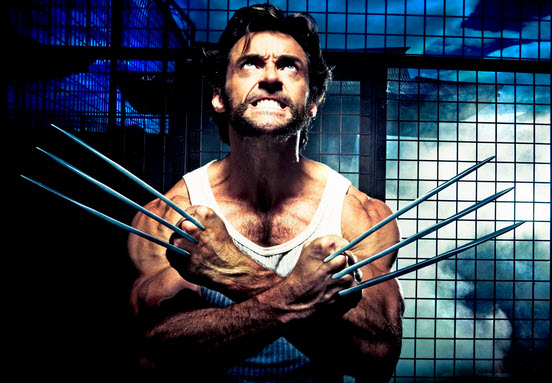
Hugh Jackman as The WolverineI tweeted those words, because they felt *solid* and *true* but without knowing why. I certainly wasn’t thinking or feeling like the Wolverine.

But as with so many other tweets, once I hit Send, the words were forgotten.

That is, until the retweets flooded in. Apparently those words felt solid and true to a number of others.

But WHY?

What does it mean to ‘Be Your Own Hero’?

That’s the question I asked myself when I saw the response to that tweet. And not in the Hollywood-action-film-hero context either. Even though that’s the first imagery that usually comes to mind.

Heros_1

Characters who travel the Hero’s Journey in film and fiction provide valid role models on “how to become a hero” on a number of levels.

But “being your own hero” goes deeper.

It’s not about storming the castle, taking down the evil warlord, or finding the golden fleece. In fact, the exact criteria will vary as wildly as there are people in the world.

I can’t tell you how to be your own hero. But after a much thought, I defined a list of criteria for myself…

How to ‘Be My Own Hero’ — 5 Easy Steps

  1. Take that one thing I have to accomplish or “I won’t be able to live with  myself”, and make it happen. Against all odds.
  2. Do what I’m most afraid of. Because that’s what I most need to learn.
  3. Strive for excellence. Never settle for mediocrity.
  4. Stand up for myself. But more important, stand up for those who may be weaker and need the support.
  5. Live my dream to its fullest … remaining fluid, embracing life circumstances with open arms, while still holding true to the vision. Because that’s the stuff real dreams are made of.

What’s on your “Be your own hero” list?


0.000000 0.000000

Creative Courage ~ Blowing Away “The Box”

27 Monday Jan 2014

Posted by Elizabeth Fais in Creativity, Inspiration, Music, Writing

≈ 6 Comments

Tags

Buffy the Vampire Slayer, Classical Music, Coldplay, Creative Courage, Crossover, Cubism, David Garrett, Elizabeth Fais, Firefly, Genre Busting, Genres, Joss Whedon, Legacy, Mavericks, Music, Pablo Picasso, San Jose, Viva La Vida

David Garrett ~ Musical Maverick

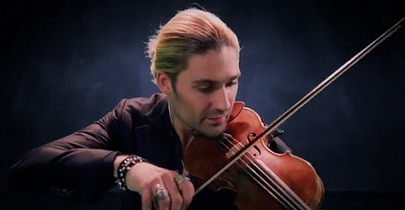
When a friend asked if I’d go with her to a concert featuring violinist David Garrett (in San Jose last Tuesday), I expected an excellent show. After all, I’d heard Garret’s classical album, Legacy; proving his world renowned talent as a classical musician.

David Garrett

What I didn’t expect … was to be totally blown away…
Along with that box everyone talks about thinking outside of.

His show — Music, named after his latest release — was genre busting in every possible way. From the wide range of music, to the orchestration and technological presentation. He played everything from Beethoven, Queen, AC/DC, Bach, Brahms, The Beatles, Brazilian … you get the picture. All backed by a rock band. Mindblowingly awesome!

I am inspired by any artist (in any medium) who refuses to follow the customs of their group and sets new standards of excellence. The Maverick … who sees beyond the rules, envisions explosive possibilities, and then brings them to life. What I love most is Garrett’s all-inclusive approach to his art…

I use my instrument to endeavor into all kinds of music genres… ~David Garrett

He draws from “everything” he hears, then filters through the possibilities and permutations to create something fresh and new. He doesn’t see one genre as “less than” and another as “superior”, he embraces all … even technology … to drive creativity to new limits. Check out the video below and see for yourself.

Garrett’s performance turned my head around in more ways than one. It made me take serious look at my approach to my craft, and ask how I can make my writing and my stories fresher. What possibilities haven’t I considered? What potentials should I investigate? What can I do that hasn’t been done before?

Mavericks in Fine Art and Filmmaking

Every medium has its mavericks. Unfortunately, they are few and far between. Pablo Picasso and Joss Whedon pioneered new ground in the fine arts and filmmaking, respectively.

Pablo Picasso was a maverick in the fine art world. He trained classically, painting in the realistic manner of the time through his childhood and adolescence. After that he experimented with different theories, techniques, and materials. His unique vision helped found the Cubist movement and made him one of the best-known figures in 20th century art.

Joss Whedon is a contemporary screenwriter, producer, and filmmaker who used his “genre salad” approach to story to create some of the most memorable TV series of our time. Whedon is best known for his TV series Buffy the Vampire Slayer, a teen-angst dramedy with vampires, monsters, and hot chics with super powers who kickass and take names. Whedon stretched the genre envelope even further with the TV series Firefly, a space western drama. And that’s just two of his remarkable genre busting accomplishments.

The question we should all be asking ourselves is…

How can I turn my [type of creative work here] on its head, spin it around, and create something new?

Viva La Vida ~ David Garrett

In the following video, as in his live performance, David Garrett puts a fresh spin on Coldplay’s Viva La Vida, using technology to push the creative edge even further. Yes, he’s playing all the tracks in real-time (on a Stradivarius!), thanks to technology. Pretty awesome.

No powder throwing ravers at the live concert…
Is anyone else concerned about the violin in that scene?
Hopefully, that’s not the Strad!


37.330454 -121.889663
← Older posts
Newer posts →

Calendar

January 2026
M T W T F S S
 1234
567891011
12131415161718
19202122232425
262728293031  
« Nov    

Enter your email address to have new posts sent directly to your inbox.

Join 236 other subscribers

It's really me!

  • Elizabeth Fais's avatar Elizabeth Fais

Life is Tweet

Follow @elizabethfais

Recent Posts

  • The true POWER of stories
  • Wisdom of Richard Peck ~ Writing for young readers
  • The Writer and Rabbit Who Saved the Countryside
  • 3 TREE-rific Informational Picture Books
  • Musings from the Writing Cave
  • MG Review ~ HOW I BECAME A SPY
  • The “Creative High” is real!

Past Posts

Officially SCBWI

Reading Fun

Advice for Writers

I Write for Apples

Author Photos

Olivia Marshall

Categories

Amazing but true! Animals Animation Blake Snyder Book Reviews Books Cats Character Dancing Disneyland Elizabeth Fais Fiction Fun Facts Funny Videos Giveaway Giving Back Holiday Humor Inspiration Middle Grade Movies Music Mystery Nonfiction Paranormal Reading Romance SCBWI Shakespeare Story Supernatural Thriller Uncategorized Winner! Writing YA YAppiest Young Adult Zombies

Blog at WordPress.com.

  • Subscribe Subscribed
    • Elizabeth Fais
    • Join 236 other subscribers
    • Already have a WordPress.com account? Log in now.
    • Elizabeth Fais
    • Subscribe Subscribed
    • Sign up
    • Log in
    • Report this content
    • View site in Reader
    • Manage subscriptions
    • Collapse this bar
 

Loading Comments...