• About Me
  • Writer’s Corner

Elizabeth Fais

~ Where awesome begins…

Elizabeth Fais

Tag Archives: Writing

What Sparks the Romance of Writing?

15 Monday Dec 2014

Posted by Elizabeth Fais in Romance, Story, Writing

≈ 5 Comments

Tags

Elizabeth Fais, Joss Whedon, Liv Rancourt, Romance, Santa Claus, Story, The Santa Drag, Umberto Eco, Writing

The force behind the creative process…

JossWhedonQuote2What compels writers to subject ourselves to endless hours of isolation, the nagging weight of self-doubt, and endless abuse from our inner critics? Not the lure of millions, I dare say.

Yes, there are writers who hit the bestseller lottery. But if you asked them “why” they write, I would bet many reasons would come before the mention of money.

Umberto Eco summed elegantly up the source of the writer’s creative spark when he said, “To survive we must tell stories.”

Joss Whedon (creator of Buffy the Vampire Slayer) explained how writing is tangible therapy, a way to face and overcome weaknesses, fears, and insecurities.

And then there are writers, like Liv Rancourt, who embrace their craft out of the sheer love of the stories they create. Through the process they become the characters and live vicariously through them, experiencing their hopes, dreams, heartaches and joys.

Liv Rancourt on Romance and Writing

Liv Rancourt, is a paranormal romance author with a flair for witty dialog, quirky characters, and stories that resonate with the heart. I’m reposting an excerpt she wrote about why she writes fiction woven with romantic themes, because I can’t think of a better topic for the holiday season. Because everything is more magical when love is in the air

So, why romance? Yesterday I had a couple hours of downtime and spent it in the company of Aidan, Krys, Mirren, Lucy & their friends while reading the novel Redemption by Susannah Sandlin. Okay, there were vampires involved, but the love story rocked and I thoroughly enjoyed myself.

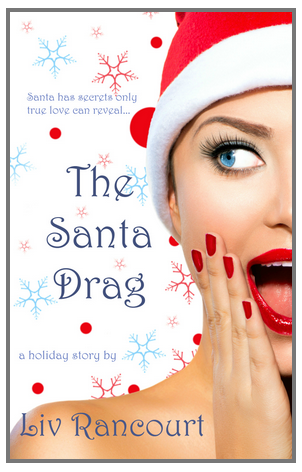
That just about sums it up. Write a love story that’s grounded in reality (or some The Santa Drag coverparanormal version thereof), involving well-drawn characters and genuine conflict, and you will have me eating out of the palm of your hand…though that’s probably not an image we want to dwell on. Instead, know that I read to have fun, and good romances are almost always fun.
If I want real-world conflict (read: sadness & pain), I’ll go to work. Sometimes I don’t even have to go that far; conflict comes to me, invading my personal space. That’s how life is. When I read, I want the assurance that the characters are going to end up happy, which is one of the hallmarks of the romance novel.

And then there’s the whole falling-in-love thing. Like most people of the human persuasion, I love to fall in love. However, after seventeen years of marriage, pretty much the only falling I get to do these days is in the pages of a book. My husband is an awesome guy, but our infatuation days were a LOOOONNGGG time ago. With a romance novel, I can experience a little vicarious infatuation stretched out over two or three days, and almost always get dinner to the table on time.

It gets even better when I write my own. I have a whole thumb-drive full of crushes. My ideal romantic heroes are often tough guys with hard fists and soft hearts. Well, except for Joe, from my short story The Santa Drag. He’s an actor, and the heroine Mackenzie describes him as the Robert Downey Jr. type: good-looking, charming and just a little bit naughty. He’s turned up in a couple of my short stories now, flashing his “yep, I’m handsome” grin and driving Mack crazy.

To read an excerpt of The Santa Drag, go here.

The Santa Drag is available exclusively from Amazon [Kindle Edition] for only $0.99. You can buy it here.

Connect with Liv!

I can be found on-line at all hours of the day and night:

  • My website & blog: livrancourt.com
  • Facebook: liv.rancourt
  • Twitter: @LivRancourt

Stop by. We’ll have fun!


Confounding Colloquialisms: Expressions that make you go, “What?”

28 Monday Jul 2014

Posted by Elizabeth Fais in Fun Facts, Humor, Writing

≈ 5 Comments

Tags

Americanism, Bite the dust, colloquialism, Elizabeth Fais, Independent as a hog on ice, informal expressions, Till the cows come home, Two shakes of a lamb's tail, Writing

A colloquialism is a word, phrase or other form used in informal language.

Parents can say some pretty weird things. My father grew up in Iowa, the heart of the Midwest, so some of the things he said seemed weirder than normal to us California-kids. Like the time he scolded my sister at the dinner table, saying she was “As independent as a hog on ice.”

Our reaction: “Huh?” (Could’ve been, “WTF?” but we weren’t allowed to swear.)

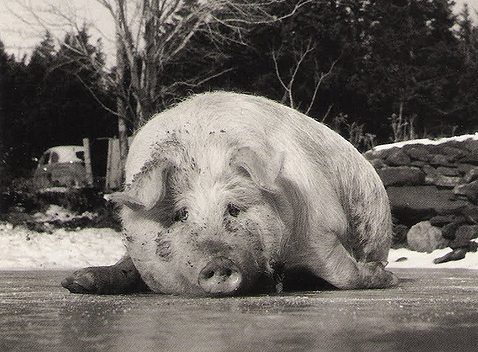
Hog on ice

Seriously. We’d lived in Southern California all our lives and had never seen ice or hogs in real life. We just stared. He took our stunned silence for acceptance and compliance, which was probably a good thing. For a lot of years, I assumed the hog-on-ice thing was an my dad’s own home-grown Iowanism. That is, until I started on my writing journey.

When I started writing, I started to notice all the odd informal sayings we used every day. I knew the implied meanings from the context in which they were used. But the meaning itself? Not so much.  That’s why I decided to take on a handful of these oddball sayings…

“As independent as a hog on ice” Flailing about

Strangely enough, I’m not the only one who has been confused by this saying. This phrase has been baffling people for decades. Yes, decades! Etymologists started searching for an explanation from the time it first appeared in the mid 19th century. In 1948 Charles Earle Funk titled his first book of word origins “A Hog on Ice”. His foreword contains a seven (7!) page narrative of his inconclusive quest for the roots of this phrase.

The Oxford English Dictionary defines the phrase as “denoting independence, awkwardness, or insecurity.” That about sums it up for a hog that’s slip-n-sliding across the ice, much like Thumper and Bambi in the Disney animated feature. “You’re doing it your way, and making a mess of it,” was what my father meant by his independent-as-a-hog-on-ice speech.

Time magazine usage in 1948, “They like to think of themselves as independents … independent as a hog on ice.”

“In two shakes of a lamb’s tail” Fast, really fast

In general usage, it is easy to infer that this phrase means “a very short period of time”.LambsTail

But why a lamb’s tail, of all things, to measure time by? Seriously. A little historical sleuthing uncovered that this is phrase is a distinct Americanism that dates back to the early 1800’s.

Apparently, a lamb can shake its tail pretty darn fast, much faster than other animals. Who knew? The term crossed “the pond” during the World War I, and became popular as British army slang.

“Bite the dust” ~ To die

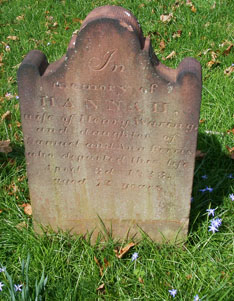
Tomb stoneI always associated this phrase with westerns. So I was not too surprised to discover that it was made popular by American westerns of the 1930’s. Picture a cowboy falling to the ground after being shot, and quite literally biting the dust when he lands face down. Because of its association with westerns, I was completely taken aback that the phrase actually dates  back thousands of years before, to Homer’s Iliad. The following  translation was made by American poet, William Cullen Bryant, in 1870:

His fellow warriors, many a one, fall around him to the earth and bite the dust.

Some might say that Bryant introduced the phrase in his interpretation of Homer.  But I’m not going to argue that point. It works for m.

The phrase also appeared in the mid 1700’s in Tobias Smollett’s translation of Alain-Rene Lesage’s novel “Gil Blas (1715-1745):

…we make two of them bite the dust.

Again, the accuracy of the translation could be open to debate. However, I think it’s interesting that traces of the phrase date so far back.

“Till the cows come home” ~ A very long time

If you grew up in a city with no exposure to cows or farm life, this phrase makes absolutely no sense whatsoever. That’s because the expression alludes to cows’ fondness for extended leisure time out at pasture where there is lots of green grass to munch on. The cows would only rush back to the barn when their udders hurt and needed milking.

The phrase originated back in the late 1500s to early 1600s. But again, it was the cinema of the 1930s that made the expression popular. Groucho Marx used it in Duck Soup (1933) when he said to Margaret Dumont,

I could dance with you till the cows come home. Better still, I’ll dance with the cows till you come home.

Cows in a green pasture

Images: morguefile.com


What’s your favorite confounding colloquialism?


Staging and Props ~ Building Character and Depth Into a Story

07 Monday Jul 2014

Posted by Elizabeth Fais in Film, Story, Writing

≈ 2 Comments

Tags

Elizabeth Fais, Film, Hollywood, Props, Staging, Story, Universal Studios, VIP Tour, Writing

Props for Props

Creating a believable set for film and television is similar to creating believable settings in fiction. It’s all about staging and props. To be honest, I didn’t realize how much time and attention went into building and dressing a set until I took the Universal Studios VIP Tour. Who knew there’s an entire warehouse filled with every type of prop you can imagine? Seriously.

Universal Studios LA props department

The VIP Tour provides an intimate behind-the-scenes view of how they create television and movie magic. An amazing treat, since I love films. But I was surprised that it also gave me insights into how to craft stories with more character and depth. [photos by moi, Universal Studios Hollywood]

Establishing the Setting

Sound Stage 44 on Universal Studios back lot is where the television show, Parenthood, a NBC family dramedy, is filmed. I learned that it took one day, 12 hours for a team of carpenters to build out the entire set.

Set for Parenthood, Universal Studios, LA

The Craftsman bungalow in Parenthood is set in Berkeley, California. The architecture and location establish the mood and tone of a story, as well as setting expectations for the family that lives there. Their morals, values, even their environmental and political beliefs. If it was a ranch house in Texas, we’d project an entirely different set of expectations on the family. When a setting is fully developed it becomes a character in the story, such as the graveyard in Neil Gaiman’s “The Graveyard Book”.

Dressing the Set

Dressing a set is the process of making it believable, giving it depth that reflects the characters. The Parenthood set took a skilled set designer six weeks to fully dress. The furniture, draperies, books on the bookshelves, pictures on the walls, and the knickknacks were all chosen to reflect the personalities of the people who inhabit the house. Subliminally, those items convey personality and quirks without having to say a word.

Inside the set of Parenthood, Universal Studios, LA

Props are also used to hint at a plot thread or character trait, such as items that are in a bedroom closet, or on display around the room. In an episode of Glee one character was going to enlist in the service, and the set was dressed with patriotic props.

Patriotic props used in an episode of Glee

In fiction, we’re always told “show, don’t tell”. What they fail to say as often is that “what” we show is just important. Too much detail slows a story down. A smattering of well-chosen detail—describing items that convey character and give their personality depth—moves the story forward while keeping the reader engaged.

Staging and props are a craft focus for me in my current project. So, I guess this post is a reminder to myself more than anything.


How do you approach staging and props in your stories?


Who’s Your Yoda?

05 Thursday Jun 2014

Posted by Elizabeth Fais in Animation, Inspiration, Writing

≈ 8 Comments

Tags

Animation, computer animation, Elizabeth Fais, Frank Thomas, mentor, Star Wars, Walt Disney Studios, Writing, Yoda

The Magic of a Mentor

YodaI used to believe that I had do everything on my own. If I didn’t, then I couldn’t take credit for the results. Luckily, I met someone who clued me in on an insider secret of the successful:

If you want to be successful at anything, apprentice yourself to someone who’s mastered the art.

Kind of like Yoda, the little green guy from Stars Wars with the pointy ears. Without Yoda mentoring him, Luke Skywalker never would’ve become a Jedi.

I’ll be straight up honest. I didn’t go looking for a mentor. I kinda sorta just bumped into him. By accident. It was one of those serendipitous meetings that changed your life. I wish I could say  that over a few short months I became a shining success in my area of study. But that would be a flat out lie.

The reality took a whole lot longer, and turned out to be better than anything I ever could have imagined. At the time, I wanted to become a computer animator—back when the industry was in its infancy. Along the way, I discovered my passion for writing for young people. Sometimes the wrong path brings you to the right place. And it was my mentor who paved the way for that transition through the (snail mail) letters we exchanged over the years.

The magic of the written word ~ Letters from Frank

I met my mentor, Frank Thomas, in 1983 at a glitzy computer graphics symposium at UCLA. I wandered up to the tradeshow area after one of the panel discussions, and ended up standing next to an old man. I overheard him telling the young woman demonstrating one product that he’d worked at Walt Disney Studios as an animator. He looked pretty old (ancient to a twenty-something-year-old), so I asked, “Did you know Walt?”

“Yes,” he replied. “If he were alive today this is where he’d be”

Me, to myself: You’re my new best friend.

At the time, I didn’t know that Frank Thomas had joined The Walt Disney Company in 1934 as employee number 224. Or that he had animated dozens of animated Frank and Jeanette Thomasfeatures and shorts, including The Brave Little Taylor, Bambi, Lady and the Tramp, Sleeping Beauty, 101 Dalmatians, to name a few. I knew he worked with Walt, and that was good enough for me. Our 21 year conversation started with a single handwritten letter that I sent to Frank, care of the Walt Disney Studios in Burbank.

Over the years, I continued to pursue computer animation, and worked on projects with Silicon Graphics and Dreamworks. Through it all, I  exchanged letters with Frank, and came to  meet his lovely, and amazing wife Jeanette. In a sense, they became like family.

Frank was generous in his letters with his expertise in traditional animation, as well as what he was learning about applying that knowledge to new technology. But it was the “storytelling style” of Frank’s letters that made the biggest impact on me. Early on, I realized I couldn’t write just anything in a letter to him. I had to write a story. I worked to make my letters as entertaining as the ones Frank always sent. He was teaching me about story structure and humor, without realizing it.

Tips on stalking a mentor

If you think “a successful person would never want to help me”, you’re wrong. Not everyone may be as accommodating as Frank Thomas, but if you have a genuine passion for their field and show an enthusiasm for learning, your mentor-of-choice will most likely take you under their wing.

FACT: People like to talk about their passion with others who share their enthusiasm.

Here are a few guidelines you might want to follow:

  • Call to ask for an “informational interview”. This works especially well for high school and college students.
  • Or, write a letter (yes, on paper) stating your purpose and why you chose them a your hero. You can include an email address as a convenience for a return reply.
  • Always be polite and courteous of their time.
  • Be professional (in accordance with industry standards) in dress and speech.
  • If they do meet with you, follow-up with a thank you letter (on paper) expressing an appreciation for their time.
  • If you want to continue working with a mentor, always bring something of interest, such as information about the industry they might not know. Anything that *shows them* you are actively working toward attaining your goal.

Have you Ever worked with a mentor?


0.000000 0.000000

Writing Lessons Learned from Garry Marshall’s “Happy Days in Hollywood”

28 Monday Oct 2013

Posted by Elizabeth Fais in Autobiography, Film, Humor, Writing

≈ 2 Comments

Tags

Bing Cosby, Danny Thomas, Dick Van Dyke, Elizabeth Fais, Film, Garry Marshall, Gomer Pyle, Happy Days, I Love Lucy, I Spy, Laverne and Shirley, Mork and Mindy, My Happy Days in Hollywood, Pretty Woman, The Odd Couple, The Princess Diaries, Wake Me When It's Funny, Writing

Garry Marshall headshotGarry Marshall is an entertainer, storyteller, but first and foremost a writer. I didn’t realize the extent of his talents until the day I listened to his Director’s Commentary on The Princess Diaries DVD.

Afterward, I immediately ran out and bought his first book, Wake Me When It’s Funny. A delight, with its real-world insider info on what it takes to be a successful writer … in any biz. It’s all about story … whether it’s a screenplay, a novel, or a comedy skit. [image: Wikipedia]

My Happy Days in Hollywood

A few weeks ago I saw a Twitter post about Garry Marshall’s new book, My Happy Days In Hollywood. I immediately went online and ordered it, except this time I opted for the unabridged audio book version that is read by Garry Marshall himself. A real treat. It’s like sitting in a living room with Garry, while he personally tells you his story.

The Writer

Garry Marshall was one of the sickly kids ever, because he was (and still is) allergic to almost everything. As a boy, his main goal was to get out of bed. But all that time in bed forced him to develop his talent for crafting stories. While all the other kids were outside playing, he’d lay in bed and made up stories to entertain himself. Scary stories made him scared, and depressing stories just made him depressed. So he quickly learned that amusing stories worked the best. He looked at life as comedy, and it stuck with him.

Garry Marshall started as a professional writer for stand-up comedians on the New York City nightclub circuit. From there he went to Hollywood, first writing for Bing Crosby, and then for television shows such as The Danny Thomas Show, The Dick Van Dyke Show, I Love Lucy, The Odd Couple, Gomer Pyle, I Spy, and Love American Style. His time in the writing trenches eventually lead to producing and directing, fist television and later movies.

The Producer, Director, & Actor
Garry Marshall was the creator and producer of some of the most popular television shows from the 1970’s, including The Odd Couple, Happy Days, Mork and Mindy and Laverne & Shirley.

HappyDays

Today, most people know Garry Marshall for his more recent work as a director (the The Princess Diaries movies, 1 & 2) and actor. What you might not realize, is that his writing skills helped shape (and in some instances make) successes through the rewrites he contributed to a script. One of his script-transformation successes was Pretty Woman (1990).

The original screenplay was named Three Thousand, and was a dark story about a thirty-something hooker who falls in love with a wealthy businessman who leaves her, and then she kills herself. Disney execs didn’t think that story would do too well at the box office (duh), so they hired Garry Marshall to direct and “lighten the story up.” The rest is history.

I could go on and on about his other successes as a director, producer and actor, but I don’t want to ruin your experience of reading, or listening to, Garry Marshall’s My Happy Days In Hollywood. Instead, I’ll cut to the chase, with the practical lessons I learned from his autobiography. These are lessons that any writer/actor/artist can use to set their career on the success track. Because as one person so aptly stated…

Garry is allergic to everything but success.

Ten Valuable Lessons

Garry Marshall’s books offer a wealth of life experiences that writers, actors, and artists of all kinds can apply to their careers. Here are ten of my favorite:

  1. Go to school (take classes and seminars), learn and improve your craft.
  2. To succeed in Hollywood (or as a writer) you must be prepared for failure and rejection.  You have to feel it’s noble to fail and learn to rationalize, because you are going to get rejected.
  3. Allow yourself 30 minutes a day for self-pity. Then get back to your writing.
  4. You’ve got to try different things (write different types of stories), hit or miss.
  5. Developing friendships in the industry is important. It’s not always who you know, but you never know when it will help. Besides, it makes everything so much more fun.
  6. Pain + time = humor
  7. The key to directing (or writing) is don’t take it too seriously.
  8. Life is more important than show business (writing).
  9. Spend your money going to film festivals (writing conferences). You might meet someone who will further your career.
  10. The real power in Hollywood (publishing industry) is to have passion for your project. That passion radiates and convinces others to believe in it (and you!) too.

The Purpose of Our Craft

Garry Marshall said he wants to be remembered
“for making films that make you feel good … even if you don’t want to.”

How about you?
How do you want to be remembered as a writer?


0.000000 0.000000

“Comedy Comes From the Heart” & Other Tips From the Fabulously Funny

06 Friday Sep 2013

Posted by Elizabeth Fais in Fiction, Humor, SCBWI, Writing

≈ 15 Comments

Tags

Comedy, Ghost Buddy, Hank Zipzer, Henry Winkler, Humor, LA13SCBWI, Lin Oliver, SCBWI, Society of Children's Book Writers and Illustrators, Writing

A Workshop with Henry Winkler and Lin Oliver

This year’s SCBWI Summer Conference in Los Angeles (August 1-5) was the ultimate blend of inspiration, guidance, and professional advice for children’s authors and illustrators. All the workshops were amazing, but one was particularly memorable for its advice and inspiration: Comedy Comes from the Heart, with Henry Winkler and Lin Oliver.

  • Henry Winkler is an actor, producer and director, who is best known for his role as “the Fonz” in the 1970’s television series “Happy Days”. Though he is quick to tell you that he’s most proud of writing books for young readers.
  • Lin Oliver is the co-founder of the Society of Children’s Book Writers and Illustrators, a long-time television writer, and a well published children’s author.

LinOliver_HenryWinkler_LA13SCBWI

Henry Winkler and Lin Oliver are two of the funniest people on the planet. Put them together in the same room and it’s no wonder things spiral virally into the hilarious.

This dynamic duo teamed up to write 17 books in the Hank Zipzer: World’s Greatest Underachiever series, and have completed four books in the Ghost Buddy series. They are both are hilarious, and they know how to translate that humor onto the written page. You can read my review of Ghost Buddy ~ Zero to Hero here.
Hank Zipzer and Ghost Buddy covers

The Do’s and Don’ts of Writing Comedy

Henry Winkler and Lin Oliver earned their Fabulously Funny street creds on the page as well as the screen. They know what works, and what doesn’t, when it comes to comedy. Here are some of the comedic secrets they shared with us:

  1. Write what makes you laugh. If you think something is funny, someone else will think so too.
  2. Write what you know is true. Don’t try to write what you think will be funny for a particular audience. Young readers know when humor is not authentic.
  3. There are different types of humor, such as character humor, physical humor, observational humor. Write the type of humor that works for you, what you think is funny.
  4. What makes you laugh the most, also makes you cry the most. Good comedy always has a cringe-worthy (pathos) moment.
  5. Write from your own experience. Mine your own life for “most embarrassing” moments.
  6. You have to love the character you’re putting in comedic jeopardy, or else it comes off as being mean. You want your audience to laugh with the character, not at him.
  7. Good comedy must have tension, just like good drama.
  8. Specific details are almost always funnier than generalizations. For example: Principal Zumba has a mole. Or… Principal Zumba has a mole shaped like the statue of liberty that looks like it’s doing the hula whenever he talks.
  9. Don’t edit yourself on the first draft. Go with your first impulses. Craft the humor afterward.
  10. Use improv to get into the character’s voice. Henry Winkler showed us how a slouch and a tilt of the head, brought out “the Fonz” in his voice.
  11. Titles are very important to young readers. Take the time to craft a terrific title.
  12. “Trying” to be funny is a formula for death. Write down 25 things that made you laugh, then analyze each instance for the elements that made it funny.

Henry Winkler embellishes an explanation for the audience [photos by moi]…

Henry Winkler acts out advice to writers

The following advice from Henry Winkler was particularly inspiring:

There’s many ways to do things. You have to be courageous enough to do things your way.

For information on some of the other amazing workshops at the LA13 SCBWI Summer Conference, you can read the official SCBWI blog.


0.000000 0.000000

Why Writing is Like Baseball

26 Saturday Jan 2013

Posted by Elizabeth Fais in Baseball, Humor, Writing

≈ 2 Comments

Tags

A League of Their Own, Baseball, Damn Yankees, Elizabeth Fais, Geena Davis, Madonna, Rosie O'Donnell, Tom Hanks, Writing

If you’ve stopped by this blog recently, you’ll remember that I’m currently under a self-imposed deadline to finish the revision of my Young Adult (YA) novel.  Now, I admit that I tend to get a little punchy at this stage of a long-haul. But no, I haven’t gone completely around the bend. Yet.

NoCryinginBaseball5

“There’s no crying in baseball” scene from A League of Their Own

8 reasons why writing is like baseball

  1. Writers are in a League of Their Own.
  2. The publication process is a team effort — writer, critique partners, agent, editors, graphic designers.
  3. It’s an American (and a whole lot of other cultures too) dream — seeing something we’ve written in print.
  4. Personal history (backstory) affects baseball players as much as it does our characters. Take the players’ personal issues in Bull Durham that stop the game with a prolonged huddle on the pitcher’s mound.
  5. You need a tough hide to survive the slides. Rejection isn’t pretty. Or easy. Ever. And it’s part of the process.
    LeagueOfTheirOwnSlide
  6. You’ve gotta have heart to make it in the industry. An entire song in Damn Yankees can’t be wrong.
  7. Shoes are optional. Shoeless Joe Jackson set the precedent there. Would Damn Yankees  (Shoeless Joe from Hannibal Mo) lie? I don’t think so!
  8. Sometimes you win, sometimes you lose, and sometimes it rains. But it’s fun, goddamit!

I write because the “hard” is what makes it Great!


What about you? Why do you write?


How NOT to Skate Through Revisions

06 Sunday Jan 2013

Posted by Elizabeth Fais in Animation, Perspective, Writing

≈ 12 Comments

Tags

Bambi, Elizabeth Fais, NaNoRevMo, Revisions, Thumper, Walt Disney Studios, Writing

This past year was a whirl wind of firsts, including a new job and blogging for the first time ever. I also started the final revision of my Work In Progress (WIP) — a Young Adult (YA) supernatural mystery. All good. It’s been terrific, really.

Bambi-on-ice2But… there was an itsy-bitsy snag  in the midst of the newness. With all the new shiny things in my life, progress on my WIP revisions slowed to a negligible crawl. Which is why come November, when everyone else was NaNoWriMoing, I lead a NaNoRevMo Charge on revisions for my WIP.

It was great tapping into the NaNo synergy. I got back in the groove, and the revisions were going well.

And then … life happened. What’s that they say about “making plans is the best way to make the universe laugh. In your face.”? Well, the universe was rolling around on the floor laughing at me…

Because it played out something like this…


Well… ALMOST… I won’t bore you with the deets, but here’s the general rundown:

  1. I had to trap and relocate an entire colony of feral cats, when the property where I’d been feeding them went up for sale. No small task, and especially stressful since I’d cared for these cats every day for more than 9 years.
  2. All the while, I had to keep on top of deadlines at the day-job. Nothing new there. But trapping the colony of feral cats in my spare time left no bandwidth for revisions. Zero. Zip. Nada. Zilch.
  3. To top that all off, a killer cold knocked me flat and bronchitis shoved me head first into the proverbial snow bank. Luckily, after the cats made it to their new home. Deadlines at the day-job still had to be met, and I got the job done! But progress on the revisions? None what so ever.
  4. Finally… I started feeling better. And now…

I’m back in the groove & skating on through…

Bambi-and-thumper-on-ice1I’ve sailed well past the half-way mark of the WIP revisions, and can actually see the light at the end of the tunnel. Yay, me! Since I’m driven by deadlines, real or self-imposed, to keep the momentum going I drew a deadline for final completion on the calendar. Then I started realigning priorities. I’m confident I’ll be able reach the finish line in a relatively short time. But that means … something’s gotta give.

Sadly, this blog has to go dark … for awhile

Only for a few weeks folks… And  that’s not to say I won’t post a funny video somewhere along the line. *wink, wink* Just no substantial content, as I need to focus my full attention on my WIP revisions … for now.

I’ll be back after the revision break. Promise!

I have a great series of posts planned for the coming year. But before I can dig intoSteamLocomotive_Wikipedia writing those awesome articles, I have to finish this WIP, so I can hop on the Literary Agent Submission Train.

I’ll see you all in a few weeks on the other side of the deadline! I’ll miss you guys, but this Revision Interlude will pass before we know it! [Image credit: Wikipedia]

Encouragement & the Long Road to “The Princess Diaries”

31 Monday Dec 2012

Posted by Elizabeth Fais in Inspiration, Meg Cabot, Writing

≈ 9 Comments

Tags

Anne Hathaway, Elizabeth Fais, Encouragement, Gary Marshall, Inspiration, Julie Andrews, Laura Langlie, Meg Cabot, My First Sale, The Princess Diaries, Walt Disney Studios, When Lightning Strikes, Writing

hThe sweet strains of encouragement have been floating around the blogosphere of late. Encouragement on querying, handling rejection, and battling the insidious self-doubt.

I listed a few of these inspirational posts below, in case you missed them. They might be just the thing you need to pull out of the Pit of Despair, or plow through rejections to land an Uber Agent and sign a Shiny Book Deal. You never know. Stranger things have happened.

~ o0o ~

Today I’d like to share a true story that has encouraged me to stay the course on my writing journey and keep on keeping on…

The Long Road to “The Princess Diaries”

ThePrincessDiariesCover_Whenever we hear about an author that’s become a huge success, it’s easy to be fooled into believing that “it happened overnight”. Like that author drank some kind of secret instant-success formula and never had to work diligently on craft, or suffer the rejections of submission roulette. 99.99% of the time this is so not the case. And certainly wasn’t for  Meg Cabot of Princess Diaries fame (and beyond).

I found out just how hard Meg Cabot worked to become a published author, in the article she wrote  titled My First Sale. Believe it or not, she slugged through more than her share of rejections on the road to publication (never mind the getting famous part).

In her article, Meg honestly admits that it took her several years (yes, years!) of rigorous submissions, followed by subsequent rejections, before landing her agent, Laura Langlie, who she is still with today. Through it all, Meg saved every rejection letter (before email submissions were the norm) in a US postal mail bag that she kept under her bed. The rejection mail bag ended up becoming so full (with rejections from editors and agents) that it’s now  too heavy for Meg to lift.

To this day Meg Cabot admits that she doesn’t know why she didn’t quit. But she didn’t! Much to the delight of her many readers world-wide.

After signing with her agent, Laura Langlie went on to sell one of Meg’s Victorian romances (Where Roses Grow Wild), written under the name Patricia Cabot. But to this day Meg considers landing her agent as her first sale. Other book deals followed, but three years later (at the age of thirty) Meg was still working her day-job and writing when she could make the time.

ThePrincessDiariesMovieIt was about the time that Meg began writing a book about a 14 year-old girl who discovers she’s a princess. When Meg told her agent about the story, Laura remarked that she thought it would make a great movie. Meg scoffed, but Laura went ahead and pursued Hollywood connections anyway.

Others soon saw the potential for Meg’s princess story too, like the assistant editor at Harper Collins Children’s Books who snapped up the manuscript. Not long after, a call came from Hollywood informing Meg that Gary Marshall wanted to direct the film version of her story and that Julie Andrews signed on to star as the grandmother. Level-headed Meg still wouldn’t believe the hype. That is, not until a check with an awful lot of zeros showed up in her mail box.

Encouragement_MegCabotAutographYou know the rest… Walt Disney Studios produced two Princess Diaries movies, both directed by Gary Marshall and starring Julie Andrews and Anne Hathaway. And lets not forget the nine bestselling sequels that followed in the Princess Diaries series, or the too-numerous-to-mention other bestsellers Meg Cabot has published since.

All because she didn’t give up!

What impresses me about Meg Cabot is that even after all the success, she hasn’t forgotten what it took for her to get there. I attended a San Francisco book signing of hers a year or so ago, and this is what she wrote in the book that (I told her) helped me find my writing voice. It doesn’t get much better than that!

Need Encouragement? These Posts Rock It!

  • How Do We Handle Rejection and Keep on Pressing? — Kristen Lamb’s Blog
  • Triumph & Perseverance — Thinking to Inking

What has encouraged you on your writing journey?

If you know of an encouraging blog post that’s not listed above, please add the link in the comments. I’m sure we’ll all benefit from it!


Fiction Fatalities: The Serial Plot Killer

13 Saturday Oct 2012

Posted by Elizabeth Fais in Fiction Fatalities, Story

≈ 4 Comments

Tags

Beat Sheet, Blake Snyder, Fiction Fatalities, Serial Plot Killer, Story, Writing

Mistakes that Murder Stories

Sit through enough critique sessions with a group of writers and you’ll soon see that we all make the same mistakes. Eventually.

But here’s the rub…

It’s always easier to spot mistakes in someone else’s story. In fact, it’s the mistakes that jump out at us in someone else’s work that we are most prone to make ourselves. I should know. Been there. Done that. And went back … more than once. And I’m not talking about misplaced commas, either. These mistakes can literally murder a story. Exposing these hooligans for what they are–fiction fatalities–is the only way to stop them.

Today’s smack down is with my own worst offender … The Serial Plot Killer.

When More Isn’t Better…

The old adage that “more is better” doesn’t work so well with fiction. The Serial Plot Killer is proof of that. Multiple main plots competing for the attention of the reader ends up killing the overall story. This happens when each plot is strong enough to be its own solid story, and the results is like a yelling match: “Follow me! Follow me! Follow me!”

No way is this kind of “more” better. It’s just more confusing. Readers won’t be able to figure out who or what to care about. Then you lose them.

An example of a personal plot faux pas was when I pitched a logline to Blake Snyder (in one of his Beat Sheet Workshops), and Blake just shook his head. I was bewildered by his negative reaction until he explained, “It’s Turner & Hooch or Miss Congeniality. You can’t have both.” He was right too. I was trying to tell two stories at once. I wasn’t the only one in that class who made that mistake either. A fellow sitting next to me admitted to adding his extra plot during revision, because he thought it would make his story more interesting. I’ve done that one too. In fact, it’s what I’m fixing in this revision of my current work in progress (WIP), hence this post.

This Fiction Fatality is hard for me to shake, because it dazzles and promises to make the story sparkle like the Emerald City. This is especially true during a second or third revision, when I’m way too familiar with the story. It’s easy to think that a new plot idea will be just the zing the story needs to make it bright shiny again. It might … but watch out. It’s more likely to be the Serial Plot Killer ninja-ing its way into the story to ensure it meets a murderous end.

This is why I feel critiques and beta reads are vitally important. They’ll expose the Serial Plot Killer for what it truly is … fatal confusion.


What story problems keep ninja-ing your writing?

You might be surprised at how many of us encounter the same problems!


← Older posts
Newer posts →

Calendar

January 2026
M T W T F S S
 1234
567891011
12131415161718
19202122232425
262728293031  
« Nov    

Enter your email address to have new posts sent directly to your inbox.

Join 236 other subscribers

It's really me!

  • Elizabeth Fais's avatar Elizabeth Fais

Life is Tweet

Follow @elizabethfais

Recent Posts

  • The true POWER of stories
  • Wisdom of Richard Peck ~ Writing for young readers
  • The Writer and Rabbit Who Saved the Countryside
  • 3 TREE-rific Informational Picture Books
  • Musings from the Writing Cave
  • MG Review ~ HOW I BECAME A SPY
  • The “Creative High” is real!

Past Posts

Officially SCBWI

Reading Fun

Advice for Writers

I Write for Apples

Author Photos

Olivia Marshall

Categories

Amazing but true! Animals Animation Blake Snyder Book Reviews Books Cats Character Dancing Disneyland Elizabeth Fais Fiction Fun Facts Funny Videos Giveaway Giving Back Holiday Humor Inspiration Middle Grade Movies Music Mystery Nonfiction Paranormal Reading Romance SCBWI Shakespeare Story Supernatural Thriller Uncategorized Winner! Writing YA YAppiest Young Adult Zombies

Blog at WordPress.com.

  • Subscribe Subscribed
    • Elizabeth Fais
    • Join 236 other subscribers
    • Already have a WordPress.com account? Log in now.
    • Elizabeth Fais
    • Subscribe Subscribed
    • Sign up
    • Log in
    • Report this content
    • View site in Reader
    • Manage subscriptions
    • Collapse this bar
 

Loading Comments...