• About Me
  • Writer’s Corner

Elizabeth Fais

~ Where awesome begins…

Elizabeth Fais

Tag Archives: Writing

The Music of Words

19 Thursday Jan 2017

Posted by Elizabeth Fais in Music, Writing

≈ Leave a comment

Tags

Am Writing, Crenshaw, Elizabeth Fais, Katherine Applegate, Maggie Stiefvater, Martha Brockenbrough, Mary E. Pearson, Music, Shiver, Stephen King, Story, The Beauty of Darkness, The Game of Love and Death, Truman Capote, Writing

shutterstock_379805902_flipThere is music in words. Listen to a conversation in a language you don’t understand and focus on the lyrical quality. When you aren’t distracted by what is being said, you hear the rhythm of the words and the melody in the tones.

Written words are musical as well. A story, in essence, is a symphony of syllables. Writers weave words into melodies, sentences that flow into passages, then swell into movements.

Writers hear the words as they are put onto the page, as if they being spoken. Their structural tempo evokes mood and conveys emotion. A character’s purpose and journey is intertwined with the melody. The author’s voice is the harmonic fabric that blends intertwining melodies into a vibrant whole.

Many writers find inspiration, and connect with the inner muse, through music. The proof is in the playlists they post on social media, different music for each story.

Find Your Writing Rythm

A writer’s rhythm is their voice. I already have a blog post on The Illusive “Voice” ~ What Editors Want and Writers Seek, so I won’t go into that again. Instead I’ll cut to the chase, to the three simple steps anyone can use to find their unique voice:

  1. Read. Read. Read.
  2. Write. Write. Write.
  3. Repeat.

Read everything in your genre, then read widely in other genres. When you find an author whose style resonates with you, read everything they’ve written. Then read those books again. In the sheer act of reading and rereading their words, you absorb the rhythm of the prose, which miraculously transforms into your own unique voice.

If you don’t have time to read, you don’t have the time or tools to write. ~Stephen King

A writer’s voice isn’t a static. The quality of voice evolves as a writer hones and polishes their craft. It takes both reading and writing to discover your writing rhythm, your voice.

Making Music with Words

A story is a symphony of syllables, with possibilities as rich and varied as the imagination. The following excerpts are from books by remarkable authors, each with a unique voice.

Shiver
by Maggie Stiefvater
: As the hours crept by, the afternoon sunlight bleached all the books on the shelves to pale, gilded versions of themselves and warmed the paper and ink inside the covers so that the smell of unread words hung in the air. That was what I loved, when I was human.

The Game of Love and Death
by Martha Brockenbrough: 
“If life didn’t end,” he [Love] said, “there would be no need for me. To choose love indreamstime_xs_182186 the face of death is the ultimate act of courage. I am the joy, but you [Death] are the meaning. Together, we make humanity more than it otherwise might have been.”

The Beauty of Darkness
by Mary E. Pearson: 
The world flickered, pulling us into protective darkness, and I was in his arms again, our palms damp, searching, no lies, no kingdoms, nothing between us but our skin, his voice warm, fluid, like a golden sun, unfolding every tight thing within me, I will love you forever, no matter what happens.

Crenshaw
by Katherine Applegate
: I noticed several weird things about the surfboarding cat. Thing number one: He as a surfboarding cat. Thing number two: He was wearing a T-shirt. It said CATS RULE, DOGS DROOL. Thing number three: He was holding a closed umbrella, like he was worried about getting wet. Which, when you think about it, is kind of not the point of surfing.

Truman Capote understood the music of words. For him, it was the joy of writing.

To me, the greatest pleasure of writing is not what it’s about, but the inner music the words make.~Truman Capote

What story do you need to write, what symphony do you have to play?
Music of words


Fictional Time Management & Other Relative Topics

06 Sunday Nov 2016

Posted by Elizabeth Fais in Story, Writing

≈ Leave a comment

Tags

Albert Einstein, Andie MacDowell, Bill Murray, clockpunk, clocks, Daylight Savings Time, Elizabeth Fais, Fantasy, Fiction, Groundhog Day, Pennsylvania, Punxsutawney, Story, Tara Sim, Theory of Relativity, time, Timekeeper, Writing, YA, Young Adult

Einstein Nailed It

When I was in grade school, my parents went away for an hour and it felt like an entire day. Seriously. Later that same year when we went to Disneyland for the first time, one day felt like a minute.

Not unlike when we set our clocks forward an hour in the spring for Daylight Savings Time, and it feels like we lose four hours of sleep instead of just one. Yet when we set our clocks back an hour in the fall, the same hour feels like it’s cut in half. What’s up with that?

Einstein’s Theory of Relativity in four words: Time is funny stuff.

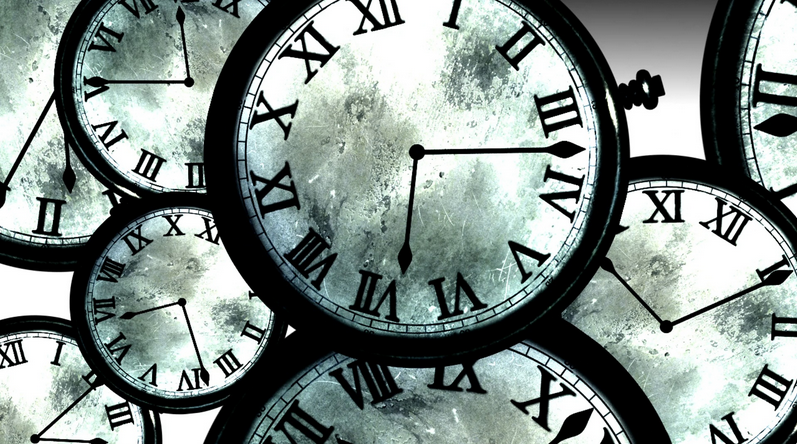
Clock faces

The Perception of Time is Relative

We often perceive time as expanding or contracting based on our emotions, and our perception creates our reality. Authors have used this to their advantage for quite some time. Telling a story in real-time slows the pace down to focus on a character or story element, or maybe to build suspense. Writers have their ways of accelerating the pace to adjust perception and influence emotion too. Further proof that the pen, and the keyboard, are mightier than the sword. And quantum physics…apparently.

Manipulating fictional time, at its best, keeps readers turning the pages. I wrote a post on Time as a Story Element that discusses these techniques in greater detail, if you’re interested.

Lost Time: Timekeeper

What if time didn’t just expand and contract, but could actually be lost? As in disappear. Vanish. Just freaking gone.

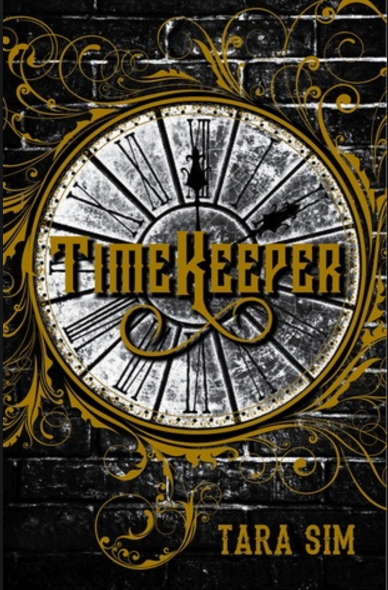
TimekeeperAn intriguing predicament that I hadn’t considered, until I picked up Timekeeper by Tara Sim. The first lines of this alternate Victorian era London run by clock towers cut to the chase:

Two o’clock was missing. Danny wanted it to be a joke. Hours didn’t just disappear.

But they can, and did, in a world where clock towers literally control time. When a clock tower breaks, so does time. And when a clock tower is destroyed, time stops completely. This clockpunk fantasy is infused with magic, woven through with myth, and spiced with mayhem. Danny, our hero, is a clock Mechanic charged with ensuring that time flows according to the natural order. The Mechanics inherit the job, because they can actually feel the strands of time and the weave of its fabric. The existential truths layered throughout the story provide satisfying believability and depth.

Time was everywhere and nowhere at once, making the moment last an eternity.

Stuck in Time: Groundhog Day

There is broken time, and then there is being stuck in time on infinite repeat. A post on fictional time and relativity just isn’t complete without a mention of one of my favorite movies: Groundhog Day.

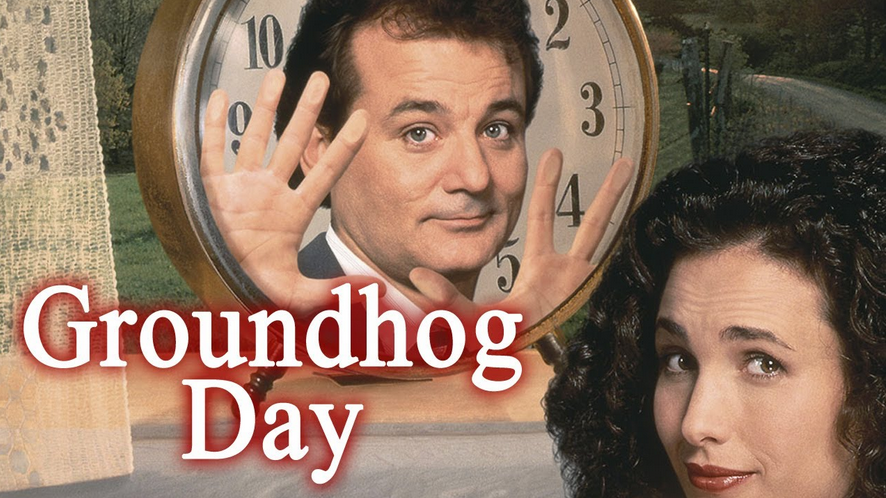
Groundhog Day movie

Phil (Bill Murray), an egotistical curmudgeon of a weatherman, gets stuck living Groundhog Day in Punxsutawney, Pennsylvania over, and over, and over…until he finally gets it right. Which for him, takes some doing. I could go on and on and on about this movie, but you’ll enjoy watching the following trailer much more. May time forever flow in your favor.


Word Wizardry ~ The Power of Punchy Dialog

03 Monday Oct 2016

Posted by Elizabeth Fais in Fiction, Television, Writing

≈ 2 Comments

Tags

Allison Janney, Bradley Whitford, Buffy the Vampire Slayer, C.J. Cregg, dialog, Donna Moss, Elizabeth Fais, Fiction, Janel Moloney, Josh Lyman, Joss Whedon, Martin Sheen, President Bartlet, Rob Lowe, Sam Seaborn, Stockard Channing, Story, Television, The West Wing, Writing

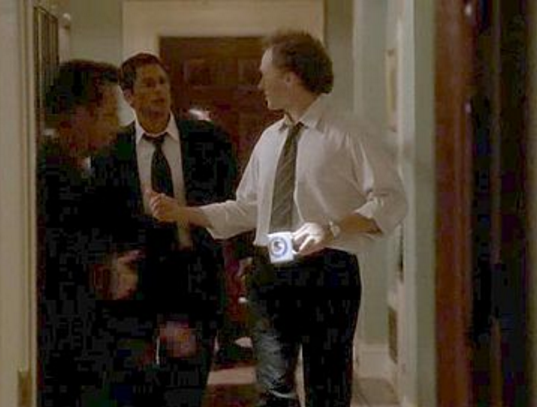
Dialog molds characters into three-dimensions. What characters say, as well as what they don’t, reveals who they are. Dialog has the power to make a story and its characters memorable, whether in books, theater, film, or television. I shamelessly study any medium that’s raised the dialog bar. My current obsession interest is The West Wing.

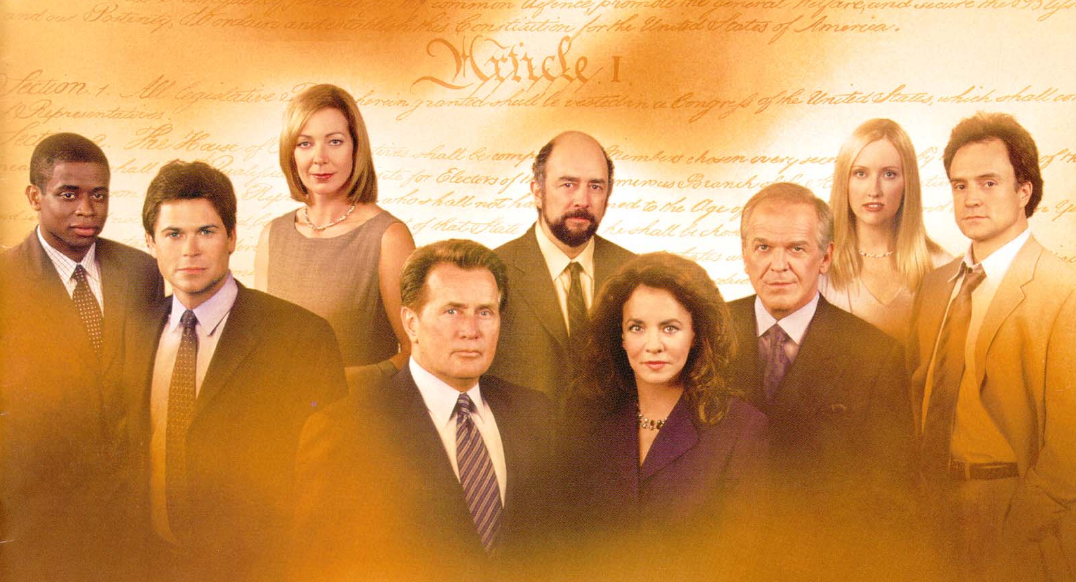
The West Wing cast

The Magic of the Cutting Quip

I’m a little (?) late to the game on The West Wing (1999-2006). However, it is still in high westwing_joshsam1pngdemand on Netflix, which is a testament to its raise-the-bar quality.

The snappy dialog, and the aplomb with which it is delivered, hooked me in the first episode. Centered around the day-to-day happenings surrounding the President of the United States and his staff, The West Wing tackles serious topics without sinking into the morose. The sheer genius of the dialog and its delivery balanced intense drama with just-right humor, while revealing nuanced layers character traits.

Such as when Sam Seaborn, Deputy White House Communications Director in the administration of President Josiah “Jed” Bartlet, deflects an attack of an irate woman for his stance on school funding:

Woman: Don’t play dumb with me.
Sam: I am dumb. Most of the time I’m playing smart.

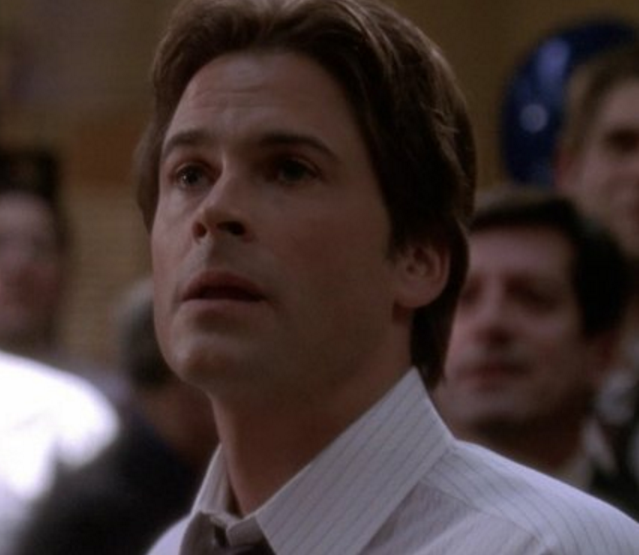
Then there were the typos in the State of the Union Address. Sam Seaborn, headshotAs a writer, I may find typos funnier than most. But still. It’s The White House. Monumental decisions that affect millions of people go down there every day. So misspelled words in the State of the Union Address? Kind of (?) funny, if not a little embarrassing.

The following exchange happened during a read-through of the President’s State of the Union speech:

President: I’m proud to report our country’s stranger than it was a year ago?
Sam: Stronger. That’s a typo.
President: It could go either way.

Then later in the same episode:

First Lady: Why is hall#wed spelled with a pound sign in the middle of it?
President: I stopped asking those questions.

Dialog “Do’s” from The West Wing

  • Reveal personality quirks.
    Josh Lyman, White House Deputy Chief of Staff, and Donna Moss, his assistant, were arguing about her not checking his lunch order to make sure his hamburger was burned-to-a-crisp. Josh elaborates, “I like my hamburger so hard that if you drop it on the floor it breaks.”
  • Show character strengths.
    Josh threatens to fire Donna when she pushes back on a request that’s obviously not important. To which she replies, “You’ve already fired me three times. I’m impervious.” Then she walks away, declaring “Impervious.”
  • Expose character dynamics.
    C.J. Cregg, White House Press Secretary, intentionally annoys Josh in a press briefing by saying, “…the theoretical psychics at Cal Tech Nuclear Lab… You know what? I’m pretty sure that’s supposed to be physicists.”
  • Engender empathy in a character.
    An international incident is in play, the President suffered a medical emergency, the State of the Union Address is that evening, and everyone keeps asking him if he’s taking his medication. To ease his staff’s worry, President Bartlet responds with humor, “Is it possible I’m taking something called euthanasia?” Sam replies, “Echinacea.” The President smiles, “That sounds more like it.”
  • Lighten an intense scene.
    Every episode of The West Wing uses witty banter to lighten intense scenes. Joss Whedon—creator of Buffy the Vampire Slayer—said it best: “Make it dark, make it grim, make it tough, but then, for the love of God, tell a joke.”

WORD CRIMES: RU Guilty 2?

18 Monday Jul 2016

Posted by Elizabeth Fais in Funny Videos, Humor, Writing

≈ Leave a comment

Tags

grammar, Weird Al Yankovic, Word Crimes, Writing

Taking Down Word Crimes ! @ ; # } ?

There are no words … only snorts … for Weird Al’s war on Word Crimes.  The funniest thing I’ve seen in a long, long time.

And yes, I snorted. More than once :-O

It’s quite apparent,
your grammar’s errant.
You’re incoherant…

Sing it sister…dance it mister…

Word Crimes

It’s time to take down Word Crimes!


Shocking! Similes Gone Wrong, Very Wrong

14 Monday Mar 2016

Posted by Elizabeth Fais in English, Humor, Writing

≈ 2 Comments

Tags

creative writing, Elizabeth Fais, English, essays, Fiction, high school, Humor, short stories, simile, Writing

A simile is a literary device used to make a comparison by showing the similarities Surprised boyof two different things. A simile draws a resemblance, in most cases using the words like or as, to create a direct comparison.

  • She swam as gracefully as a swan.
  • Confidence radiated off him like he owned the place, even though he was just a waiter.
  • Shall I compare thee to a summer’s day? Thou art more lovely and more temperate. — William Shakespeare, Sonnet 18

When used correctly, similes are a powerful descriptive tool that engages readers, encouraging the imagination. Misused, similes can be nothing short of hilarious, maybe even shocking.

High School Hilarity

laughing catIn the process of cleaning out a file cabinet, I found a folder full of “funny stuff” that floated around the Internet back in the 90’s. I wish I could take credit for compiling this list of high school’s most hilarious similes, but I can’t. I don’t even know the originator, or I’d give them credit.

Each of the following similes was taken from an actual high school essay or short story, punctuation and all. What makes them so hilarious is their innocence, not their ignorance. Enjoy!

  • The thunder was ominous-sounding, much like the sound of a thin sheet of metal being shaken backstage during the storm scene in a play.
  • She caught your eye like one of those pointy hook latches that used to dangle from screen doors and would fly up whenever you banged the door open again.
  • The little boat gently drifted across the pond exactly the way a bowling ball wouldn’t.
  • McBride fell 12 stories, hitting the pavement like a Hefty bag filled with vegetable soup.
  • The politician was gone  but unnoticed, like the period after the Dr. on a Dr Pepper can.
  • Her hair glistened in the rain like nose hair after a sneeze.
  • John and Mary had never met. They were like two hummingbirds who had also never met.
  • Her vocabulary was as bad as, whatever.
  • The hailstones leaped from the pavement, just like maggots when you fry them in hot grease.
  • Her date was pleasant enough, but she knew that if her life was a movie, this guy would be buried in the credits as something like “second tall man”.
  • Long separated by cruel fate, the star-crossed lovers race across the grassy field toward each other like two freight trains, one having left Cleveland at 6:36 p.m. traveling at 55 mph, the other from Topeka at 4:19 p.m. at a speed of 35 mph.
  • His thoughts tumbled in his head, making and breaking alliances like underpants in a dryer without Cling Free.

[PC: morguefile.com]

Secret Ingredients of a Satisfying Ending

03 Sunday Jan 2016

Posted by Elizabeth Fais in New York City, Story, Writing

≈ Leave a comment

Tags

Elizabeth Burke, Elizabeth Fais, endings, FBI, Mozzie, Neil Caffrey, New York City, NYC, Peter Burke, Story, story elements, White Collar, Writing

A great beginning keeps readers turning the pages. A great ending builds a fan base, because readers will be thinking about the book long after turning the last page. We’ve all experienced the satisfaction of a perfect ending to a book, movie, or television series. But what’s the secret?

What makes the ending of one story great, while another story’s ending leaves us unfulfilled?

The finale of the TV series WHITE COLLAR helped solve this mystery for me. The series ending was so perfect, I couldn’t help breaking it down, analyzing the elements that lead up to a culmination of satisfaction.

But first, an overview of the series for those who may not be familiar with the main characters and premise of the series.

White Collar ~ The Series

Cast of White Collar

The third time turns out to be the charm for criminal Neal Caffrey. He has been eluding FBI agent Peter Burke for years, a run that finally comes to an end with his capture. But after the resourceful prisoner escapes from a maximum-security facility, then is nabbed once again by Burke, Caffrey suggests a different end-game: In return for freedom, he’ll help the Feds catch long-sought criminals. Though skeptical, Burke soon realizes that Caffrey’s instincts and insight are a rare commodity. Caffrey’s trusted friend and co-conspirator with ties to the criminal underworld, Mozzie, also becomes a useful source for Burke and the FBI. [Series Synopsis]

The series was well written with engaging characters and story lines, and plot threads with enough twists to keep the most agile guessing. Mozzie, Neil’s sidekick, added a delightful streak of rebellious quirkiness for comic relief.

Ingredients of a Great Ending

*** SPOILER ALERT ***
If you don’t want to know how White Collar ends, STOP now.

Ingredients for a satisfying ending, with examples from White Collar:

  1. The promise of the premise for the story and the genre is paid off. The FBI promised Neil Caffrey his freedom if he was instrumental in helping them solve their toughest ‘white collar’ cases. To satisfy the promise for this genre, justice had to be served to this end. Neil does go free after making the ultimate sacrifice when pulling off a sting on a treacherous ring of international thieves.
  2. The main character’s arc (Neil Caffrey) is completed in a believable fashion. Neil’s loyalty to Peter (as an FBI representative) and his wife Elizabeth becomes true, when he realizes his freedom ultimately threatens the lives of the couple and their unborn child. Neil also shows deep remorse when his actions hurt an innocent young woman he’s forced to befriend to bring down the thieves. For the first time he questions his life and the role he plays with the FBI. The completion of the character arcs for Peter and Elizabeth Burke, and of course, Mozzie, though less dramatic, are equally rewarding. It would take too long to explain them all here in detail. Trust me. Better yet, watch the series.
  3. The main character earns the payoff, internally as well as externally. In the end, Neil overcomes his inability to trust Peter (as an FBI representative), and puts the safety and well-being of his friends before his own. To ensure their safety, Neil secretly masterminds the final phase of the sting. His selfless actions earn him his freedom and happiness.
  4. There’s a significant sacrifice for the pay off. For Neil to earn his freedom (payoff), he made the ultimate sacrifice. He fakes his own death to ensure the lifelong safety of his friends—sparing them from retaliation by the gang members caught in the sting. Neil can never talk to or see the people who mean the most to him again. The ingenious method he uses to fake his death added to the overall satisfaction.
  5. Enough is left to the imagination without leaving unanswered questions. Everything isn’t tied up neatly, leaving “what happens next” up to the audience’s imagination. In the final scenes, Peter Burke discovers clues leading to the storage locker Neil secretly rented during the initial planning of the sting. What Peter finds gives him insights into how Neil faked his death, thus assuaging his remorse over the loss of his friend. In the final shot, we see Neil strolling down a Parisian side street wearing his fedora, a satisfied smile on his face and a carefree spring in his step.


If you have an a Perfect ending Element to add to the list, Please do!


Time as a Story Element ~ Setting, Tone, Atmosphere, & Urgency

22 Thursday Oct 2015

Posted by Elizabeth Fais in Story, Writing

≈ 2 Comments

Tags

A Long Way From Chicago, Back to the Future, Bruce Willis, Die Hard, Edward V, Elizabeth Fais, Found, Historical Fiction, Home Alone, Margaret Peterson Haddix, Marty McFly, Michael J. Fox, Missing series, NaNoWriMo, Richard of Shrewsbury Duke of York, Richard Peck, seasonal, Sent, Story, story elements, ticking-clock, time, Writing

clockNational Novel Writing Month (NANOWRIMO) is just around the corner—a yearly event in which writers commit to completing a 50,000 word (or more) novel during the month of November. One month. One book. Not a lot of time. So, time as a story element seems like an appropriate blog topic.

Stories unfold over a set interval of time. That’s a given. What I want to discuss is how different types of time can be used as story elements to set mood, further plot, and deepen character. [pc: morguefile.com]

Types of Time

There are four types of time that can be used to add atmosphere, set tone, and increase urgency in a story:

  • Clock time:  Sets mood and creates suspense.
  • Calendar time: Creates a context for events, such as prom, homecoming, and graduation.
  • Seasonal time: Creates atmosphere, as well as providing a backdrop and reason for cultural events and activities.
  • Historical time: Establishes a context for social ideas, behaviors, and attitudes.

These elements can be combined, as you’ll see in the following examples.

Seasonal Atmosphere

Calendar and seasonal time are a natural combination. A season is technicallyCover for A Long Way From Chicago by Richard Peck three months long, allowing the story to unfold during time. Seasonal time can be used to set atmosphere and integrate events particular to the season to further the story. One great example is A Long Way From Chicago by Richard Peck. The story begins in the fall, with a Halloween outhouse scene that is laugh-out-loud hilarious, while also adding depth to the characters.

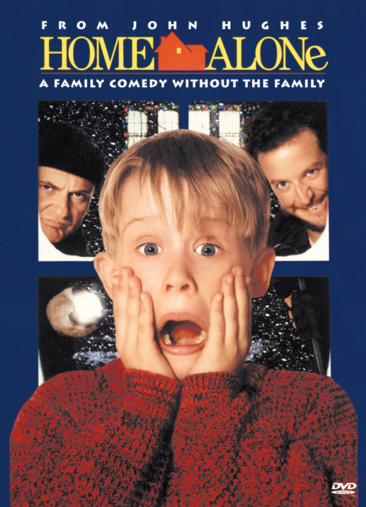
Home Alone movie posterSeasonal events can also introduce urgency that influence characters’ actions. The movie Home Alone is a perfect example.

When a young boy is accidentally left behind at Christmas–while the family travels to Paris–he is forced to defend their house against burglars, with side-splittingly funny results.

Ticking-Clock ~ Urgency and/or Advocate

You don’t really know a person until you see how they react under extreme pressure. DieHardWhich is why a ticking clock—a figurative pressure cooker—is a great way to reveal character strengths and flaws.

The ticking-clock can be combined with seasonal time. The Christmas party setting in the movie Die Hard is the perfect excuse for the entire company to be at the office headquarters at night with minimal security. It also provides a reason for NYC cop John McClane (Bruce Willis)–the estranged husband of a corporate VP, Holly McClane–to be visiting, so he can then take down the bad guys in badass style.

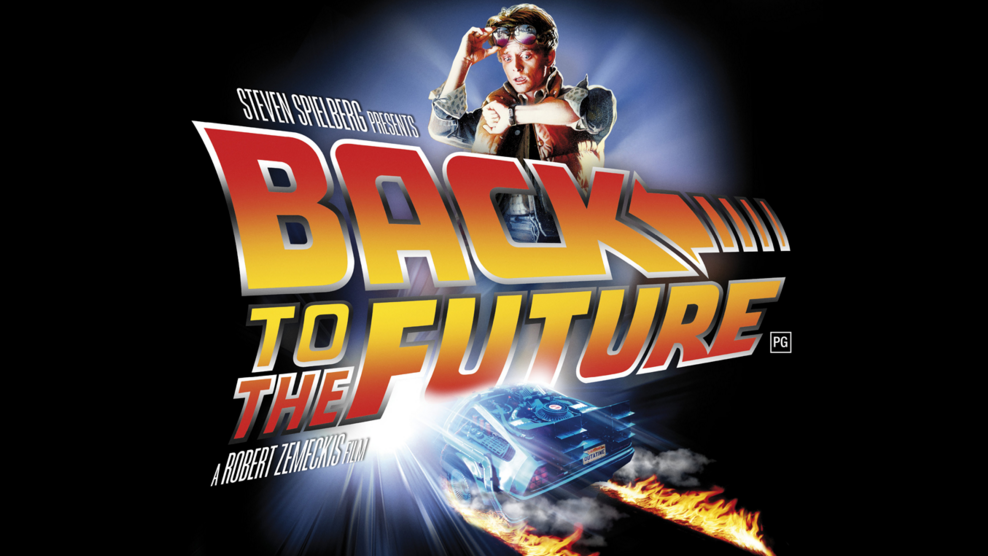
In the movie Back to the Future, time is both an advocate and adversary. Time is the vehicle (no pun intended) by which teenager Marty McFly (Michael J. Fox) travels back into the past to alter the developmental paths of his parents to create a better future for the family. The ticking-clock is BackToTheFuturethe electrical storm required for Marty to escape the past and get back to the future.

As the electrical storm gathers, Marty arrives at the clock tower as a falling branch disconnects the wire from the tower to the street. As Marty races the DeLorean toward the clock tower, Doc climbs across the clock to reconnect the cable. The lightning strikes, sending Marty back to 1985, but not before he sees Doc killed. Marty soon discovers Doc actually survived because of the bullet-proof vest he was wearing. Doc takes Marty home to 1985, then sets off for October 21, 2015 (Back to the Future Day!).

Historical Time

Sent coverHistorical time can define setting, social interactions, attitudes, laws, and mores. There are any number of terrific novels that transport the reader to a different historic time to experience life in another era. What I like about Margaret Haddix‘s Missing series, is the unique spin on historical fiction with a time travel twist.

In Found, the first book in the series, Haddix establishes the plausibility of time travel and the anticipation that the main characters are not who they think they are.  In the second book, Sent, Chip, Alex, Jonah, and Katherine land in 1483 in the Tower of London where the imprisoned Edward and Richard fearfully await their fates. Chip and Alex soon realize that they are princes Edward V and Richard of Shrewsbury, Duke of York–come back from the future. They watch history unfold, trying to save the princes without altering time in a way that would kill them anyway. This book is rich with accurate historical details that bring the setting and characters to life. It also poses a unique possibility regarding the actual fates of Edward and Richard.


Fiction Writing ~ Socially Acceptable Insanity

09 Wednesday Sep 2015

Posted by Elizabeth Fais in Fiction, Story, Writing

≈ 4 Comments

Tags

butter beer, Diagon Alley, Elizabeth Fais, Fiction, Genovia, Hogwarts, J.K. Rowling, Judy Blume, Meg Cabot, Ray Bradbury, Reading, SCBWI, Story, suspension of disbelief, Universal Studios, Wizarding World of Harry Potter, Writing

Kidding … But Only Just

A while back I tweeted, “Fiction writing is a socially acceptable form of insanity.” I was only half-joking, and was surprised by how many people seemed to agree with me. Later I discovered that some famous authors gave credence to that view also.

J.K. Rowling said that she is “perfectly happy sitting alone in a room, making things up in her head all day.” We applaud her because she’s written stories many of us hold dear. If a non-writer type person made the same statement, we’d worry for them.

Then there’s Ray Bradbury, who said pretty much the same thing:

Ray Bradbury quote

Keeping It Real

When fiction is done well, readers suspend disbelief, their world drops away, and the story becomes real…the characters, the setting, everything about the time and place. For an author to create a story that convincing, the world and characters have to become real for them as well. As Robert Frost said:

No tears in the writer, no tears in the reader. No surprise in the writer, no surprise in the reader.

At a Society of Children’s Book Writers and Illustrators (SCBWI) Summer Conference a few years back, Judy Blume made a surprise appearance and added one better to Robert Frost’s quote:Marble statue

“If the author isn’t turned on when writing a love scene, the reader won’t be turned on either.”

The audience hooted, because it’s so true. If you don’t feel the spark when you’re writing a scene, the reader won’t feel it either.

The same standard of realness holds true for any art form, if it is to emotionally move its audience … whether it’s music, the visual or performing arts. To transmit a feeling through their work, the artist must delve into the emotion. One glance at the statue in this image, and it’s obvious the sculptor felt love on a deep, spiritual level. [PC: morguefile.com]

Reading ~ Socially Acceptable Psychosis

I came across the following description of reading and laughed out loud, because it’s a perfect match for psychosis:

…staring at marked slices of trees and hallucinating vividly for hours on end.

When fiction is done right, this is the effect is has on the reader. We become so fully engaged in the story…everything about it becomes real.

The reality a story creates doesn’t cease when a book is finished…for the reader or the writer. The story and its characters take on a life of their own. So much so, that many of us wish fictional characters Happy Birthday on social media (you know you do too, admit it).

The world the characters inhabit becomes equally real. Why else would thousands of people trek to Universal Studios’ Wizarding World of Harry Potter, in Orlando (and soon in Los Angeles) to visit Hogwarts, Diagon Alley, and drink butter beer? Because that world is real to those who love those books.

Meg Cabot recently tweeted about actually googling the weather in Genovia (Princess Mia’s country). I love this. I can so totally relate, after having read the entire Princess Diaries series. This is fiction done right!

Meg Cabot tweet


The Illusive “Voice” ~ What Editors and Agents Want & Writers Seek

20 Monday Apr 2015

Posted by Elizabeth Fais in Character, Fiction, Writing

≈ 9 Comments

Tags

Character, Elizabeth Fais, Fiction, Kathleen Applegate, Meg Cabot, Rachel Hawkins, Rebel Belle, The One And Only Ivan, The Princess Diaries, Voice, Writing

Which way?At my first writing conference several years ago, editors and agents told the crowded room of enthusiastic writers that they were looking for “a unique voice”. I had no idea what that meant.

My response: “What the heck is that, and how to I get one?”

Luckily, I had enough sense not to say that out loud. Instead, I kept writing and going to conferences, and eventually I found my “voice”.

If you’ve been writing  fiction for some time, you’ve most likely developed your unique voice. This post is for anyone in the early stages of their writing journey, and are too shy to ask, “what the heck is voice?”

What is “Voice” anyway?

Voice, quite simply, is character and personality.

Voice is the rhythm, tempo, and style that sparks with originality, and projects emotion and tone. Voice blends the personality of the writer with that of the characters in a story.

“What’s so hard about that?” I just have to be myself,” you might be thinking.

True. But in good fiction, characters, events, emotions, and voice need to be larger than life. Translating personality onto the page in a way that is authentic and brings characters to life, can an obscure path to navigate. Trust me on this.

I don’t know about you, but talking about concepts only takes me so far. I need examples to ground ideas in something practical. The following examples of voice are in the first person, so the personality (voice) is easier to ascertain. Third person and omniscient points of view also have distinctive voices, but we’ll save that for another time.

The Princess Diaries

The book series was as popular as the movies, because of the unique voice Meg Cabot brings to her characters. Mia may be a princess, but her voice is that of a quirky, insecure, and slightly irreverent teenager. If you haven’t read the series, it’s a must for character study and voice.

But a PRINCE? Of a whole COUNTRY? I mean, I Princess Diaries DVknew Dad was in politics, and of course I knew he had money–how many kids at my school have summer homes in France? Martha’s Vineyard, maybe, but not France.

So what I want to know is, if my dad’s an actual prince, how come I have to learn Algebra? I mean, seriously.


The One and Only Ivan

Katherine Applegate uses the voice of Ivan to tell his heartfelt story. Ivan’s honest simplicity pulls us close and holds us there. Ivan is as believable (as a narrator) as his voice is unique.

 I am Ivan. I am a gorilla.TheOneAndOnlyIvan_cover

It’s not as easy as it looks.

People call me the Freeway Gorilla. The Ape at Exit 8. The One and Only Ivan, Mighty Silverback.

The names are mine. But they are not me. I am Ivan, just Ivan, only Ivan.


Rebel Belle

Rachel Hawkins infuses Southern charm and etiquette in the voice of her characters, in this fun and quirky, kick-butt tale.

Now this is when it really gets weird. I know, I know, dead janitor in disguise, killer history teacher, how much weirder could it get?

Lots. Trust me.

When Dr. DuPont put that sword–well, scimitar–on my neck, I didn’t feel scared, like, at all. Instead, I felt that tingle in my chest again, only this time, it was more like this … energy. …

I didn’t knee him in the groin, although I didn’t rule that move out. Instead I … ugh, this is so embarrassing.

I head-butted him.

I know, like a soccer hooligan or something.

Rebel Belle, by Rachel Hawkins

How do you find your voice?

You may be thinking, “Wow, those are great examples. But how do I find my voice?”

It’s a simple, but not quick. Don’t hate me:

Read. Read. Read, and read some more.

Read everything in your genre, then read authors in other genres. When you find an author whose style resonates with you, read everything they’ve ever written. Then read those books again. By reading and rereading their words, you absorb the rhythm and style of the prose. It’s learning through osmosis.

Voice isn’t a static thing, though. It’s a quality that evolves with the author, as they hone and polish their craft. That’s what’s so wonderful about writing. It’s not a static process. There’s always room for growth, for improvement.


Which author’s voice resonates with you?


Fanning the Creative Flame ~ Why Conferences Matter

28 Saturday Mar 2015

Posted by Elizabeth Fais in Conferences, Inspiration, SCBWI, Writing

≈ 2 Comments

Tags

Asilomar, E.B. Lewis, Golden Gate Conference, Illustrators, Inspiration, SCBWI, SCBWI San Francisco/South, Society of Children's Book Writers and Illustrators, Writing

Asilomar Conference Grounds, Pacific Grove, CAThe SCBWI San Francisco/South Golden Gate Conference (at Asilomar) was earlier this month, my first conference in over a year. Such an amazing conference! I can’t believe I was so short-sighted, to go that long without attending a writing conference.

Oh sure, I had the standard rational excuses, that made perfect sense. Taking a year off from writing conferences would save time, money, and effort that would further my work in progress.

What I totally forgot, was how invaluable it is to connect with people who share the same passion. Writing can be such a solitary journey. I always come away from a conference with my creative energy renewed, and a feeling of deep kinship with others who are called to the writing journey.

Motivational Milestones & Inspiring Insights

Initially, I think of  conferences as motivational milestones for my current work in progress (WIP). I admit I am motivated by fear. So when I sign up for a professional critique, I am dangling a figurative hatchet over my head. I will work harder than ever to deliver the best possible pages by the submission deadline, out of fear of public humiliation. I put my self through this trial, because feedback from the editor of a major publishing house is invaluable. I always come away from such a critique with tools for improving my craft, and a clear path for strengthening my story.

Just as important as professional level feedback though, are the insights that arise from the talks and workshops given by the conference’s faculty.

Award winning illustrator E.B. Lewis reminded us all, writers and illustrators alike that:

We’re in the business of amazement.

Jodell Sadler, of Sadler Children’s Literary, invited us to see:

Language is music  … music is language.

E.B. Lewis delivered the most profound insight (for me) with his presentation on the language of pictures. He explained the components of an image that make it a story: narrative (plot), emotion, and anticipation (what’s next). A light bulb went on in my head when I realized that these are the same elements that comprise a well crafted scene in fiction.

Stories aren’t bound by format or medium. E.B. Lewis told us of a young boy who said he “writes the pictures”. We writers, paint with words.

E.B. Lewis, profile picture and quote

Synergy Happens

Creativity is contagious, and the Golden Gate Conference Brochure cover synergy at conferences is nothing short of miraculous. Sparkly new ideas dart about like fireflies, lighting new pathways of possibility.

I learn something from everyone I meet at a conference, and the connections forged can blossom into friendships that last years. 

If you’ve ever thought about writing for young readers, join SCBWI now. SCBWI provides extensive professional resources to its members. You won’t find a more welcoming and supportive group.  And they’re super fun.

I feel fortunate to have found the Society of Children’s Book Writers and Illustrators (SCBWI). They are my tribe, my people.

[All images are my own]


← Older posts
Newer posts →

Calendar

December 2025
M T W T F S S
1234567
891011121314
15161718192021
22232425262728
293031  
« Nov    

Enter your email address to have new posts sent directly to your inbox.

Join 236 other subscribers

It's really me!

  • Elizabeth Fais's avatar Elizabeth Fais

Life is Tweet

Follow @elizabethfais

Recent Posts

  • The true POWER of stories
  • Wisdom of Richard Peck ~ Writing for young readers
  • The Writer and Rabbit Who Saved the Countryside
  • 3 TREE-rific Informational Picture Books
  • Musings from the Writing Cave
  • MG Review ~ HOW I BECAME A SPY
  • The “Creative High” is real!

Past Posts

Officially SCBWI

Reading Fun

Advice for Writers

I Write for Apples

Author Photos

Olivia Marshall

Categories

Amazing but true! Animals Animation Blake Snyder Book Reviews Books Cats Character Dancing Disneyland Elizabeth Fais Fiction Fun Facts Funny Videos Giveaway Giving Back Holiday Humor Inspiration Middle Grade Movies Music Mystery Nonfiction Paranormal Reading Romance SCBWI Shakespeare Story Supernatural Thriller Uncategorized Winner! Writing YA YAppiest Young Adult Zombies

Blog at WordPress.com.

  • Subscribe Subscribed
    • Elizabeth Fais
    • Join 236 other subscribers
    • Already have a WordPress.com account? Log in now.
    • Elizabeth Fais
    • Subscribe Subscribed
    • Sign up
    • Log in
    • Report this content
    • View site in Reader
    • Manage subscriptions
    • Collapse this bar
 

Loading Comments...