Inspiration or Envy? We Have a Choice

Tags

, , , , , , ,

It’s conference time again, folks. And for me this is a benchmark-time-of-year. It’s when I assess the goals I made last year, and set new ones. You know…

  • Land “the” uber-agent
  • Lasso a ten-figure book deal
  • Out sell the Harry Potter series, by A LOT
  • Win the Pulitzer
  • Dance with the Stars (Hugh Jackman or Keanu Reeves, of course)

OK, I’m being a tad facetious. But that’s because this topic is usually charged with emotion. Whether we admit it or not, deep down we all want to succeed.

“Hitch your wagon to a star.” That’s what my dad always said. And he was right. If you don’t dare to dream big, you’ll never reach those heights.

Setting goals is good. But what happens when we got to a conference and meet up with writers we haven’t seen since the previous year’s conference, and they’ve landed “the” uber-agent, lassoed an umpteen-figure book deal, and are sharing the stage with J. K. Rowling on Friday night?

As I see it, we have two choices…

  1. Succumb to the Ogre of Envy and plummet into the Dungeon of Despair.
  2. Be inspired, recognizing their success as proof that our goals are attainable.

Hear me out…

Door #1: Follow the Ogre of Envy

Sure. It’s tempting to take the easy route and throw ourselves a Personal Pity Party. But before plunging to our doom, let’s look at what this option robs us of. Hanging out with the Ogre of Envy is the quickest way NOT to accomplish our goals. Nothing stunts motivation and creativity more than buying into negativity. What’s behind this door can only hold us back. Not to mention that if we stay in the dungeon long enough, we’ll end up looking like the ogre.

Not a good look on anyone. Just sayin’.

Door #2: Be Inspired

This choice may seem hard at first, but using the accomplishments of others as proof that our goals are possible is the only real way to win. The down low on this must do is … it’s the quickest way to be successful AND be happy along the way.

It’s no secret that inspiration opens the doors of possibility and potential. It helps too, if we to take “time” out of the (success) equation. How fast we get to the next milestone isn’t as important as accomplishing the goal to the best of our ability. Always remember: Measuring our progress against others stifles inspiration, and is a sure-fire shortcut to a permanent stay in the ogre’s dungeon. Don’t do it!

Staying Inspired

Being inspired for a few days or weeks is one thing. Staying inspired over the long haul can take serious determination. But it’s always worth the effort. In fact, it’s the best investment you can make in your writing.

One thing that’s worked for me is following authors whose work I admire on Twitter and reading their blogs. Invariably I learn the story behind their journey to publication, and see the truth in the saying: “There is no such thing as an overnight success.”

Ally Carter, author of the Gallagher Girl series, posted a wonderful letter on her blog recently, a letter to herself as a “baby author” circa 2004. It’s a wonderful piece filled with wisdom and inspiration for any writer, no matter where you are on your journey.

Meg Cabot, author of the Princess Diaries series, is another inspiration for me. Her web site has a page of frequently asked questions. There, she states that she queried agents for three years straight before landing her agent, and it was another year before she signed her first book contract. On a live Goodreads interview, Meg said she worked at a day-job for ten years before quitting to write full-time. Watch the interview by clicking these links:

When all else fails …

I read a quote from our 16th President that I have pasted on my wall:

Always bear in mind that your resolution to succeed is more important than any one thing. –Abraham Lincoln

What do you do to stay inspired in your writing?

Inquiring minds want to know!

Super Glue Reader Rapport

Tags

, , ,

Instant Character Bonding … In One Scene

Hooking a reader’s interest starts with the first line. Getting the reader to connect with your character on an emotional level so they stay with the story has to follow immediately. But how? That’s what I wanted to know.

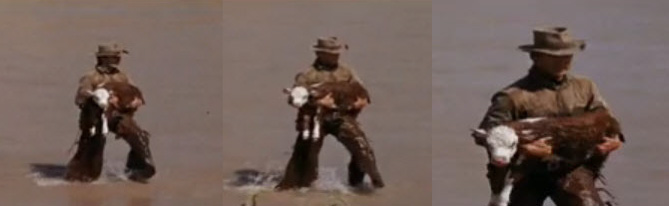
Who knew the answer was in the first sixty seconds of the classic Clint Eastwood film “Hang ‘Em High”?

It’s what Blake Snyder calls a Save the Cat! moment.

In Blake Snyder’s words, a Save the Cat scene is…

…where we meet the hero and he does something — like save a cat — that defines who he is and makes us, the audience, like him.

And OK, so Clint saves a calf, not a cat? It still has the same effect. That one simple act of compassion makes us like him. We instantly care about what happens to him. We’re rooting for him throughout the rest of one of the roughest, toughest, shoot-em-uppest westerns of all time.

We gladly signed on to Team Clint all because he waded out into the river and saved a stranded calf. (Check out the Novel Dog narration of the clip below.)


So… what’s your favorite Save the Cat scene?

In a movie or a book … Inquiring minds want to know!


Historic Roller Coasters: Beaches, Boardwalks, and Abominable Bobsleds

Tags

, , , , , , , , , ,

California Screaming

A delectable post on All Things Summer (by Tami Clayton) set me thinking… What’s my  most quintessential summer experience? And because I’m a total adventure geek, the answer is two words: Roller Coaster!

My love affair with roller coasters is limited to the historic kind, however. Sorry, folks. I’m not a fan of the super-thrill-whirl-and-hurl roller coasters of today. I much prefer the sky-high rickety old wooden structures from the previous century. [photo credit] Maybe that’s because I grew up in a small town in Southern California, that was a two-hour drive from San Diego.

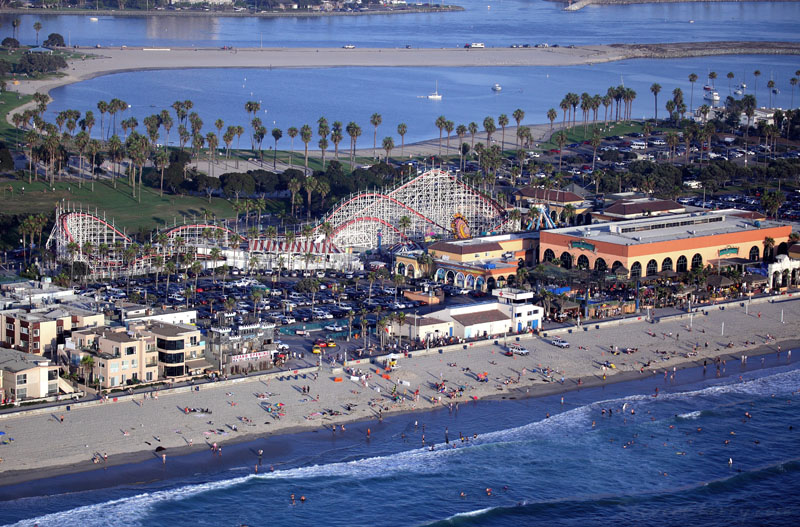
That’s where my adrenaline-ride love affair began … at Belmont Park in Mission Beach. Because THE BEST DAY EVER, was a trip to the beach and riding the roller coaster. Oh yeah, and a chocolate milk shake was part of that package too!

Twin Giant Dippers

San Diego’s Giant Dipper, also known as the Mission Beach Roller Coaster, was built in 1925.  The original coaster was constructed by a crew of 100 to 150 people in two weeks. When the coaster opened on July 4, 1925, it was the centerpiece for Belmont Park. The park was a huge hit in the 1940’s and 1950’s, but fell into disrepair in the late 1960’s. The coaster finally closed in 1976, and was scheduled to be torn down in the early 1980’s. [photo credit]

Luckily, a group of citizens formed the “Save the Coaster Committee”, intervening in the demolition of the Giant Dipper, and had it designated as a National Historic Landmark in 1987. The coaster was restored, to the tune of two million dollars, and re-opened on August 11, 1990.

The Santa Cruz Boardwalk Giant Dipper is the twin sister of the San Diego Giant Dipper. And I can say from first-hand experience, that the Santa Cruz coaster is every bit as much of a thrill ride as its sister!

The Santa Cruz Giant Dipper opened on May 17, 1924, and is the fifth-oldest roller coaster in the United States today. [photo credit]

Over 55 million riders have ridden the coaster since its opening. The United States National Park Service recognized the Giant Dipper as part of a National Historic Landmark also covering the nearby Looff carousel in 1987. [Wikipedia]

The Santa Cruz and San Diego Giant Dippers are the only remaining coasters on the West Coast built by the noted coaster builders Prior and Church.

But hang on to your hats folks …  there’s one coaster that deserves a mention, even if it’s not “officially” historic …

The Matterhorn Bobsleds, Disneyland Resort

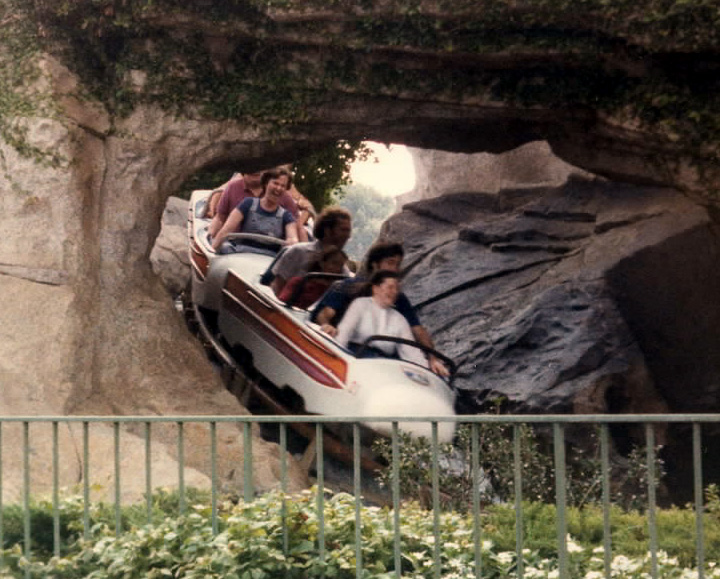
What the Matterhorn Bobsleds ride lacks in historic clout, it more than makes up for in kitsch. And I mean that in the BEST possible way. Because the Matterhorn Bobsleds are awesome! [photo credit]

Walt Disney was inspired to build a miniature of the Matterhorn at his park in Anaheim, while filming the live-action drama “Third Man on the Mountain” in Zermatt, Switzerland (1956). Under Walt’s direction, his team of Imagineers recreated the mountain to scale (exactly 100 times shorter than Switzerland’s 14,700-foot-tall original), and designed special tubular steel tracks for the coaster to simulate the smooth motions of bobsleds gliding over ice. The ride contains two separate tracks that intertwine with each other as they descend the mountain, another stroke of genius by the man with the magic. The ride opened for the first time in 1959, and has been a favorite ever since.

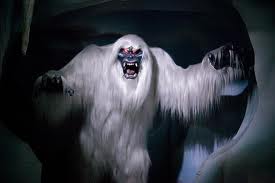
The Matterhorn underwent its first major renovations in 1978, with the significant addition of the Abominable Snowman. The Audio-Animatronic creature roars at passing bobsledder as he glares with red glowing eyes. As if to say, “Get the hell off my mountain!” Uh, huh. Like that’s really working, Big Guy. I don’t know about you, but he’s one the main draws for me on that ride. The Skyway attraction, the buckets that passed through the middle of the mountain, were taken down in November 1994. And in 1995 the Frank Wells Lost Expedition tribute was added in honor the late Walt Disney Company President, who was an avid mountaineer.

The silhouette of the Matterhorn rising above Fantasyland is iconic. Yet oddly enough, Disneyland (in Anaheim, California) is the only Walt Disney park in the world with a Matterhorn ride. I’m not sure why. If anyone out there knows the “official” story, I beg you … please share.

Never ridden the Matterhorn Bobsleds; can’t make it out to Anaheim for face time with Mr. Abominable? No worries!

Check out the video of a real-ride experience … lederhosen are not required … but screaming is highly encouraged.


what Experience always says “summer” to you?


Abominable Bobsleds!


Secret American History

Tags

, , , , , , , , , , ,

The REAL Abraham Lincoln … Vampire Hunter

History prefers legends to men … It prefers nobility to brutality … soaring speeches to quiet deeds. History remembers the battle and forgets the blood. However history remembers me before I was a President, it shall only remember a fraction of the truth … [from the trailer below]

The premise of Seth Grahame-Smith’s bestselling novel, Abraham Lincoln Vampire Hunter, is awesome. Somehow though, I never got around to reading it. So when the movie came out, I had to see it. It was obvious from the trailers that the story was anything but a joke. Still, I couldn’t fathom how — given everything we know about our 16th President — the history could be believable. OK, so you have to buy into the whole Vampire’s-are-real thing. But after that … Abraham Lincoln Vampire Hunter is disturbingly plausible.

Which got me to thinking … What if? What if … what we’ve been taught about that time in history is only part of the truth? The possibility is awesome.

Hollywood has given us some other more-than-believable options for American history…

A Secret National Treasure Map

National Treasure is a perfect example … A secret from our nation’s past leads to the greatest adventure (and treasure) in history.

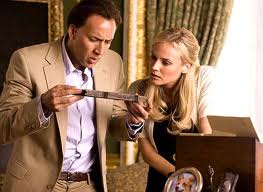
Benjamin Gates’ (Nicolas Cage) life-long journey leads him, and his nerd-savante sidekick Riley Poole (Justin Bartha), to an invisible map that is encrypted on the back of the Declaration of Independence.  However, what they thought was the final clue turns out to only be the beginning of their hunt.

Gates soon realizes that to protect the world’s greatest treasure, he must steal the most revered, best guarded document in American history before it falls into the wrong hands. In a race against time, Gates must stay one step ahead of his ruthless adversary (Sean Bean), elude the authorities, and unlock a 2000 year-old mystery behind our greatest national treasure.

What makes this story so believable are the historical facts that are woven into the story at every turn. Nine of the Founding Fathers who signed the Declaration of Independence were Masons. The invisible map (encrypted using Masonic symbols) points to the hiding place of King Solomon’s treasure — an unfathomable storehouse of wealth — that vanished after the Knights Templar (precursors to the Masons) uncovered it beneath King Solomon’s palace.

And let’s not forget the clue Gates discovers on the Independence Hall clock tower on the back of a hundred-dollar bill, or the special glasses needed to read the map — made by Benjamin Franklin himself, the inventor of bifocals — that are hidden in that very clock tower. And the final believability gem (pun intended) comes when Gates realizes the treasure is deep beneath Trinity Church (Trinity Wall Street at 79th Street in Lower Manhattan), which was founded in 1696. Again, the magic of … what if?

More National Treasure … in a Book of Secrets

National Treasure: Book of Secrets starts out with the promise of a great premise…

This time Benjamin Gates sets out to discover the truth behind the assassination of Abraham Lincoln, by uncovering the mystery within the 18 pages missing from assassin John Wilkes Booth’s diary. A Gates ancestor has been accused of being an accomplice in Booth’s crime, and Benjamin  believes the missing pages will clear the family name. His conviction drives him to uncover clues to the location of the mythical City of Gold, Cibola.

The historic facts laced throughout this story are viable. Such as the hidden inscription on the scale model of the Statue of Liberty on the Île aux Cygnes in Paris that points to the two Resolute desks; one of which is in the Queen’s chambers in Buckingham Palace, the other in the Oval Office of the White House. All well and good. But they lost me with the Mayan-style temple of gold beneath Mount Rushmore.

It might just be me. But the only way I’d believe that one is if they proved George Washington used his hatchet to cut crop circles to signal aliens (instead of chopping down that cherry tree). Because the aliens could totally have helped the Mayans build a temple of gold beneath Mount Rushmore. Which of course, is why George’s face is now on that mountain.

But seriously … a city carved into the walls at the bottom of the Grand Canyon — similar to Petra in Jordan — and filled with tons of golden artifacts would have been much more believable. I’m just sayin’. Are you listening, Jon Turteltaub?

I’m hoping National Treasure 3 — if and when it happens — brings the series back on track to its original suspense filled, believable glory. Without aliens, crystal skulls, or nuked refrigerators. Please!

How to lose an audience…

What I learned from these stories was … to keep a story believable the audience needs a consistent trail of plausibility that’s easy to follow. A logical set up of known historical facts woven throughout the story so they pay off in a believable secret history.

Let’s face it. On some level we all want to believe the secret history could be true. We want to believe, because it takes us out of our day-to-day lives and lifts us up into realm of infinite possibilities. That … What if? … place, where anything can happen.

A storyteller’s mistake comes when their plausibility trail hits a wall that requires us to pole vault over it. The end result … you lose us … an audience that wanted to go along for the ride, not go out for the Olympics.


What’s your favorite piece of secret history … American or otherwise?

Inquiring minds want to know!


“The Aurora County All-Stars” A Summer Fun Home Run

Tags

, , , ,

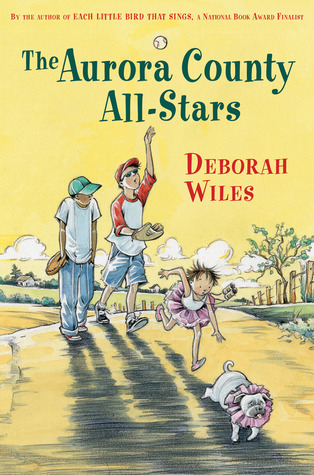
The Aurora County All-Stars, by Deborah Wiles

House Jackson, age twelve, star pitcher and team captain of the Aurora County All-Stars, has a secret. For the past year while he was sidelined with a broken elbow, he spent every afternoon at the bedside of a mysterious old man the other  kids call Mean-Man Boyd–and he doesn’t want anyone to know. Now House is finally ready to play ball again, but his team’s biggest (and only) game of the year might be canceled, thanks to the very girl who caused his broken  elbow. It’s almost too much to bear. But in the standoff that ensues, House finds a courage he didn’t know he possessed–and discovers that just about everyone in Aurora County, Mississippi has a secret. [Book Jacket Synopsis]

A Line Drive Out of the Park – Fun For All Ages

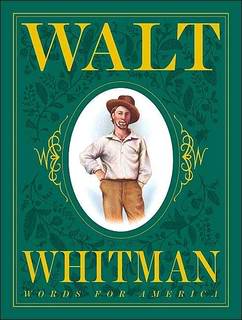
This story is about baseball … but that’s just the surface. Underneath lies a rich tapestry of friendship, betrayal, courage, family, and acceptance that is spun through with the deep mystery of life–the symphony true. I am in awe of a story that seamlessly weaves profound themes (Walt Whitman, no less) with baseball, a old Pug dog, ballerinas, and small town eccentricities … served up with with laugh-out-loud humor.

When House is finally able to play ball again, full-of-herself Frances (Finesse) Shotz waltzes back into his life to ruin it again. She insists the ball team must perform in  her pageant (for the town’s 200th anniversary) … wearing costumes! The team is horrified, but the rest of the town sides with Frances and their one-and-only ballgame is doomed. Life couldn’t get more unfair. You’d think a best friend would be sympathetic of his team captain’s predicament. But Cleebo puts the responsibility back on to House:

You have to approach your problems! You never approach your problems, House. You don’t talk about ’em … and that’s what gets folks in trouble … they don’t approach their problems.

House is pissed, but his friend’s words force him to dig deep and find the courage he needs to tackle his problems head on. And the results are nothing short of staggering. House’s belief in Walt Whitman’s symphony true saves the baseball game, and the pageant goes on in all its flamboyant glory. But more important, House sees the way to forgive his best friend’s betrayal and forget the unintentional wrongs of the past. The trials of friendship and family will resonate with readers of all ages, as will the lessons of acceptance and forgiveness.

If you’ve read Deborah Wiles’ other books set in Aurora County, Mississippi, (Each Little Bird that Sings or Love, Ruby Lavender) you’ll continue to be delighted by the rich and quirky characters she brings to life with such ease. If you haven’t read them, you’re still in for a real treat with The Aurora County All Stars!


Do you have a favorite Middle Grade summer read?

Writer’s Cave-atitis … THE Cure!

Tags

, , ,

The mystery of an age-old disease … solved!

The disease starts innocuously enough. That’s the rub. You’re hunched over your keyboard hour after hour, day after day determined to make that deadline.

The walls of your writer’s cave close in on you. The deadline approaches faster than is relatively possible (what did Einstein know about time anyway?). The pressure builds until things get so intense that you don’t know whether to light your hair on fire or run up the walls, full-on Matrix style. Because if you don’t, your head will explode.

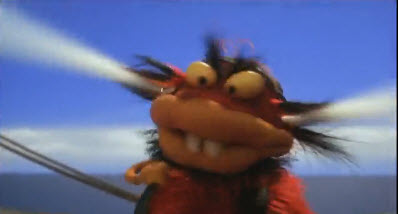
Yeah, been there. Write long enough, and we all go there eventually. It seemed like a hazard of our trade. Then  I discovered that this sickness has plagued mankind from the time the first ships dared to sail out to sea. But back then, they called it Cabin Fever. And it was the Muppets who found THE cure!

No hoax, folks! I wouldn’t mess with you. Honest! [Image credits: Muppet Treasure Island]

Here’s all you have to do:

  1. Click the START arrow on the following video and crank up the sound FULL VOLUME.
  2. Wear any extraneous fruit (uneaten, of course) lying around your writer’s cave as head ornamentation.
  3. Jump around, shaking your pirate booty in rhythm to the music (or however you damn well please). Let loose! No one’s watching (we hope).
  4. Use any and all solid objects as implements of percussion.


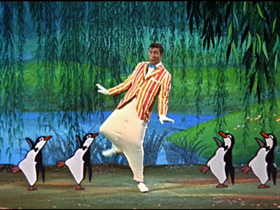
Dancing Penguins ~ Jolly Holiday Style

Tags

, , , , , ,

Because Fridays are always better with a Happy Dance!

Or … maybe … because my previous post on Animated Storytelling is the perfect excuse set up for posting a dance sequence that ALWAYS makes me laugh ... The dancing penguins sequence from Walt Disney’s “Mary Poppins”!

I especially love the penguin who toboggans off-screen, and then – try as he might – can never get back in sync with the group. I think that’s because I frequently feel like I’ve gone barreling off the map and am forever out of step with everyone else!

What movie always makes you laugh, and why?

Inquiring minds want to know!


Walt Disney’s “Mary Poppins” ~ Jolly Holiday

Animated Storytelling

Tags

, , , , , , ,

What animation taught me about storytelling…

I came to writing fiction through animation. Yep, I’m an animation geek, and proud of it! And as circuitous as my journey might sound … it’s not.

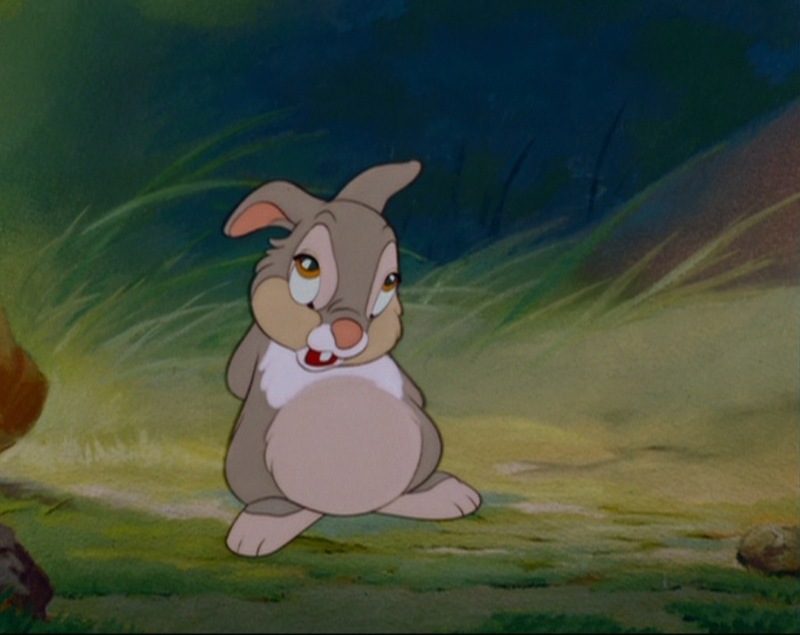
Good animation tells a story by showing emotion, the same as fiction. This image of Thumper (from Walt Disney’s “Bambi”) is a perfect example. You can tell Thumper’s been reprimanded by his slumped posture, his paws held behind his back, his ears laid back, and his head tilted downward.

Likewise, in this next image (also from Bambi) it’s obvious the two skunks are infatuated with each other by  their posture, how they hold their hands and look at one another. Good storytelling immerses you in the lives of the characters, so that you feel what they are feeling.

The Walt Disney Studios developed the 12 principles of realistic character-driven animation back in the 1930’s. Those principles are still considered “standard” today. The Illusion of Life, by Frank Thomas and Ollie Johnston, is an insightful read on the history of how these principles were developed.

Writing with Emotional Impact

Writing fiction is not the same medium as animation (duh!), so the techniques a writer must use to immerse an audience are slightly different from the keys to invoking emotion in animation. But not so different. Really. I ask myself the following questions when I begin a  scene. These questions are surprisingly similar to the questions an animator must resolve when animating a scene:

  1. What is the character thinking, and why?
  2. What is the character feeling, and why?
  3. How does the character express their feelings, and how does that vary with the different people in the scene?
  4. What is the arc of the character’s reaction to the circumstances?
  5. What are the character’s strengths and faults, and how do they manifest as a result of the circumstances?

When I understand what’s motivating a character and why, I can figure out how the character will react and what their feeling. I keep a copy of the Emotion Thesaurus handy to prevent myself from using worn out descriptions, or reusing the same ones over and over.

The Bella Note “Spaghetti Scene” in Walt Disney’s Lady and the Tramp is  probably the best-loved scene in animation of all time. It became famous, because we relate to the characters’ feelings (even though they’re dogs). We feel their love for each other through their nuanced looks, expressions, and gestures. Magical storytelling in action! You can watch this remarkable scene here.

Bella Note Lady & the Tramp


Live or Die … by Your First Line

Tags

, , ,

Your life depends on one sentence … what would you say?

A little drastic. But you kept reading. Right? Which was the point. First lines matter. A lot. Especially for a young audience. Texting and tweeting has narrowed the overall attention span to 140 characters. Or less.

Which means you have to grab your reader on the First Line, hook them by the First Paragraph, and hold them captive by the First Page.

Richard Peck’s essay on the importance of opening lines (November 2006, Horn Book Magazine) changed my writing. He said that, “The most important secret of writing . . . you are only as good as your opening line.

I thought that was kind of harsh at first. Then, I spent a lot of time going to bookstores and libraries and reading ONLY first lines. And I came to see that he’s right. The books that had amazing first lines I ended up reading.

A great opening line shouldn’t be just about shock-value. It should set the tone of the story, reveal character,  conflict, and theme. It’s the promise of the premise … in encapsulated form. Not easy to do. at all. I know (from first-hand experience). But when a first line is done well, it has an awesome effect on a reader! Something I also learned first-hand. Which is why, I now work on the opening line of a story until it has the grab-em-and-keep-em hook of a smash-hit movie trailer.

Gotta Love those “Firsts”…

From all those “one line stands” I fell in love with more than a few books

All from reading … one … single … sentence.

And if it can happen to me, I am sure it happens to young readers. When they read an opening line that takes their hand and leads them into a world of imagination and wonder.


Here are a few of my all-time favorite opening lines:

  • “If your teacher has to die, August isn’t a bad time of year for it.” THE TEACHER’S FUNERAL by Richard Peck.
  • “I come from a family with a lot of dead people.” EACH LITTLE BIRD THAT SINGS by Deborah Wiles.
  • “When the doorbell rings at three in the morning, it’s never good news.” STORMBREAKER by Anthony Horowitz.
  • “I witnessed the kidnapping of Betty Ann Mulvaney.” TEEN IDOL by Meg Cabot.
  • “Being dead became fashionable approximately forty-five minutes after Samantha ‘the Divine’ Devereaux came back from summer break.” DEAD IS THE NEW BLACK by Marlene Perez.
  • “My name is India Opal Buloni, and last summer my daddy, the preacher, sent me to the store for a box of macaroni-and-cheese, some white rice, and two tomatoes and I came back with a dog.” BECAUSE OF WINN-DIXIE by Kate DiCamillo.
What first line hooked you into reading the entire story?

Elephant Glee! … Only Better!

Tags

, , , ,

Because it’s Friday…!

Though, a dancing elephant pretty much rocks my world any day of the week! Looking down a long holiday weekend or not.

But I may be prejudiced in that department, elephants being one of my favorite animals and all. Still, this little guy’s Singing in the Rain dance-out has the entire jungle in awe. So it can’t be just me.

In my humble opinion… “The Glee! team won’t shoot to Hollywood super-stardom without this guy.” Seriously. The little pachyderm has a soft shoe Gene Kelly would have envied. And with a trunk like that, he’s got to have a voice with more reach than Rachel’s. I’m just saying… But you decide.


What about you?
What makes your heart sing … in the rain or otherwise?