• About Me
  • Writer’s Corner

Elizabeth Fais

~ Where awesome begins…

Elizabeth Fais

Category Archives: Writing

Be Your Own Muse

31 Tuesday Jan 2017

Posted by Elizabeth Fais in Story, Writing

≈ Leave a comment

Tags

Andrew Smith, consciousness, creative writing, Elizabeth Fais, Gretchen McNeil, Jessica Brody, Mariko Tamaki, muse, myth, Neal Shusterman, On Writing, On Writing - A Memoir of the Craft, Robert Frost, science of creativity, Stacey Lee, Stephen King, Story, writer, Writing

The Myth of the Muse

Muse ~ a person, or personified force, who is the source of inspiration for a creative artist.

A muse

For centuries, there have been accounts of writers and artists who looked to muses to spark imagination and fuel creativity. I hate to throw shade on anyone’s creative process, but creativity and imagination are not something you can get from something or someone else. The truth is…

There’s No Magic Feather … or Genie

That’s the bad news. Nothing, and no one, can magically imbue you with creativity. Grow up. It’s just not going to happen.

Creative mindIn Stephen King‘s book, On Writing – A Memoir of the Craft, he says just that: “There’s no magic feather” that will make you a good writer (or artist). It takes a certain amount of innate talent combined with a serious amount of hard work.

The good news is, you don’t need anything outside of yourself to be amazingly creative. You have a vast storehouse of creativity inside you. You just have to know how to access the limitless supply of ideas and raw imagination.

It’s like having your very own Idea Store…inside your head. You just might have temporarily misplaced the key that unlocks the door. Studies of consciousness and the science of creativity (yes, it’s a thing) show there is a Fort-Knox treasure of creativity inside us…just waiting to be tapped.

Activating Your Inner Muse

It’s great knowing you have a wealth of creativity at your beck and call, but you have to know the number. Here’s a few ways to find yours.

I’ve used the following methods, and (from my personal experience) they activate my inner muse. These approaches to unleashing creativity are also listed in the Forbes magazine article Science Continues to Show Us How to Be More Creative.

  • Performing routine tasks, such as housework or walking, allow the mind to wander so creative ideas flow in.
  • Being painfully bored also opens the floodgates of creative thinking. For example, having to wait for long stretches of time, like long airplane flights without a book to read or waiting in line at the DMV.
  • Having a regular meditation practice has shown to improve creativity. Meditation helps slow down the mind, which in turn opens the creative centers of the brain.

At a recent YA (young adult) novel conference, a young writer asked the panel of published authors how they get their creative ideas. Here’s how a few of the authors responded:

  • Gretchen McNeil — blow drying her hair
  • Stacey Lee — walking or dancing
  • Jessica Brody — staying off the internet and meditating before writing
  • Mariko Tamaki — listening to music or running
  • Andrew Smith — running
  • Neal Shusterman — traveling

Inspiration is Contagious

Why is inspired creativity important for writers? Because a writer’s emotions are woven throughout the tapestry of their stories. As Robert Frost said so succinctly:

No tears in the writer, no tears in the reader. No surprise in the writer, no surprise in the reader.

When a story is infused with imagination, the reader is swept up in the fictional world and carried away. I think we’ve all had that magnificent feeling when reading a good book, becoming the characters and our real world drops away. That quality of writing can create a lifetime love of reading. And to me, that is an author’s true measure of success.

Boy's imagination while reading


The Music of Words

19 Thursday Jan 2017

Posted by Elizabeth Fais in Music, Writing

≈ Leave a comment

Tags

Am Writing, Crenshaw, Elizabeth Fais, Katherine Applegate, Maggie Stiefvater, Martha Brockenbrough, Mary E. Pearson, Music, Shiver, Stephen King, Story, The Beauty of Darkness, The Game of Love and Death, Truman Capote, Writing

shutterstock_379805902_flipThere is music in words. Listen to a conversation in a language you don’t understand and focus on the lyrical quality. When you aren’t distracted by what is being said, you hear the rhythm of the words and the melody in the tones.

Written words are musical as well. A story, in essence, is a symphony of syllables. Writers weave words into melodies, sentences that flow into passages, then swell into movements.

Writers hear the words as they are put onto the page, as if they being spoken. Their structural tempo evokes mood and conveys emotion. A character’s purpose and journey is intertwined with the melody. The author’s voice is the harmonic fabric that blends intertwining melodies into a vibrant whole.

Many writers find inspiration, and connect with the inner muse, through music. The proof is in the playlists they post on social media, different music for each story.

Find Your Writing Rythm

A writer’s rhythm is their voice. I already have a blog post on The Illusive “Voice” ~ What Editors Want and Writers Seek, so I won’t go into that again. Instead I’ll cut to the chase, to the three simple steps anyone can use to find their unique voice:

  1. Read. Read. Read.
  2. Write. Write. Write.
  3. Repeat.

Read everything in your genre, then read widely in other genres. When you find an author whose style resonates with you, read everything they’ve written. Then read those books again. In the sheer act of reading and rereading their words, you absorb the rhythm of the prose, which miraculously transforms into your own unique voice.

If you don’t have time to read, you don’t have the time or tools to write. ~Stephen King

A writer’s voice isn’t a static. The quality of voice evolves as a writer hones and polishes their craft. It takes both reading and writing to discover your writing rhythm, your voice.

Making Music with Words

A story is a symphony of syllables, with possibilities as rich and varied as the imagination. The following excerpts are from books by remarkable authors, each with a unique voice.

Shiver
by Maggie Stiefvater
: As the hours crept by, the afternoon sunlight bleached all the books on the shelves to pale, gilded versions of themselves and warmed the paper and ink inside the covers so that the smell of unread words hung in the air. That was what I loved, when I was human.

The Game of Love and Death
by Martha Brockenbrough: 
“If life didn’t end,” he [Love] said, “there would be no need for me. To choose love indreamstime_xs_182186 the face of death is the ultimate act of courage. I am the joy, but you [Death] are the meaning. Together, we make humanity more than it otherwise might have been.”

The Beauty of Darkness
by Mary E. Pearson: 
The world flickered, pulling us into protective darkness, and I was in his arms again, our palms damp, searching, no lies, no kingdoms, nothing between us but our skin, his voice warm, fluid, like a golden sun, unfolding every tight thing within me, I will love you forever, no matter what happens.

Crenshaw
by Katherine Applegate
: I noticed several weird things about the surfboarding cat. Thing number one: He as a surfboarding cat. Thing number two: He was wearing a T-shirt. It said CATS RULE, DOGS DROOL. Thing number three: He was holding a closed umbrella, like he was worried about getting wet. Which, when you think about it, is kind of not the point of surfing.

Truman Capote understood the music of words. For him, it was the joy of writing.

To me, the greatest pleasure of writing is not what it’s about, but the inner music the words make.~Truman Capote

What story do you need to write, what symphony do you have to play?
Music of words


Spread Light with Stories that Empower

13 Sunday Nov 2016

Posted by Elizabeth Fais in Inspiration, Story, Writing

≈ 2 Comments

Tags

C.S. Lewis, Chronicles of Narnia, diverse books, Elizabeth Fais, empower, J.R.R. Tolkien, Martha Brockenbrough, Meg Cabot, The Hobbit, The Lord of the Rings, Yogi Tea

Literature Lights the Way

I’ve stayed clear of politics on this blog, until now. The results of the recent Presidential election cast our nation into darkness. Many now live in fear for their safety and the safety and well-being of family and friends. This is not OK! Especially not in a nation formed on the ideals of freedom, equality, human and civil rights, “life, liberty and the pursuit of happiness” for all.

Love light

But as bad as it is, I finally realized these aren’t the worst times our country has faced…and survived. We are not in a Civil War.

Not to minimize the difficulties and rough road ahead, just giving it a little perspective.

Serendipity bestowed an emotional pick-me-up the other night that helped me to see things in a new way. The Yogi Tea I drink in the evening comes with wisdom-y quotes. This one was spot on:

Spread the light. Be a lighthouse.

How perfect is that?

We each have special skills to draw from that can help to turn the tide of discrimination and hate to one of acceptance and love. Writers wage the of power influence through their words, with their stories. Meg Cabot tweeted as much the very next day.

empower_mc

Words of Power

Honesty hour. I hit a wall on my current YA project two-thirds of the way through the first draft. Self-doubt and an internal editor, who’s more like a death eater, put the skids on my progress. Until now. The election results were my call to arms—or maybe hands, since I’m a writer. Suddenly, something is way more important than my ego.

Creating stories that infuse young readers with courage, dignity, inclusion, love, and hope is my mission. My new mantra, compliments of an author I admire:

Write that, write that hard. –Martha Brockenbrough

Writers in previous generations used their words to dispel the darkness, when faced with criminal injustice and the atrocities of war.

C.S. Lewis wrote The Chronicles of Narnia after returning from World War I. Likewise, J.R.R. Tolkien penned The Hobbit and The Lord of the Rings trilogy in the aftermath of World War I.

empower_lord-of-the-rings
empower_chronicles-of-narnia

We don’t have to attain the greatness of Tolkien or C.S. Lewis to make a difference today. We just have to craft well-told stories that empower minds of all ages.

Now to writing that, writing that hard.


Fictional Time Management & Other Relative Topics

06 Sunday Nov 2016

Posted by Elizabeth Fais in Story, Writing

≈ Leave a comment

Tags

Albert Einstein, Andie MacDowell, Bill Murray, clockpunk, clocks, Daylight Savings Time, Elizabeth Fais, Fantasy, Fiction, Groundhog Day, Pennsylvania, Punxsutawney, Story, Tara Sim, Theory of Relativity, time, Timekeeper, Writing, YA, Young Adult

Einstein Nailed It

When I was in grade school, my parents went away for an hour and it felt like an entire day. Seriously. Later that same year when we went to Disneyland for the first time, one day felt like a minute.

Not unlike when we set our clocks forward an hour in the spring for Daylight Savings Time, and it feels like we lose four hours of sleep instead of just one. Yet when we set our clocks back an hour in the fall, the same hour feels like it’s cut in half. What’s up with that?

Einstein’s Theory of Relativity in four words: Time is funny stuff.

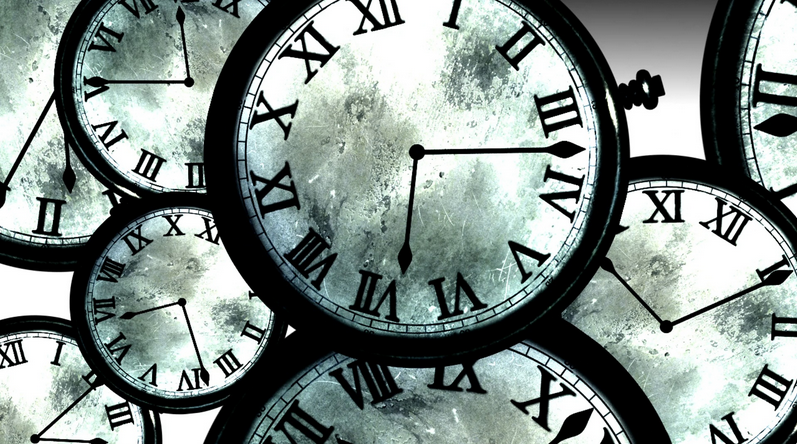
Clock faces

The Perception of Time is Relative

We often perceive time as expanding or contracting based on our emotions, and our perception creates our reality. Authors have used this to their advantage for quite some time. Telling a story in real-time slows the pace down to focus on a character or story element, or maybe to build suspense. Writers have their ways of accelerating the pace to adjust perception and influence emotion too. Further proof that the pen, and the keyboard, are mightier than the sword. And quantum physics…apparently.

Manipulating fictional time, at its best, keeps readers turning the pages. I wrote a post on Time as a Story Element that discusses these techniques in greater detail, if you’re interested.

Lost Time: Timekeeper

What if time didn’t just expand and contract, but could actually be lost? As in disappear. Vanish. Just freaking gone.

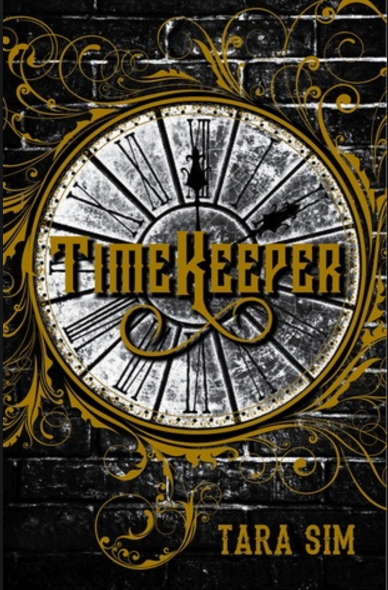
TimekeeperAn intriguing predicament that I hadn’t considered, until I picked up Timekeeper by Tara Sim. The first lines of this alternate Victorian era London run by clock towers cut to the chase:

Two o’clock was missing. Danny wanted it to be a joke. Hours didn’t just disappear.

But they can, and did, in a world where clock towers literally control time. When a clock tower breaks, so does time. And when a clock tower is destroyed, time stops completely. This clockpunk fantasy is infused with magic, woven through with myth, and spiced with mayhem. Danny, our hero, is a clock Mechanic charged with ensuring that time flows according to the natural order. The Mechanics inherit the job, because they can actually feel the strands of time and the weave of its fabric. The existential truths layered throughout the story provide satisfying believability and depth.

Time was everywhere and nowhere at once, making the moment last an eternity.

Stuck in Time: Groundhog Day

There is broken time, and then there is being stuck in time on infinite repeat. A post on fictional time and relativity just isn’t complete without a mention of one of my favorite movies: Groundhog Day.

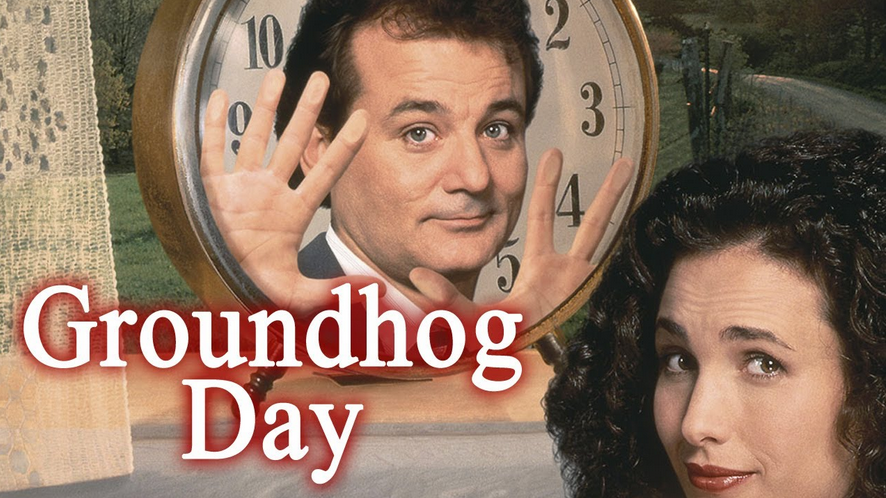
Groundhog Day movie

Phil (Bill Murray), an egotistical curmudgeon of a weatherman, gets stuck living Groundhog Day in Punxsutawney, Pennsylvania over, and over, and over…until he finally gets it right. Which for him, takes some doing. I could go on and on and on about this movie, but you’ll enjoy watching the following trailer much more. May time forever flow in your favor.


Groups with Game ~ Squad Goals … or Not?

17 Monday Oct 2016

Posted by Elizabeth Fais in Amazing but true!, Animals, English, Writing

≈ Leave a comment

Tags

Animals, apes, butterflies, crows, Elephants, English, foxes, geese, giraffes, hedgehogs, hippopotamuses, iguanas, kangaroos, larks, pandas, squad goals

parade of elephants

The English language never ceases to amaze me. Colloquialisms, while wacky, can be explained in most cases. The names given to groups of animals and other living things? Not so much. Seriously.

The following list isn’t exhaustive, but it includes some of the more interesting names for groups of living things. If your squad wanted a mascot, which would you take for a name?

For the record, I asked my boss at the day-job if our team could take pandas as our mascot. When he found out what a group of pandas is called, he wasn’t thrilled with the suggestion…for some reason. 😂

Apes — A shrewdness of apes

Butterflies — A kaleidoscope of butterflies

Crows — A murder of crows

Elephants — A parade of elephants

Foxes — A charm of foxes

Geese — A gaggle of geese

tower of giraffes

Giraffes — A tower of giraffes

Hedgehogs — A prickle of hedgehogs

Hippopotamuses — A crash of hippopotamuses

squad_hippos_crash

Iguanas — A slaughter of iguanas

Kangaroos — A mob of kangaroos

Larks — An exaltation of larks

Pandas — An embarrassment of pandas

squad_pandas_embarrassment


Word Wizardry ~ The Power of Punchy Dialog

03 Monday Oct 2016

Posted by Elizabeth Fais in Fiction, Television, Writing

≈ 2 Comments

Tags

Allison Janney, Bradley Whitford, Buffy the Vampire Slayer, C.J. Cregg, dialog, Donna Moss, Elizabeth Fais, Fiction, Janel Moloney, Josh Lyman, Joss Whedon, Martin Sheen, President Bartlet, Rob Lowe, Sam Seaborn, Stockard Channing, Story, Television, The West Wing, Writing

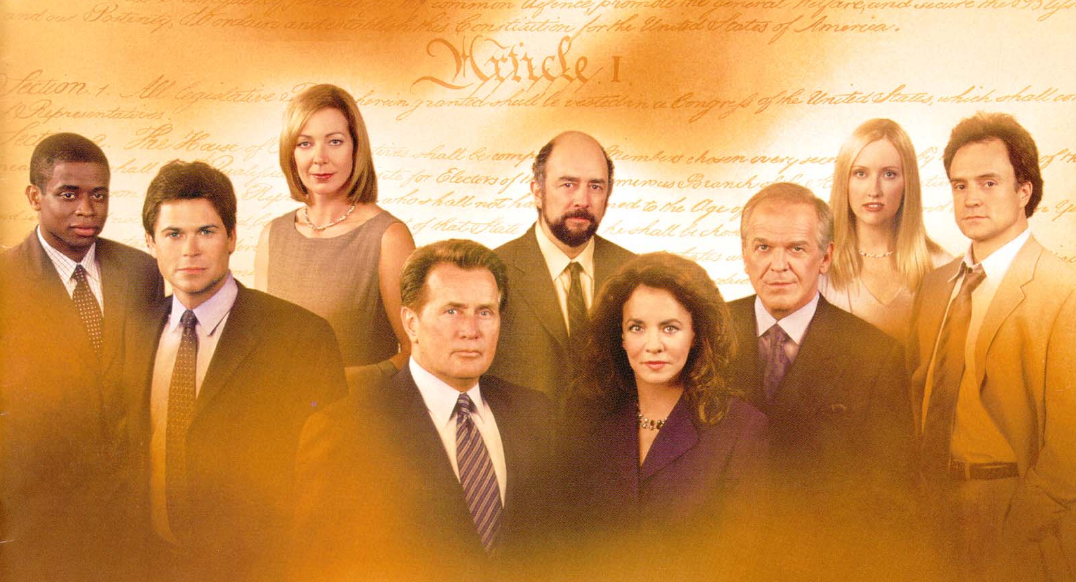
Dialog molds characters into three-dimensions. What characters say, as well as what they don’t, reveals who they are. Dialog has the power to make a story and its characters memorable, whether in books, theater, film, or television. I shamelessly study any medium that’s raised the dialog bar. My current obsession interest is The West Wing.

The West Wing cast

The Magic of the Cutting Quip

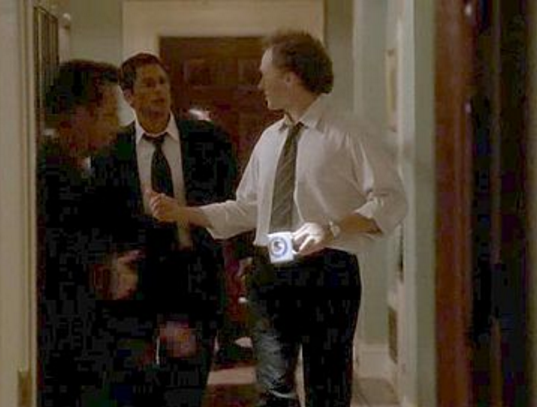
I’m a little (?) late to the game on The West Wing (1999-2006). However, it is still in high westwing_joshsam1pngdemand on Netflix, which is a testament to its raise-the-bar quality.

The snappy dialog, and the aplomb with which it is delivered, hooked me in the first episode. Centered around the day-to-day happenings surrounding the President of the United States and his staff, The West Wing tackles serious topics without sinking into the morose. The sheer genius of the dialog and its delivery balanced intense drama with just-right humor, while revealing nuanced layers character traits.

Such as when Sam Seaborn, Deputy White House Communications Director in the administration of President Josiah “Jed” Bartlet, deflects an attack of an irate woman for his stance on school funding:

Woman: Don’t play dumb with me.
Sam: I am dumb. Most of the time I’m playing smart.

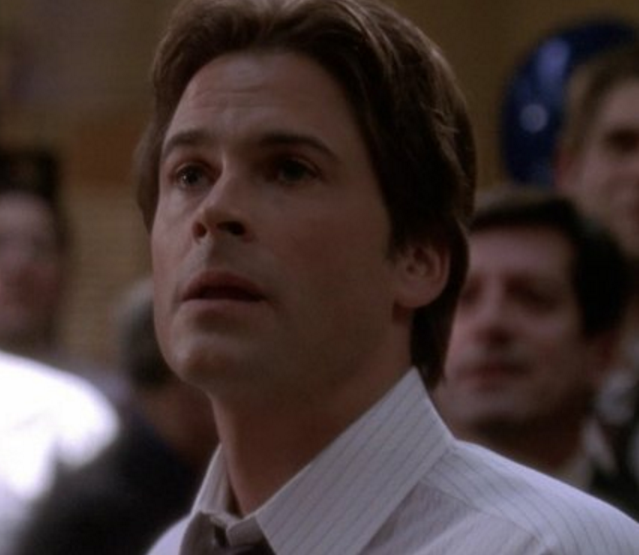
Then there were the typos in the State of the Union Address. Sam Seaborn, headshotAs a writer, I may find typos funnier than most. But still. It’s The White House. Monumental decisions that affect millions of people go down there every day. So misspelled words in the State of the Union Address? Kind of (?) funny, if not a little embarrassing.

The following exchange happened during a read-through of the President’s State of the Union speech:

President: I’m proud to report our country’s stranger than it was a year ago?
Sam: Stronger. That’s a typo.
President: It could go either way.

Then later in the same episode:

First Lady: Why is hall#wed spelled with a pound sign in the middle of it?
President: I stopped asking those questions.

Dialog “Do’s” from The West Wing

  • Reveal personality quirks.
    Josh Lyman, White House Deputy Chief of Staff, and Donna Moss, his assistant, were arguing about her not checking his lunch order to make sure his hamburger was burned-to-a-crisp. Josh elaborates, “I like my hamburger so hard that if you drop it on the floor it breaks.”
  • Show character strengths.
    Josh threatens to fire Donna when she pushes back on a request that’s obviously not important. To which she replies, “You’ve already fired me three times. I’m impervious.” Then she walks away, declaring “Impervious.”
  • Expose character dynamics.
    C.J. Cregg, White House Press Secretary, intentionally annoys Josh in a press briefing by saying, “…the theoretical psychics at Cal Tech Nuclear Lab… You know what? I’m pretty sure that’s supposed to be physicists.”
  • Engender empathy in a character.
    An international incident is in play, the President suffered a medical emergency, the State of the Union Address is that evening, and everyone keeps asking him if he’s taking his medication. To ease his staff’s worry, President Bartlet responds with humor, “Is it possible I’m taking something called euthanasia?” Sam replies, “Echinacea.” The President smiles, “That sounds more like it.”
  • Lighten an intense scene.
    Every episode of The West Wing uses witty banter to lighten intense scenes. Joss Whedon—creator of Buffy the Vampire Slayer—said it best: “Make it dark, make it grim, make it tough, but then, for the love of God, tell a joke.”

WORD CRIMES: RU Guilty 2?

18 Monday Jul 2016

Posted by Elizabeth Fais in Funny Videos, Humor, Writing

≈ Leave a comment

Tags

grammar, Weird Al Yankovic, Word Crimes, Writing

Taking Down Word Crimes ! @ ; # } ?

There are no words … only snorts … for Weird Al’s war on Word Crimes.  The funniest thing I’ve seen in a long, long time.

And yes, I snorted. More than once :-O

It’s quite apparent,
your grammar’s errant.
You’re incoherant…

Sing it sister…dance it mister…

Word Crimes

It’s time to take down Word Crimes!


The Magic of “GREAT!” Beginnings

13 Monday Jun 2016

Posted by Elizabeth Fais in Books, Story, Writing

≈ 1 Comment

Tags

Also Known As, Elizabeth Fais, Katherine Applegate, Martha Brockenbrough, Mary E. Pearson, Newbery Medal, Richard Peck, Robin Benway, SCBWI, The Game of Love and Death, The Kiss of Deception, The One And Only Ivan

Spellbinding Firsts

Magic of a good bookWhat is it about one book that you can’t put down once you start reading, and another that you can’t get past the first few pages? “Magic?” you say. I’d have to agree, if the magic is that of an intriguing story well told.

How does a writer work that magic into a story? How do we conjure the spell?

Multiple Newbery Medal winner, Richard Peck, shed insight on the magic behind great beginnings in an article in that appeared in the September/October 2006 issue of The Horn Book Magazine. Then, at a SCBWI annual summer conference, he expanded on his theory that, “You are only as good as your first line.” The secret he related was that, “the essence of the entire story should be encapsulated on the first page.” Yes, the entire story…is an expanded reflection of the first page.

No wonder Richard Peck revises his first chapter again and again, and then once more after he’s finished the book. Because…

The first chapter is the last chapter in disguise.

Peck keeps working on the beginning of a story until he can answer each of the following questions with a satisfied “Yes”:

Does it intrigue? Does it invite? Does it work?

He should know. Multiple Newbery Medals don’t lie. Applying concepts to my own writing is always easier when I have quality examples to study for structure. The following books provide insights into how great beginnings work, each in its own way:

  • The Kiss of Deception by Mary E. Pearson
  • The Game of Love and Death by Martha Brockenbrough
  • The One and Only Ivan by Katherine Applegate
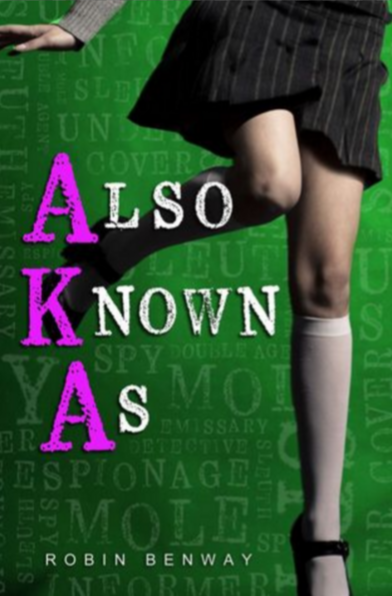
  • Also Known As by Robin Benway

The Kiss of Deception

The Kiss of Deception, the first in The Remnant Chronicles series by Mary. E. The Kiss of DeceptionPearson, is expertly crafted in many ways. The beginning is no exception. The opening paragraphs wrap us in a lyrical voice and language that intrigue, engender suspense, and unfold threads of magic that alight to weave their magic throughout the series:

Today was the day a thousand dreams would die and a single dream would be born.

The wind knew. It was the first of June, but cold gusts bit at the hilltop citadelle as fiercely as deepest winter, shaking the windows with curses and winding through drafty halls with warning whispers. There was no escaping what was to come.

The Game of Love and Death

Game of Love and Death The Game of Love and Death, by Martha Brockenbrough, is an eternal love story staged by the ultimate masters of the game of life: Love and Death.

The masters choose players to unwittingly participate in a romantic dance through a life filled with jazz clubs and airfields. The players’ dance comes to such a poignant and satisfying culmination, that even the arch nemeses are overwhelmed by its divine beauty.

Brockenbrough establishes the fable in entrancing magic from the first paragraph, weaving the lyrical rhythm of language and fully developed characters with expert elegance:

The figure in the fine gray suit materialized in the nursery and stood over the sleeping infant, inhaling the sweet, milky night air. He could have taken any form, really: a sparrow, a snowy owl, even a common house fly. Although he often traveled the world on wings, for this work he always preferred a human guise.

The One and Only Ivan

The One and Only Ivan, by Katherine Applegate, is a fictional story that was inspired by Ivan, aTheOneAndOnlyIvan_cover real gorilla at the Atlanta Zoo. You can read about the real Ivan here.

The One and Only Ivan is both heartbreaking and heartfelt, brimming with the tenacity of true friendship and the beauty of resolute spirit. Ivan’s soulful voice, his big heart, and the simple honesty of his view of the world draw us in and hold us till the well-deserved happy ending:

I am Ivan. I am a gorilla.

It’s not as easy as it looks.

People call me the Freeway Gorilla. The Ape at Exit 8. The One and Only Ivan, Mighty Silverback.

The names are mine, but they are not me. I am Ivan, just Ivan, only Ivan.

Also Known As

Also Known AsGreat beginnings don’t have to be serious. They can be fresh and fun too, like Also Known As by Robin Benway.

Maggie Silver is the safe cracking prodigy of parents who work for the world’s premier spy organization. Maggie’s sass and snark don’t disappoint on this fast-paced caper, rife with international espionage and the unexpected perils of negotiating high school and first love:

I cracked my first safe when I was three.

I know that sounds like I’m bragging, but really, it wasn’t that hard. It was a Master Lock, the same combination lock that you probably have on your locker or bike. Anyone with Internet access and too much time on his or her hands can crack a Master Lock. I’m serious. Google it. I’ll wait.

See? Easy.


Geek Speak Decoded ~ Software Secrets Exposed At Last!

01 Friday Apr 2016

Posted by Elizabeth Fais in Humor, Writing

≈ Leave a comment

Tags

computer, Elizabeth Fais, engineering, geek speak, high-tech, software, technical writer

I’ve been a technical writer in the computer software industry longer than I care to admit. As in any industry, there are closely guarded secrets no one wants the unsuspecting public to know. /dev/null tells no tales, but I sure can! It’s time you learned what you never wanted to know about software, because you were afraid to ask.

CAUTION: Disturbing subject matter, could result in gut-wrenching laughter.

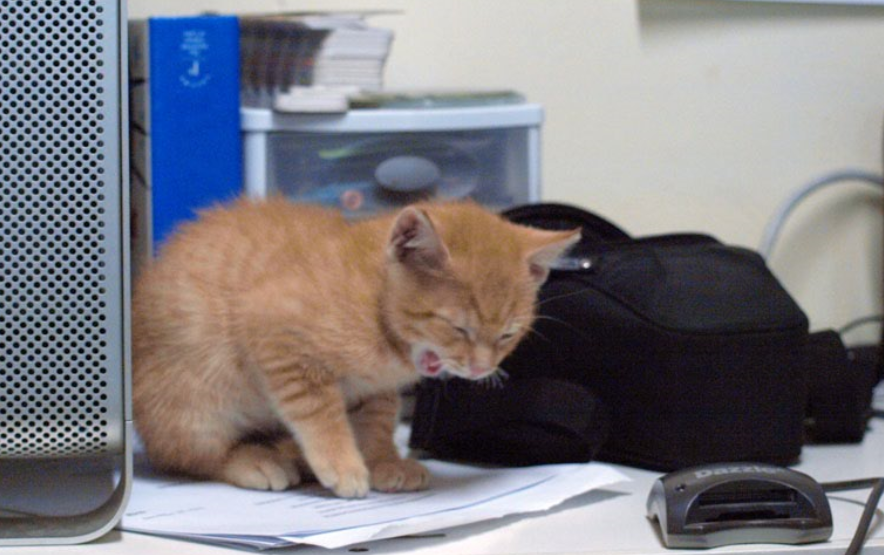
cat and computer

What they really mean when they say…

  • NEW — Different colors from the previous version.
  • ALL NEW — Software is not compatible with the previous version.
  • EXCLUSIVE — We’re the only one who has documentation.
  • UNMATCHED — Almost as good as the competition.
  • DESIGN SIMPLICITY — Developed on a shoe-string budget.
  • FOOLPROOF OPERATION — All parameters are hard-coded.
  • ADVANCED DESIGN — Upper management doesn’t understand it.
  • IT’S HERE AT LAST — Released a 26 week project in 48 weeks.
  • FIELD TESTED — Manufacturing doesn’t have a test system.
  • HIGH ACCURACY — It hasn’t crashed…yet.
  • YEARS OF DEVELOPMENT — Finally got one to work.
  • UNPRECEDENTED PERFORMANCE — Nothing ever ran this slow before.
  • REVOLUTIONARY — Disk drives go round and round.
  • BREAKTHROUGH — It finally booted on the first try.
  • FUTURISTIC — It only runs on the next generation supercomputer.
  • NO MAINTENANCE — Impossible to fix.
  • PERFORMANCE PROVEN — Worked through Beta test.
  • MEETS QUALITY STANDARDS — It compiles without errors.
  • SATISFACTION GUARANTEED — We’ll send you another pack if it fails.
  • STOCK ITEM — We shipped it once and we can do it again.

DISCLAIMER: I cannot take credit for this enlightening expose. This top-secret information was clandestinely distributed in the 1990s. Now that the statute of imitation has expired, the gritty truth can finally be told.


Write Word, Wrong Place ~ The Struggle is Reel!

29 Tuesday Mar 2016

Posted by Elizabeth Fais in English, Humor, Writing

≈ 2 Comments

Tags

A Farewell to Arms, Elizabeth Fais, English, Ernest Hemingway, Humor, language, Science

three laughing childrenLet’s take a break, for a moment, from the writer’s obsession with finding just the right words to convey voice, tone, emotion, character, pacing and the like.

Yes, we writers obsess over our words. It’s part of the job description. Ernest Hemingway admitted to rewriting the ending of a A Farewell to Arms thirty-nine times! When asked what the problem was, he replied, “Getting the words right.”

But let’s ditch the obsessing—for a little while—and go back to the time when we were still trying to wrap our heads around the complexities of language, and indulge in some innocent language levity. [PC: morguefile]

Language Levity

I don’t know about you, but when I was in grade school I’d use a word because it sounded right. Back then, there were only paper dictionaries (yes, paper!), and if a dictionary wasn’t handy I’d go with what sounded right.

My “sounds right” guessing was probably as hilarious as some of the following excerpts taken from actual student science exams in the 1990s:

  • The dodo is a bird that is almost decent by now.
  • The Earth makes one resolution every 24 hours.
  • To collect fumes of sulfur, hold a deacon over a flame in a test tube.
  • The process of turning steam back into water again is called conversation.
  • The three kinds of blood vessels are arteries, vanes, and caterpillars.
  • English sparrows and starlings eat the farmers grain and soil his corpse.
  • Charles Darwin was a naturalist who wrote the organ of the species.
  • A magnet is something you find crawling over a dead cat.
  • A triangle which has an angle of 135 degrees is called an obscene angle.
  • For head colds, use an agonizer to spray the nose.
  • For snakebites, bleek the wound and rap the victim in a blanket for shock.
  • To prevent conception, the male wears a condominium.
  • Use a turnpike on an arm or leg if there’s a bad cut to stop the bleeding.
  • Living Death is an oximormon that’s like being dead when you’re really alive.

← Older posts
Newer posts →

Calendar

January 2026
M T W T F S S
 1234
567891011
12131415161718
19202122232425
262728293031  
« Nov    

Enter your email address to have new posts sent directly to your inbox.

Join 236 other subscribers

It's really me!

  • Elizabeth Fais's avatar Elizabeth Fais

Life is Tweet

Follow @elizabethfais

Recent Posts

  • The true POWER of stories
  • Wisdom of Richard Peck ~ Writing for young readers
  • The Writer and Rabbit Who Saved the Countryside
  • 3 TREE-rific Informational Picture Books
  • Musings from the Writing Cave
  • MG Review ~ HOW I BECAME A SPY
  • The “Creative High” is real!

Past Posts

Officially SCBWI

Reading Fun

Advice for Writers

I Write for Apples

Author Photos

Olivia Marshall

Categories

Amazing but true! Animals Animation Blake Snyder Book Reviews Books Cats Character Dancing Disneyland Elizabeth Fais Fiction Fun Facts Funny Videos Giveaway Giving Back Holiday Humor Inspiration Middle Grade Movies Music Mystery Nonfiction Paranormal Reading Romance SCBWI Shakespeare Story Supernatural Thriller Uncategorized Winner! Writing YA YAppiest Young Adult Zombies

Blog at WordPress.com.

  • Subscribe Subscribed
    • Elizabeth Fais
    • Join 236 other subscribers
    • Already have a WordPress.com account? Log in now.
    • Elizabeth Fais
    • Subscribe Subscribed
    • Sign up
    • Log in
    • Report this content
    • View site in Reader
    • Manage subscriptions
    • Collapse this bar
 

Loading Comments...