• About Me
  • Writer’s Corner

Elizabeth Fais

~ Where awesome begins…

Elizabeth Fais

Tag Archives: Story

Fiction Writing ~ Socially Acceptable Insanity

09 Wednesday Sep 2015

Posted by Elizabeth Fais in Fiction, Story, Writing

≈ 4 Comments

Tags

butter beer, Diagon Alley, Elizabeth Fais, Fiction, Genovia, Hogwarts, J.K. Rowling, Judy Blume, Meg Cabot, Ray Bradbury, Reading, SCBWI, Story, suspension of disbelief, Universal Studios, Wizarding World of Harry Potter, Writing

Kidding … But Only Just

A while back I tweeted, “Fiction writing is a socially acceptable form of insanity.” I was only half-joking, and was surprised by how many people seemed to agree with me. Later I discovered that some famous authors gave credence to that view also.

J.K. Rowling said that she is “perfectly happy sitting alone in a room, making things up in her head all day.” We applaud her because she’s written stories many of us hold dear. If a non-writer type person made the same statement, we’d worry for them.

Then there’s Ray Bradbury, who said pretty much the same thing:

Ray Bradbury quote

Keeping It Real

When fiction is done well, readers suspend disbelief, their world drops away, and the story becomes real…the characters, the setting, everything about the time and place. For an author to create a story that convincing, the world and characters have to become real for them as well. As Robert Frost said:

No tears in the writer, no tears in the reader. No surprise in the writer, no surprise in the reader.

At a Society of Children’s Book Writers and Illustrators (SCBWI) Summer Conference a few years back, Judy Blume made a surprise appearance and added one better to Robert Frost’s quote:Marble statue

“If the author isn’t turned on when writing a love scene, the reader won’t be turned on either.”

The audience hooted, because it’s so true. If you don’t feel the spark when you’re writing a scene, the reader won’t feel it either.

The same standard of realness holds true for any art form, if it is to emotionally move its audience … whether it’s music, the visual or performing arts. To transmit a feeling through their work, the artist must delve into the emotion. One glance at the statue in this image, and it’s obvious the sculptor felt love on a deep, spiritual level. [PC: morguefile.com]

Reading ~ Socially Acceptable Psychosis

I came across the following description of reading and laughed out loud, because it’s a perfect match for psychosis:

…staring at marked slices of trees and hallucinating vividly for hours on end.

When fiction is done right, this is the effect is has on the reader. We become so fully engaged in the story…everything about it becomes real.

The reality a story creates doesn’t cease when a book is finished…for the reader or the writer. The story and its characters take on a life of their own. So much so, that many of us wish fictional characters Happy Birthday on social media (you know you do too, admit it).

The world the characters inhabit becomes equally real. Why else would thousands of people trek to Universal Studios’ Wizarding World of Harry Potter, in Orlando (and soon in Los Angeles) to visit Hogwarts, Diagon Alley, and drink butter beer? Because that world is real to those who love those books.

Meg Cabot recently tweeted about actually googling the weather in Genovia (Princess Mia’s country). I love this. I can so totally relate, after having read the entire Princess Diaries series. This is fiction done right!

Meg Cabot tweet


Remembering Blake Snyder ~ Mr. Save The Cat!

04 Tuesday Aug 2015

Posted by Elizabeth Fais in Blake Snyder, Save the Cat!, Story

≈ 11 Comments

Tags

Blake Snyder, BOLT, Jose Siliero, Save the Cat!, Story, Transformation Machine, Walt Disney Pictures

If  you’re lucky, at least once in your life you meet a teacher who explains things in way that no one else could … and you finally “get it”. Blake Snyder was that teacher for me.

Blake Snyder’s Save the Cat! books and Beat Sheet Workshops on story structure transformed my writing career. He helped hundreds of other writers–screenwriters and novelists alike. Yes, hundreds. The truth is you can have the most eloquent writing style on the planet, but without a compelling story you won’t engage readers.

Blake Snyder passed away on August 4, 2009, but his spirit lives on in the stories Save The Cat! continues to influence.

Why Save The Cat?

I  rewrote my first novel three times, and still didn’t get the story right. Save The Cat!Worse, I didn’t have a clue how to fix it. A little internet intervention changed all that.

Amazon recommended “Save The Cat! The Last Book on Screenwriting You’ll Ever Need” based on past books I’d ordered about (real) cats. I’d never read a book on screenwriting, but since Save the Cat! was the last book I’d ever need, I thought, “Why not?”

Save the Cat! is the term Blake uses to describe the scene–usually early in a story–where the hero does something nice that makes us sympathize with him/her…like saving a cat.

Guidelines for story structure are a lot like the principles of music theory you’d follow to compose a song or symphony. Certain patterns are intrinsically more pleasant, they resonate deeper and are more satisfying.

Save The Cat! explains the basic story types, then breaks each story into the 15 beats (plot points) that will make it satisfying. Following these story sign posts allows me more creative license when it comes to the actual writing. Who knew?

The Transformation Machine

Blake often talked about The Transformation Machine in relation to the hero’s character arc. Every satisfying story is about change, and the Transformation Machine forces the hero to do just that. On the hero’s journey, two stories are told: the external/physical and the internal/emotional. As Blake Snyder put it…

All stories are about transformation. And seeing this as a good thing is the starting point of writing a successful story of any kind. Something has to happen, change has got to occur. That’s why the opening image (the snapshot of the world BEFORE) of a movie script has to be the opposite of the final image (the snapshot of the world AFTER.)

You can hear the Blake himself talk about the Transformation Machine in the following video clip:


Blake – the Pigeon – in “Bolt”

Blake Snyder and Jose Silerio worked as a team, consulting on a number of Hollywood A-List movies. BOLT, the feature animation by Walt Disney Pictures, was one of those films. The following scene is a testament to their contribution. Blake, the screenwriting pigeon, and his writing partner pitch their movie idea. When I saw BOLT in the theater, I almost jumped out of my seat and yelled, “I know Blake!” Simply priceless!


What Sparks the Romance of Writing?

15 Monday Dec 2014

Posted by Elizabeth Fais in Romance, Story, Writing

≈ 5 Comments

Tags

Elizabeth Fais, Joss Whedon, Liv Rancourt, Romance, Santa Claus, Story, The Santa Drag, Umberto Eco, Writing

The force behind the creative process…

JossWhedonQuote2What compels writers to subject ourselves to endless hours of isolation, the nagging weight of self-doubt, and endless abuse from our inner critics? Not the lure of millions, I dare say.

Yes, there are writers who hit the bestseller lottery. But if you asked them “why” they write, I would bet many reasons would come before the mention of money.

Umberto Eco summed elegantly up the source of the writer’s creative spark when he said, “To survive we must tell stories.”

Joss Whedon (creator of Buffy the Vampire Slayer) explained how writing is tangible therapy, a way to face and overcome weaknesses, fears, and insecurities.

And then there are writers, like Liv Rancourt, who embrace their craft out of the sheer love of the stories they create. Through the process they become the characters and live vicariously through them, experiencing their hopes, dreams, heartaches and joys.

Liv Rancourt on Romance and Writing

Liv Rancourt, is a paranormal romance author with a flair for witty dialog, quirky characters, and stories that resonate with the heart. I’m reposting an excerpt she wrote about why she writes fiction woven with romantic themes, because I can’t think of a better topic for the holiday season. Because everything is more magical when love is in the air

So, why romance? Yesterday I had a couple hours of downtime and spent it in the company of Aidan, Krys, Mirren, Lucy & their friends while reading the novel Redemption by Susannah Sandlin. Okay, there were vampires involved, but the love story rocked and I thoroughly enjoyed myself.

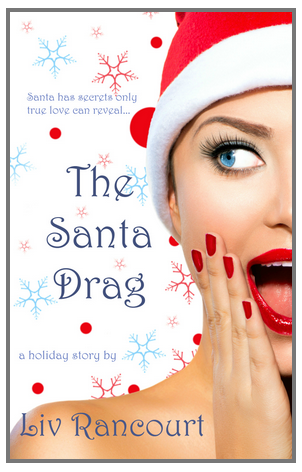
That just about sums it up. Write a love story that’s grounded in reality (or some The Santa Drag coverparanormal version thereof), involving well-drawn characters and genuine conflict, and you will have me eating out of the palm of your hand…though that’s probably not an image we want to dwell on. Instead, know that I read to have fun, and good romances are almost always fun.

If I want real-world conflict (read: sadness & pain), I’ll go to work. Sometimes I don’t even have to go that far; conflict comes to me, invading my personal space. That’s how life is. When I read, I want the assurance that the characters are going to end up happy, which is one of the hallmarks of the romance novel.

And then there’s the whole falling-in-love thing. Like most people of the human persuasion, I love to fall in love. However, after seventeen years of marriage, pretty much the only falling I get to do these days is in the pages of a book. My husband is an awesome guy, but our infatuation days were a LOOOONNGGG time ago. With a romance novel, I can experience a little vicarious infatuation stretched out over two or three days, and almost always get dinner to the table on time.

It gets even better when I write my own. I have a whole thumb-drive full of crushes. My ideal romantic heroes are often tough guys with hard fists and soft hearts. Well, except for Joe, from my short story The Santa Drag. He’s an actor, and the heroine Mackenzie describes him as the Robert Downey Jr. type: good-looking, charming and just a little bit naughty. He’s turned up in a couple of my short stories now, flashing his “yep, I’m handsome” grin and driving Mack crazy.

To read an excerpt of The Santa Drag, go here.

The Santa Drag is available exclusively from Amazon [Kindle Edition] for only $0.99. You can buy it here.

Connect with Liv!

I can be found on-line at all hours of the day and night:

  • My website & blog: livrancourt.com
  • Facebook: liv.rancourt
  • Twitter: @LivRancourt

Stop by. We’ll have fun!


Staging and Props ~ Building Character and Depth Into a Story

07 Monday Jul 2014

Posted by Elizabeth Fais in Film, Story, Writing

≈ 2 Comments

Tags

Elizabeth Fais, Film, Hollywood, Props, Staging, Story, Universal Studios, VIP Tour, Writing

Props for Props

Creating a believable set for film and television is similar to creating believable settings in fiction. It’s all about staging and props. To be honest, I didn’t realize how much time and attention went into building and dressing a set until I took the Universal Studios VIP Tour. Who knew there’s an entire warehouse filled with every type of prop you can imagine? Seriously.

Universal Studios LA props department

The VIP Tour provides an intimate behind-the-scenes view of how they create television and movie magic. An amazing treat, since I love films. But I was surprised that it also gave me insights into how to craft stories with more character and depth. [photos by moi, Universal Studios Hollywood]

Establishing the Setting

Sound Stage 44 on Universal Studios back lot is where the television show, Parenthood, a NBC family dramedy, is filmed. I learned that it took one day, 12 hours for a team of carpenters to build out the entire set.

Set for Parenthood, Universal Studios, LA

The Craftsman bungalow in Parenthood is set in Berkeley, California. The architecture and location establish the mood and tone of a story, as well as setting expectations for the family that lives there. Their morals, values, even their environmental and political beliefs. If it was a ranch house in Texas, we’d project an entirely different set of expectations on the family. When a setting is fully developed it becomes a character in the story, such as the graveyard in Neil Gaiman’s “The Graveyard Book”.

Dressing the Set

Dressing a set is the process of making it believable, giving it depth that reflects the characters. The Parenthood set took a skilled set designer six weeks to fully dress. The furniture, draperies, books on the bookshelves, pictures on the walls, and the knickknacks were all chosen to reflect the personalities of the people who inhabit the house. Subliminally, those items convey personality and quirks without having to say a word.

Inside the set of Parenthood, Universal Studios, LA

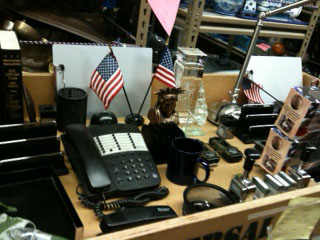
Props are also used to hint at a plot thread or character trait, such as items that are in a bedroom closet, or on display around the room. In an episode of Glee one character was going to enlist in the service, and the set was dressed with patriotic props.

Patriotic props used in an episode of Glee

In fiction, we’re always told “show, don’t tell”. What they fail to say as often is that “what” we show is just important. Too much detail slows a story down. A smattering of well-chosen detail—describing items that convey character and give their personality depth—moves the story forward while keeping the reader engaged.

Staging and props are a craft focus for me in my current project. So, I guess this post is a reminder to myself more than anything.


How do you approach staging and props in your stories?


Music as Character ~ Buffy Wasn’t Just About Slaying Vampires

06 Monday Jan 2014

Posted by Elizabeth Fais in Buffy the Vampire Slayer, Character, Music, Story

≈ 13 Comments

Tags

Buffy the Vampire Slayer, Character, Elizabeth Fais, Joss Whedon, Music, Once More With Feeling, Prayer of St. Francis, Sarah McLachlan, Sarah Michell Gellar, Story

Music that Shaped Buffy the Vampire Slayer

Buffy the Vampire SlayerJoss Whedon inspired many a writer (myself included) with his panache for strong story, witty dialog, and quirky characters in his irreverent series Buffy the Vampire Slayer.

What’s easy to overlook, though, is how Whedon broke new ground with music in the series. To the point where music became a character integral to the story.

Take the Bronze. Sunnydale’s hippster nightclub. Of 144 episodes of the series, 66 have at least one scene at The Bronze. Each of those scenes featured live bands, playing original music. [Wikipedia] By the third season, groups were clamoring to be featured in an episode of Buffy.

But the Bronze’s live music wasn’t just a convenient plot device; it also shaped the mood and tone of the show. New bands from the Los Angeles area were showcased, as well as more well-known artists such as Aimee Mann, Splendid, Cibo Matto, Angie Hart, Michelle Branch, K’s Choice, Garbage and Nerf Herder.  [Wikipedia]

The bands that took the stage at The Bronze weren’t everything, though. The musical scores that flowed through the seven season run, gave depth of story and emotion in equal measure.

Every Buffy fan has their musical favorites. Here are a couple of mine…

Prayer of St. Francis ~ Sarah McLachlan


Try as I might, I couldn’t pick just one favorite song from the classic musical episode, Once More With Feeling, in Season Six, so I opted for the trailer. If you haven’t seen the episode, do it NOW. It’s utterly brilliant. All the more so, when you realize the story, music, and lyrics were all written by Joss Whedon himself!

Buffy ~ The Musical: Once More with Feeling


What’s your favorite Buffy musical moment?


0.000000 0.000000

Demystifying the Logline with the “ACME Instant Logline Generator”

20 Tuesday Aug 2013

Posted by Elizabeth Fais in Blake Snyder, Save the Cat!, Story, Writing

≈ 4 Comments

Tags

ACME Instant Logline Generator, Blake Snyder, Elevator Ptich, Elizabeth Fais, Hollywood, LA13SCBWI, Logline, Matthew Wright, Save the Cat!, SCBWI, Society of Children's Book Writers and Illustrators, Story

The Illusive, and Often Anxiety Inducing, Logline

We writers spend months, sometimes years, slaving over a novel in order to get the story just right. Then we’re told we have to boil down our labor-of-love—with its three-dimensional characters, intricate plot and subplots, and dynamic dialog—into one sentence (of 25 words or less).

This is known as a logline, or elevator pitch. Some say it is what you have to have to get your dream agent / book deal. Yeah, no pressure there. Right. Tell it to this guy.

Believe it or not, publishing gremlins did not spend months dreaming up loglines as a new and entertaining way to torture writers, both published and pre-published. Hollywood has been using loglines since Hollywood became… well … Hollywood. That’s because, loglines are a quick way to test out story ideas.

The secret, I learned from Blake Snyder’s “Save the Cat!” approach to story structure, is to perfect your logline BEFORE you write your 400 page tome. This is because…

If you don’t have a solid logline, you don’t have a solid story.


Loglines Aren’t Just for Hollywood Anymore

At the Society of Children’s Book Writers and Illustrators Annual Conference in Los Angeles (check out the #LA13SCBWI blog), the topic of loglines came up in several workshops. Children’s authors are not immune from needing a good logline anymore.

Blake Snyder aptly described the value of a good logline:

A good logline is the coin in the realm of Hollywood and can be traded like currency with those who appreciate it.

“How do you grab that illusive gold logline coin for your story?”

Generator with light bulbs and knobsIt’s easy! Use the ACME Instant Logline Generator.

I’ve come across several logline formulas, but the easiest and the most fun is the ACME Instant Logline Generator.

I wish I could take credit for the genius behind the ACME Instant Logline Generator. But this unique and humorous one-from-column-A and one-from-column-B method of demystifying the process for creating a logline was devised by M.J. Wright, an author whose blog I follow. You can view the originial blog post here. Or, read the reblogged version here…

The ACME Instant Logline Generator

All novels need a logline, sometimes also known as a hook line – a single sentence that describes the plot and acts as a sale pitch to agents and publishers.

The form is usually “[Character name], [character description] has to [action] in order to [result].”

The result usually has an emotional content. Hard to winnow your story down to it? Try this. Begin with the logline instead. All you need, in fact, is a six-sided dice. Roll once for each variable and complete the sentence:

1. Roger Dodger the old Codger,
2. Peregrine Hyphen-Hyphen Folderol,
3. Snoot,
4. Adele,
5. Eric,
6. Heinz Dasistwirklicheinesehrdummelangeswortistesnicht von Abernatürlichistesjaabsolutichdenkeso of Sehrgutwerdeichgehenundhöreaufmeinekraftwerkalben,

1. a world-renowned horologist,
2. a rock god,
3. an up-and-coming railway enthusiast,
4. a truck driver specialising in cab-over series Macks,
5. an unemployed random-generator writer,
6. a rodent exterminator,

has to

1. win a challenging drag race
2. build a box-girder bridge with a toothpick
3. write a vampire fan-fic novel
4. learn how to sing and dance
5. cook a souffle
6. defeat the evil Thog monsters from Planet Zil

in order to

1. become the Ruler of the Universe.
2. rescue beloved from certain doom.
3. be home in time for tea.
4. get to Buckingham Palace and receive a knighthood.
5. audition for ‘America’s Got Talent’.
6. finish up at the beginning again, only better for it.

Have fun.

Copyright © Matthew Wright 2013


If you need more intel before tackling a logline, no worries! Nathan Bradford wrote a great post on How to Write a One Sentence Pitch that you can read here.

Easy peasy? You know it!

Your dream agent/book deal is just a logline away.


Fiction Fatalities: The Serial Plot Killer

13 Saturday Oct 2012

Posted by Elizabeth Fais in Fiction Fatalities, Story

≈ 4 Comments

Tags

Beat Sheet, Blake Snyder, Fiction Fatalities, Serial Plot Killer, Story, Writing

Mistakes that Murder Stories

Sit through enough critique sessions with a group of writers and you’ll soon see that we all make the same mistakes. Eventually.

But here’s the rub…

It’s always easier to spot mistakes in someone else’s story. In fact, it’s the mistakes that jump out at us in someone else’s work that we are most prone to make ourselves. I should know. Been there. Done that. And went back … more than once. And I’m not talking about misplaced commas, either. These mistakes can literally murder a story. Exposing these hooligans for what they are–fiction fatalities–is the only way to stop them.

Today’s smack down is with my own worst offender … The Serial Plot Killer.

When More Isn’t Better…

The old adage that “more is better” doesn’t work so well with fiction. The Serial Plot Killer is proof of that. Multiple main plots competing for the attention of the reader ends up killing the overall story. This happens when each plot is strong enough to be its own solid story, and the results is like a yelling match: “Follow me! Follow me! Follow me!”

No way is this kind of “more” better. It’s just more confusing. Readers won’t be able to figure out who or what to care about. Then you lose them.

An example of a personal plot faux pas was when I pitched a logline to Blake Snyder (in one of his Beat Sheet Workshops), and Blake just shook his head. I was bewildered by his negative reaction until he explained, “It’s Turner & Hooch or Miss Congeniality. You can’t have both.” He was right too. I was trying to tell two stories at once. I wasn’t the only one in that class who made that mistake either. A fellow sitting next to me admitted to adding his extra plot during revision, because he thought it would make his story more interesting. I’ve done that one too. In fact, it’s what I’m fixing in this revision of my current work in progress (WIP), hence this post.

This Fiction Fatality is hard for me to shake, because it dazzles and promises to make the story sparkle like the Emerald City. This is especially true during a second or third revision, when I’m way too familiar with the story. It’s easy to think that a new plot idea will be just the zing the story needs to make it bright shiny again. It might … but watch out. It’s more likely to be the Serial Plot Killer ninja-ing its way into the story to ensure it meets a murderous end.

This is why I feel critiques and beta reads are vitally important. They’ll expose the Serial Plot Killer for what it truly is … fatal confusion.


What story problems keep ninja-ing your writing?

You might be surprised at how many of us encounter the same problems!


Newer posts →

Calendar

December 2025
M T W T F S S
1234567
891011121314
15161718192021
22232425262728
293031  
« Nov    

Enter your email address to have new posts sent directly to your inbox.

Join 236 other subscribers

It's really me!

  • Elizabeth Fais's avatar Elizabeth Fais

Life is Tweet

Follow @elizabethfais

Recent Posts

  • The true POWER of stories
  • Wisdom of Richard Peck ~ Writing for young readers
  • The Writer and Rabbit Who Saved the Countryside
  • 3 TREE-rific Informational Picture Books
  • Musings from the Writing Cave
  • MG Review ~ HOW I BECAME A SPY
  • The “Creative High” is real!

Past Posts

Officially SCBWI

Reading Fun

Advice for Writers

I Write for Apples

Author Photos

Olivia Marshall

Categories

Amazing but true! Animals Animation Blake Snyder Book Reviews Books Cats Character Dancing Disneyland Elizabeth Fais Fiction Fun Facts Funny Videos Giveaway Giving Back Holiday Humor Inspiration Middle Grade Movies Music Mystery Nonfiction Paranormal Reading Romance SCBWI Shakespeare Story Supernatural Thriller Uncategorized Winner! Writing YA YAppiest Young Adult Zombies

Blog at WordPress.com.

  • Subscribe Subscribed
    • Elizabeth Fais
    • Join 236 other subscribers
    • Already have a WordPress.com account? Log in now.
    • Elizabeth Fais
    • Subscribe Subscribed
    • Sign up
    • Log in
    • Report this content
    • View site in Reader
    • Manage subscriptions
    • Collapse this bar
 

Loading Comments...