Some of you may know that I’ve been slugging my way through the (hopefully) final revision of my Work In Progress (WIP). I’m hip deep in ripping-and-revising, but progress has been slow going (for lots of reasons). I knew if I stopped to dash off a new project for NaNoWriMo, I might never complete this WIP, and I wasn’t willing to take that risk. So, what to do? I needed a dose of serious inspiration. Then I realized…
I’m late to the NaNo starting gate so I’ll have to charge ahead to catch up. Especially considering how much work still needs to be done on this revision. It’s borderline insanity. But that’s ever stopped me before.
So, here it goes. From this day through the end of this month, my goal is to revise the following until they shine:
Young Adult supernatural mystery WIP
The query letter for this project
The Charge of the Write Brigade!
As I embark upon the Charge of the Write Brigade, my blog posts may be less frequent. But with so many folks participating in NaNoWriMo, I know everyone will understand. My motto for the rest of this month is going to be:
It’s conference time again, folks. And for me this is a benchmark-time-of-year. It’s when I assess the goals I made last year, and set new ones. You know…
Land “the” uber-agent
Lasso a ten-figure book deal
Out sell the Harry Potter series, by A LOT
Win the Pulitzer
Dance with the Stars (Hugh Jackman or Keanu Reeves, of course)
OK, I’m being a tad facetious. But that’s because this topic is usually charged with emotion. Whether we admit it or not, deep down we all want to succeed.
“Hitch your wagon to a star.” That’s what my dad always said. And he was right. If you don’t dare to dream big, you’ll never reach those heights.
Setting goals is good. But what happens when we got to a conference and meet up with writers we haven’t seen since the previous year’s conference, and they’ve landed “the” uber-agent, lassoed an umpteen-figure book deal, and are sharing the stage with J. K. Rowling on Friday night?
As I see it, we have two choices…
Succumb to the Ogre of Envy and plummet into the Dungeon of Despair.
Be inspired, recognizing their success as proof that our goals are attainable.
Hear me out…
Door #1: Follow the Ogre of Envy
Sure. It’s tempting to take the easy route and throw ourselves a Personal Pity Party. But before plunging to our doom, let’s look at what this option robs us of. Hanging out with the Ogre of Envy is the quickest way NOT to accomplish our goals. Nothing stunts motivation and creativity more than buying into negativity. What’s behind this door can only hold us back. Not to mention that if we stay in the dungeon long enough, we’ll end up looking like the ogre.
Not a good look on anyone. Just sayin’.
Door #2: Be Inspired
This choice may seem hard at first, but using the accomplishments of others as proof that our goals are possible is the only real way to win. The down low on this must do is … it’s the quickest way to be successful AND be happy along the way.
It’s no secret that inspiration opens the doors of possibility and potential. It helps too, if we to take “time” out of the (success) equation. How fast we get to the next milestone isn’t as important as accomplishing the goal to the best of our ability. Always remember: Measuring our progress against others stifles inspiration, and is a sure-fire shortcut to a permanent stay in the ogre’s dungeon. Don’t do it!
Staying Inspired
Being inspired for a few days or weeks is one thing. Staying inspired over the long haul can take serious determination. But it’s always worth the effort. In fact, it’s the best investment you can make in your writing.
One thing that’s worked for me is following authors whose work I admire on Twitter and reading their blogs. Invariably I learn the story behind their journey to publication, and see the truth in the saying: “There is no such thing as an overnight success.”
Ally Carter, author of the Gallagher Girl series, posted a wonderful letter on her blog recently, a letter to herself as a “baby author” circa 2004. It’s a wonderful piece filled with wisdom and inspiration for any writer, no matter where you are on your journey.
Meg Cabot, author of the Princess Diaries series, is another inspiration for me. Her web site has a page of frequently asked questions. There, she states that she queried agents for three years straight before landing her agent, and it was another year before she signed her first book contract. On a live Goodreads interview, Meg said she worked at a day-job for ten years before quitting to write full-time. Watch the interview by clicking these links:
A delectable post on All Things Summer (by Tami Clayton) set me thinking… What’s mymost quintessential summer experience? And because I’m a total adventure geek, the answer is two words: Roller Coaster!
My love affair with roller coasters is limited to the historic kind, however. Sorry, folks. I’m not a fan of the super-thrill-whirl-and-hurl roller coasters of today. I much prefer the sky-high rickety old wooden structures from the previous century. [photo credit] Maybe that’s because I grew up in a small town in Southern California, that was a two-hour drive from San Diego.
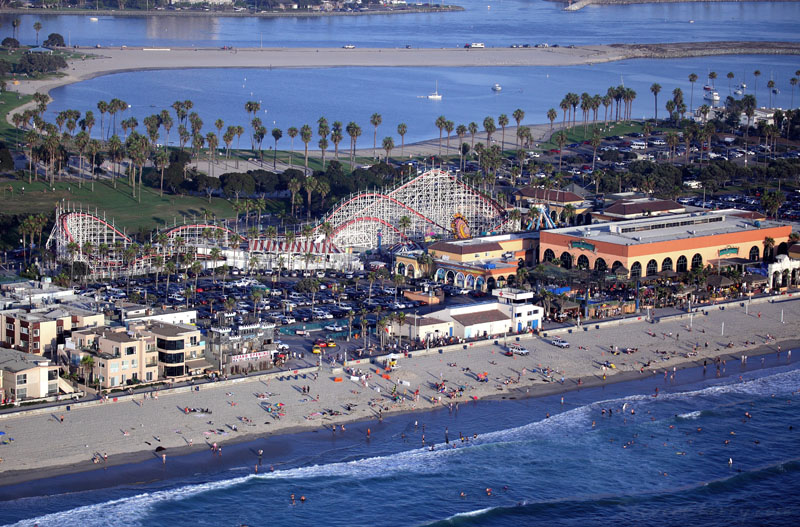
That’s where my adrenaline-ride love affair began … at Belmont Park in Mission Beach. Because THE BEST DAY EVER, was a trip to the beach and riding the roller coaster. Oh yeah, and a chocolate milk shake was part of that package too!
Twin Giant Dippers
San Diego’s Giant Dipper, also known as the Mission Beach Roller Coaster, was built in 1925. The original coaster was constructed by a crew of 100 to 150 people in two weeks. When the coaster opened on July 4, 1925, it was the centerpiece for Belmont Park. The park was a huge hit in the 1940’s and 1950’s, but fell into disrepair in the late 1960’s. The coaster finally closed in 1976, and was scheduled to be torn down in the early 1980’s. [photo credit]
Luckily, a group of citizens formed the “Save the Coaster Committee”, intervening in the demolition of the Giant Dipper, and had it designated as a National Historic Landmark in 1987. The coaster was restored, to the tune of two million dollars, and re-opened on August 11, 1990.
The Santa Cruz Boardwalk Giant Dipper is the twin sister of the San Diego Giant Dipper. And I can say from first-hand experience, that the Santa Cruz coaster is every bit as much of a thrill ride as its sister!
The Santa Cruz Giant Dipper opened on May 17, 1924, and is the fifth-oldest roller coaster in the United States today. [photo credit]
Over 55 million riders have ridden the coaster since its opening. The United States National Park Service recognized the Giant Dipper as part of a National Historic Landmark also covering the nearby Looff carousel in 1987. [Wikipedia]
The Santa Cruz and San Diego Giant Dippers are the only remaining coasters on the West Coast built by the noted coaster builders Prior and Church.
But hang on to your hats folks … there’s one coaster that deserves a mention, even if it’s not “officially” historic …
The Matterhorn Bobsleds, Disneyland Resort
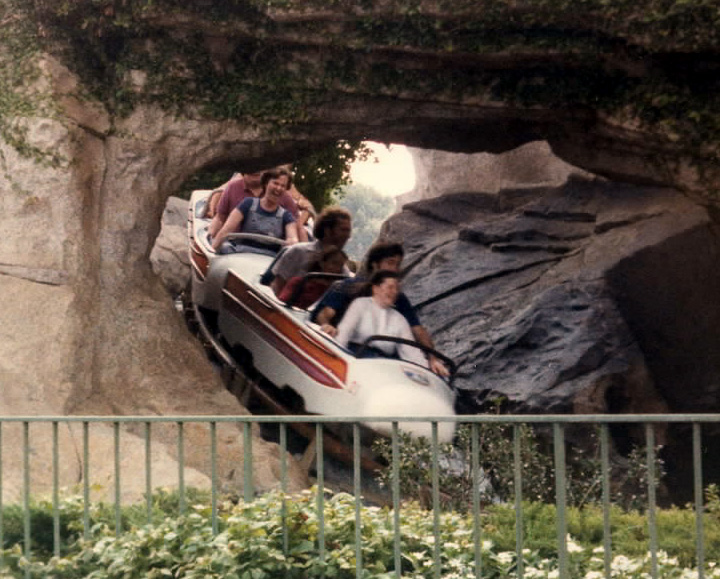
What the Matterhorn Bobsleds ride lacks in historic clout, it more than makes up for in kitsch. And I mean that in the BEST possible way. Because the Matterhorn Bobsleds are awesome! [photo credit]
Walt Disney was inspired to build a miniature of the Matterhorn at his park in Anaheim, while filming the live-action drama “Third Man on the Mountain” in Zermatt, Switzerland (1956). Under Walt’s direction, his team of Imagineers recreated the mountain to scale (exactly 100 times shorter than Switzerland’s 14,700-foot-tall original), and designed special tubular steel tracks for the coaster to simulate the smooth motions of bobsleds gliding over ice. The ride contains two separate tracks that intertwine with each other as they descend the mountain, another stroke of genius by the man with the magic. The ride opened for the first time in 1959, and has been a favorite ever since.
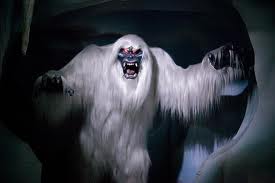
The Matterhorn underwent its first major renovations in 1978, with the significant addition of the Abominable Snowman. The Audio-Animatronic creature roars at passing bobsledder as he glares with red glowing eyes. As if to say, “Get the hell off my mountain!” Uh, huh. Like that’s really working, Big Guy. I don’t know about you, but he’s one the main draws for me on that ride. The Skyway attraction, the buckets that passed through the middle of the mountain, were taken down in November 1994. And in 1995 the Frank Wells Lost Expedition tribute was added in honor the late Walt Disney Company President, who was an avid mountaineer.
The silhouette of the Matterhorn rising above Fantasyland is iconic. Yet oddly enough, Disneyland (in Anaheim, California) is the only Walt Disney park in the world with a Matterhorn ride. I’m not sure why. If anyone out there knows the “official” story, I beg you … please share.
Never ridden the Matterhorn Bobsleds; can’t make it out to Anaheim for face time with Mr. Abominable? No worries!
Check out the video of a real-ride experience … lederhosen are not required … but screaming is highly encouraged.
I came to writing fiction through animation. Yep, I’m an animation geek, and proud of it! And as circuitous as my journey might sound … it’s not.
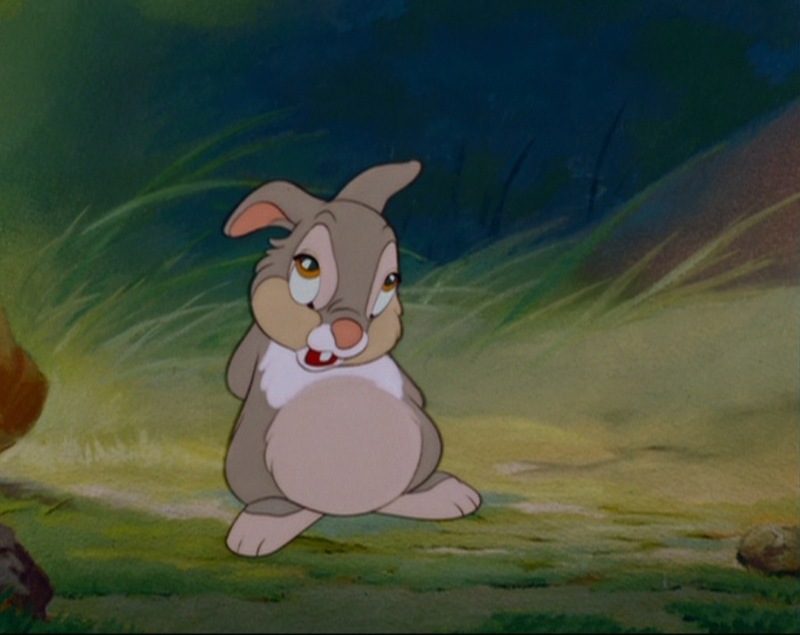
Good animation tells a story by showing emotion, the same as fiction. This image of Thumper (from Walt Disney’s “Bambi”) is a perfect example. You can tell Thumper’s been reprimanded by his slumped posture, his paws held behind his back, his ears laid back, and his head tilted downward.
Likewise, in this next image (also from Bambi) it’s obvious the two skunks are infatuated with each other by their posture, how they hold their hands and look at one another. Good storytelling immerses you in the lives of the characters, so that you feel what they are feeling.
Writing fiction is not the same medium as animation (duh!), so the techniques a writer must use to immerse an audience are slightly different from the keys to invoking emotion in animation. But not so different. Really. I ask myself the following questions when I begin a scene. These questions are surprisingly similar to the questions an animator must resolve when animating a scene:
What is the character thinking, and why?
What is the character feeling, and why?
How does the character express their feelings, and how does that vary with the different people in the scene?
What is the arc of the character’s reaction to the circumstances?
What are the character’s strengths and faults, and how do they manifest as a result of the circumstances?
When I understand what’s motivating a character and why, I can figure out how the character will react and what their feeling. I keep a copy of the Emotion Thesaurus handy to prevent myself from using worn out descriptions, or reusing the same ones over and over.
The Bella Note “Spaghetti Scene” in Walt Disney’s Lady and the Tramp is probably the best-loved scene in animation of all time. It became famous, because we relate to the characters’ feelings (even though they’re dogs). We feel their love for each other through their nuanced looks, expressions, and gestures. Magical storytelling in action! You can watch this remarkable scene here.
Though, a dancing elephant pretty much rocks my world any day of the week! Looking down a long holiday weekend or not.
But I may be prejudiced in that department, elephants being one of my favorite animals and all. Still, this little guy’s Singing in the Rain dance-out has the entire jungle in awe. So it can’t be just me.
In my humble opinion… “The Glee! team won’t shoot to Hollywood super-stardom without this guy.” Seriously. The little pachyderm has a soft shoe Gene Kelly would have envied. And with a trunk like that, he’s got to have a voice with more reach than Rachel’s. I’m just saying… But you decide.
What about you?
What makes your heart sing … in the rain or otherwise?
I’m jumping back in to my work in progress (WIP) for (hopefully!) a final revision. Why another revision, you ask?
Well … I enlisted the services of a terrific freelance editor for a professional perspective on my WIP, and there’s work to be done before I can seriously hop on the submission train with this project.
The reality of her comments, though less glamorous than my dream of instant best-sellerdom, was all-in-all delightfully encouraging. I’m 100% behind the changes she suggested, because I know they will make the story stronger. So, with leap-for-joy enthusiasm, I’m rolling up my sleeves and throwing myself in to revision-mode.
But here’s the thing…
While time is indeed relative, there’s only so much of it in a day. And since “the book” has to be my most important focus … after my day-job that is … I’m dialing back on the blog posts until this revision is complete.
I know. A blog post a week is hardly enough to stay connected in the bloggasphere. And even that might be a challenge once I’m submersed in my manuscript and swimming in my story.
But an author’s gotta do what she’s gotta do.
Life happens. And for everything there is a season, as Kristen Lamb wisely stated in a recent post. I’m entering Revision Season … which will pass in time too. If I stay focused on my WIP and the work at hand, that is.
Trust me, this is NOT farewell. I’m just slowing down on the blog posts so I can increase my WIP revision speed. That’s all. I’ll give a shout out whenever I come up for air. That’s a promise!
So … what season are you in these days? Inquiring minds want to know!
I attended a Society of Children’s Book Writers and Illustrators (SCBWI) writers retreat this past weekend in Southern California. It was a working retreat, where aside from critiques and talking with editors one-on-one, the Young Adult (YA) and Middle Grade (MG) authors participated in hands-on workshops for developing richly layered characters. Something I need to work on, and I learned A LOT!
In the initial stages of defining a character, if you’re like me, you focus on the character’s strengths. What their good at, why people like them, how they affect the people around them in a positive way. That’s all good. But for a character to be fully developed and believable, you can’t gloss over their flaws. That’s because it’s the flaws that make a character likeable. Their faults are what we relate to, why we fall in love with the character. Take Mia Thermopolis‘ klutziness in the Princess Diaries, for example. Her dorkiness is what endears her to us, because we’ve ALL been there. At one time or another. One reason I loveMeg Cabot’s books, is that she is a master at developing quirky, well-rounded characters.
But of course, to draw us in so we care about a character we can’t insert a bulleted list of good and bad traits. We have to layer in them so the traits are discovered through actions and reactions to other characters. Just like us, characters won’t interact with everyone in the same way. What a parent says will piss them off.
However, a friend can say the same thing and the character takes the advice to heart, or laughs it off. Defining a character through their interactions with the people around them — their circle of influence (COI) — is what makes them believable.
Another tool for building a character with greater emotional impact is to use traits that go against type. For example, in one workshop at the retreat we wrote a scene with two characters that showed their flaws. I chose a paranoid, arrogant, and tad superstitious Jiminy Cricket pitted against a perfectionist Pinocchio who was theatrical and self-righteous. So not the Disney classics, but that’s the point.
Dare to be different. Breathe freshness and fun into your characters with unusual or conflicting traits. And it’s important to remember that in many cases …
…characters speak to conceal rather than to reveal.
That’s subtext … and a whole other topic … for another blog.
Implements of Construction
Here are some useful resources for building emotional impact into your characters:
Shakespeare rocks the hood with Othello as a rap song. I’m not even kidding!
The Reduced Shakespeare Company
The Reduced Shakespeare Company (RSC) is a troop of three madcap men in tights who perform The Complete Works of William Shakespeare (abridged) — all 37 plays in 97 Minutes!
So, trust me. It really only takes a couple of minutes to watch this version of Othello. Hilarious!
Warning! Do not watch this video while operating heavy machinery, or when your boss is nearby. Seriously. I laughed so hard I cried!
Rapping Othello
Your turn…
What’s the funniest Shakespeare play/performance you’ve ever seen?
Yes, a realMagic Castle nestled against the Hollywood hills … a private clubhouse for the Academy of Magical Arts, Inc. It’s secret because you have to be as talented as Houdini to get in, or know someone who is. Seriously. You have to be a professional magician or know one to be admitted to the mystical fortress … which is actually a vintage Victorian, but whatever. The strict admission policy is a reflection of the professionalism of an organization devoted to the advancement of the ancient magical arts. No sideshow amateurs here. This is the real deal folks. Trust me on this one. I’ve been inside!
How did I rate an invite to this exclusive club? Nothing as glamorous as befriending a magician, I’m afraid. I stumbled upon the Magic Castle before I was old enough to get in (21 because alcohol is served), and was obsessed with the place ever since. Finally, I discovered a local B&B who’s owner was a member at the Magic Castle and he treated his guests to reservations. I couldn’t believe my luck! The price for the elusive invite was well worth it. The magicians I saw perform were AWESOME! The seating for all the shows is intimate … and it was all MAGIC!
The B&B changed hands, but now there’s a Magic Castle Hotel just a couple of blocks from the castle that can hook you up with a magical invite when you stay there. As easy as Bibbity-bobbity-boo!
A Glimpse of Magic…
Those of you who won’t be dashing off to Hollywood can still sneak a rarified peak inside one of Hollywood’s best kept magical secrets…
Yes, monsters. And don’t go all girly on me. You liked them too. Admit it.
We’ve all been fascinated with monsters from the time we were at least three. Huddling under the covers with a flashlight, telling scary stories when our parents thought we were asleep. Yeah, you remember.
I got to wondering exactly what makes “horror” such a big market in film and fiction after reading a blog post by Tim Kane on the Five Most Common Misconceptions About Classic Movie Monsters. Monsters have been an uber-hot commodity for a looooong time. Way before Buffy or Twilight, that’s for sure.
But why?
Why do we conjure up grotesque creatures only to hurry through dark streets, afraid they’ll jump out of the shadows?
As soon as I asked myself this, the answer hit me like a stake through the heart (OK, maybe that’s just a tad melodramatic). Alfred Hitchcock once said that the scariest things are the things we can’t see. Monsters put a face on our fears, and once they have form we can conquer them.
The simple fact is … we need monsters. The hero’s light shines brightest when it’s contrasted against the greatest darkness. Enter … the monster.
Great stories require terrible villains, and Monsters are the perfect casting call. Nothing tests a hero’s strength like a monster. What would Harry Potter’s story been without Voldermort?
A badass monster generates conflict in epic proportions. Our hero has to dig deep to surmount superhuman obstacles, rising above fear and character flaws to save the day. Remember Indiana Jones going into the pit of snakes, his worst nightmare?
We pay good money to go on the journey with our hero (monsters and all), because along the way we glimpse what it would be like to conquer our own inner demons and triumph in the end.
So yeah, monsters are awesome. You’ve gotta love to hate them.
What’s your favorite monster from film or fiction?
 I learned about the National Novel REVISING Month cavalcade from Young Adult Author, Elana Johnson’s recent blog post. My immediate reaction was, “Sign me up!”










 Elizabeth Fais