• About Me
  • Writer’s Corner

Elizabeth Fais

~ Where awesome begins…

Elizabeth Fais

Category Archives: Story

What Sparks the Romance of Writing?

15 Monday Dec 2014

Posted by Elizabeth Fais in Romance, Story, Writing

≈ 5 Comments

Tags

Elizabeth Fais, Joss Whedon, Liv Rancourt, Romance, Santa Claus, Story, The Santa Drag, Umberto Eco, Writing

The force behind the creative process…

JossWhedonQuote2What compels writers to subject ourselves to endless hours of isolation, the nagging weight of self-doubt, and endless abuse from our inner critics? Not the lure of millions, I dare say.

Yes, there are writers who hit the bestseller lottery. But if you asked them “why” they write, I would bet many reasons would come before the mention of money.

Umberto Eco summed elegantly up the source of the writer’s creative spark when he said, “To survive we must tell stories.”

Joss Whedon (creator of Buffy the Vampire Slayer) explained how writing is tangible therapy, a way to face and overcome weaknesses, fears, and insecurities.

And then there are writers, like Liv Rancourt, who embrace their craft out of the sheer love of the stories they create. Through the process they become the characters and live vicariously through them, experiencing their hopes, dreams, heartaches and joys.

Liv Rancourt on Romance and Writing

Liv Rancourt, is a paranormal romance author with a flair for witty dialog, quirky characters, and stories that resonate with the heart. I’m reposting an excerpt she wrote about why she writes fiction woven with romantic themes, because I can’t think of a better topic for the holiday season. Because everything is more magical when love is in the air

So, why romance? Yesterday I had a couple hours of downtime and spent it in the company of Aidan, Krys, Mirren, Lucy & their friends while reading the novel Redemption by Susannah Sandlin. Okay, there were vampires involved, but the love story rocked and I thoroughly enjoyed myself.

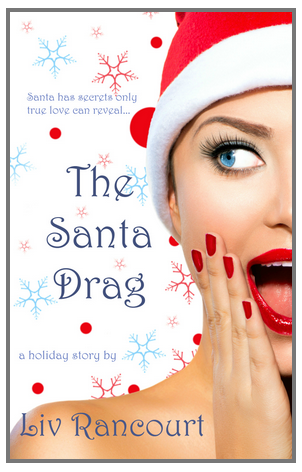
That just about sums it up. Write a love story that’s grounded in reality (or some The Santa Drag coverparanormal version thereof), involving well-drawn characters and genuine conflict, and you will have me eating out of the palm of your hand…though that’s probably not an image we want to dwell on. Instead, know that I read to have fun, and good romances are almost always fun.
If I want real-world conflict (read: sadness & pain), I’ll go to work. Sometimes I don’t even have to go that far; conflict comes to me, invading my personal space. That’s how life is. When I read, I want the assurance that the characters are going to end up happy, which is one of the hallmarks of the romance novel.

And then there’s the whole falling-in-love thing. Like most people of the human persuasion, I love to fall in love. However, after seventeen years of marriage, pretty much the only falling I get to do these days is in the pages of a book. My husband is an awesome guy, but our infatuation days were a LOOOONNGGG time ago. With a romance novel, I can experience a little vicarious infatuation stretched out over two or three days, and almost always get dinner to the table on time.

It gets even better when I write my own. I have a whole thumb-drive full of crushes. My ideal romantic heroes are often tough guys with hard fists and soft hearts. Well, except for Joe, from my short story The Santa Drag. He’s an actor, and the heroine Mackenzie describes him as the Robert Downey Jr. type: good-looking, charming and just a little bit naughty. He’s turned up in a couple of my short stories now, flashing his “yep, I’m handsome” grin and driving Mack crazy.

To read an excerpt of The Santa Drag, go here.

The Santa Drag is available exclusively from Amazon [Kindle Edition] for only $0.99. You can buy it here.

Connect with Liv!

I can be found on-line at all hours of the day and night:

  • My website & blog: livrancourt.com
  • Facebook: liv.rancourt
  • Twitter: @LivRancourt

Stop by. We’ll have fun!


What goes around, comes around ~ Stories that come back again & again…

24 Sunday Aug 2014

Posted by Elizabeth Fais in Reading, Story, Writing

≈ 2 Comments

Tags

1984, Anne Rice, Blade Runner, Bram Stoker, Buffy the Vampire Slayer, Catching Fire, Divergent, Dracula, Dystopian, Elizabeth Fais, George Orwell, Hero, Horror, Hunger Games, Interview with a Vampire, Joss Whedon, Paranormal, Road Warrior, Stephenie Meyer, supernatural, Suzanne Collins, Tim Kane, Twilight, Under the Never Sky, Vampire, Veronica Rossi, Veronica Roth

Girl sitting on the grass reading a bookSome things are destined to return: the seasons, fashion trends, and certain types of stories.

As a race, we have an inherent need for stories. They come from a deep place in our psyche, and shape our lives.

Science is now able to prove that stories affect our psychological make up. The New York Times article, Your Brain on Fiction, by Annie Murphy Paul, shows how reading fiction affects the way we react in social encounters in real life. The ability to internalize the emotions and actions of fictional characters, actually helps us cope with our own world in a more positive way. [image: morguefile.com]

Reading … enlarges and improves us as human beings. Brain science shows this claim is truer than we imagined.

Joseph Campbell’s interviews with Bill Moyers on The Power of the Myth discussed the universality of stories (myths), and the similarities in the types of stories told from cultures around the world.

Why We Need Certain Stories

You could write an exhaustive doctorate’s thesis on this topic. You’ll be glad to know I’m not. I was thinking about the recent vampire craze, and wondered  “why” certain story types keep coming back, each time with a huge social impact.

The following is some of my reasoning, totally unsupported by any research whatsoever. Your comments on the topic are welcome and appreciated!

Paranormal: Vampires

Vampires existed in folklore for centuries, and became world-renowned in the 19th Vampirecentury. Bram Stoker’s “Dracula” (1897) was one of the first novels in the vampire craze. In recent decades, “Interview with a Vampire” by Anne Rice, “Twilight” by Stephenie Meyer, and Buffy the Vampire Slayer created by Joss Whedon, boosted the vampire pop culture phenomena.

Why the mass market fascination with blood sucking immortals? I think immortal is the operative word, with the monster factor playing a close second. [image: morguefile.com]

We are afraid of the unknown, and what happens after death is one of life’s biggest mysteries—one that makes us face our worst fear, extinction. We idolize vampires, because of their beatific immortality. They have been glamorized to such an extent that we overlook the fact that they are blood sucking monsters. In recent fiction, some vampires sparkle in sunlight and are portrayed as humanitarian—the Twilight series, for example.

In truth, vampires are at best monsters who enjoy the glamour of killing. Why do we crave stories about monsters? It’s kind of sick, if you think about it.

Or, maybe not…

I wrote an earlier blog post on this topic, titled Monsters We Love to Hate. To put it simply, we need something horrible onto which we can project our fear of the unknown—a monster that can be destroyed. The ability to vanquish monsters in a story, gives us a sense of control over our fears and conquering the unknown.

For an in-depth study of vampires in pop culture, check out “The Changing Vampire in Film and Television: A Critical Study of the Growth of a Genre” by Tim Kane.

Dystopian

Hunger GamesThe dystopian story—post apocalyptic, degenerated society—provides a venue for managing another type of fear. The primal fear of survival.

Survival is the crux of a dystopian story. Surviving under the worst possible conditions.

Dystopian stories are usually characterized by dehumanization (“1984” by George Orwell, and the 1980’s films Road Warrior and Blade Runner), totalitarian governments “(The Hunger Games” by Suzanne Collins, “Divergent” by Veronica Roth), environmental disaster (“Under the Never Sky” by Veronica Rossi), and other characteristics associated with a severe decline in society.

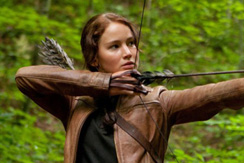
The hero in a dystopian tale give us courage by showing us how to survive at all costs. How they cope with and overcome the hardships in their brutal world, helps us to face and overcome our own battles for survival, both real and imagined. In essence, dystopian stories teach us how to be our own hero. Everyone needs that type of encouragement at one time or another. There’s nothing more empowering than knowing you can save yourself. [image: The Hunger Games (movie)]


What are the stories you can’t get enough of?


Staging and Props ~ Building Character and Depth Into a Story

07 Monday Jul 2014

Posted by Elizabeth Fais in Film, Story, Writing

≈ 2 Comments

Tags

Elizabeth Fais, Film, Hollywood, Props, Staging, Story, Universal Studios, VIP Tour, Writing

Props for Props

Creating a believable set for film and television is similar to creating believable settings in fiction. It’s all about staging and props. To be honest, I didn’t realize how much time and attention went into building and dressing a set until I took the Universal Studios VIP Tour. Who knew there’s an entire warehouse filled with every type of prop you can imagine? Seriously.

Universal Studios LA props department

The VIP Tour provides an intimate behind-the-scenes view of how they create television and movie magic. An amazing treat, since I love films. But I was surprised that it also gave me insights into how to craft stories with more character and depth. [photos by moi, Universal Studios Hollywood]

Establishing the Setting

Sound Stage 44 on Universal Studios back lot is where the television show, Parenthood, a NBC family dramedy, is filmed. I learned that it took one day, 12 hours for a team of carpenters to build out the entire set.

Set for Parenthood, Universal Studios, LA

The Craftsman bungalow in Parenthood is set in Berkeley, California. The architecture and location establish the mood and tone of a story, as well as setting expectations for the family that lives there. Their morals, values, even their environmental and political beliefs. If it was a ranch house in Texas, we’d project an entirely different set of expectations on the family. When a setting is fully developed it becomes a character in the story, such as the graveyard in Neil Gaiman’s “The Graveyard Book”.

Dressing the Set

Dressing a set is the process of making it believable, giving it depth that reflects the characters. The Parenthood set took a skilled set designer six weeks to fully dress. The furniture, draperies, books on the bookshelves, pictures on the walls, and the knickknacks were all chosen to reflect the personalities of the people who inhabit the house. Subliminally, those items convey personality and quirks without having to say a word.

Inside the set of Parenthood, Universal Studios, LA

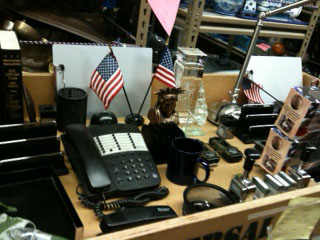
Props are also used to hint at a plot thread or character trait, such as items that are in a bedroom closet, or on display around the room. In an episode of Glee one character was going to enlist in the service, and the set was dressed with patriotic props.

Patriotic props used in an episode of Glee

In fiction, we’re always told “show, don’t tell”. What they fail to say as often is that “what” we show is just important. Too much detail slows a story down. A smattering of well-chosen detail—describing items that convey character and give their personality depth—moves the story forward while keeping the reader engaged.

Staging and props are a craft focus for me in my current project. So, I guess this post is a reminder to myself more than anything.


How do you approach staging and props in your stories?


Music as Character ~ Buffy Wasn’t Just About Slaying Vampires

06 Monday Jan 2014

Posted by Elizabeth Fais in Buffy the Vampire Slayer, Character, Music, Story

≈ 13 Comments

Tags

Buffy the Vampire Slayer, Character, Elizabeth Fais, Joss Whedon, Music, Once More With Feeling, Prayer of St. Francis, Sarah McLachlan, Sarah Michell Gellar, Story

Music that Shaped Buffy the Vampire Slayer

Buffy the Vampire SlayerJoss Whedon inspired many a writer (myself included) with his panache for strong story, witty dialog, and quirky characters in his irreverent series Buffy the Vampire Slayer.

What’s easy to overlook, though, is how Whedon broke new ground with music in the series. To the point where music became a character integral to the story.

Take the Bronze. Sunnydale’s hippster nightclub. Of 144 episodes of the series, 66 have at least one scene at The Bronze. Each of those scenes featured live bands, playing original music. [Wikipedia] By the third season, groups were clamoring to be featured in an episode of Buffy.

But the Bronze’s live music wasn’t just a convenient plot device; it also shaped the mood and tone of the show. New bands from the Los Angeles area were showcased, as well as more well-known artists such as Aimee Mann, Splendid, Cibo Matto, Angie Hart, Michelle Branch, K’s Choice, Garbage and Nerf Herder.  [Wikipedia]

The bands that took the stage at The Bronze weren’t everything, though. The musical scores that flowed through the seven season run, gave depth of story and emotion in equal measure.

Every Buffy fan has their musical favorites. Here are a couple of mine…

Prayer of St. Francis ~ Sarah McLachlan


Try as I might, I couldn’t pick just one favorite song from the classic musical episode, Once More With Feeling, in Season Six, so I opted for the trailer. If you haven’t seen the episode, do it NOW. It’s utterly brilliant. All the more so, when you realize the story, music, and lyrics were all written by Joss Whedon himself!

Buffy ~ The Musical: Once More with Feeling


What’s your favorite Buffy musical moment?


0.000000 0.000000

Demystifying the Logline with the “ACME Instant Logline Generator”

20 Tuesday Aug 2013

Posted by Elizabeth Fais in Blake Snyder, Save the Cat!, Story, Writing

≈ 4 Comments

Tags

ACME Instant Logline Generator, Blake Snyder, Elevator Ptich, Elizabeth Fais, Hollywood, LA13SCBWI, Logline, Matthew Wright, Save the Cat!, SCBWI, Society of Children's Book Writers and Illustrators, Story

The Illusive, and Often Anxiety Inducing, Logline

We writers spend months, sometimes years, slaving over a novel in order to get the story just right. Then we’re told we have to boil down our labor-of-love—with its three-dimensional characters, intricate plot and subplots, and dynamic dialog—into one sentence (of 25 words or less).

This is known as a logline, or elevator pitch. Some say it is what you have to have to get your dream agent / book deal. Yeah, no pressure there. Right. Tell it to this guy.

Believe it or not, publishing gremlins did not spend months dreaming up loglines as a new and entertaining way to torture writers, both published and pre-published. Hollywood has been using loglines since Hollywood became… well … Hollywood. That’s because, loglines are a quick way to test out story ideas.

The secret, I learned from Blake Snyder’s “Save the Cat!” approach to story structure, is to perfect your logline BEFORE you write your 400 page tome. This is because…

If you don’t have a solid logline, you don’t have a solid story.


Loglines Aren’t Just for Hollywood Anymore

At the Society of Children’s Book Writers and Illustrators Annual Conference in Los Angeles (check out the #LA13SCBWI blog), the topic of loglines came up in several workshops. Children’s authors are not immune from needing a good logline anymore.

Blake Snyder aptly described the value of a good logline:

A good logline is the coin in the realm of Hollywood and can be traded like currency with those who appreciate it.

“How do you grab that illusive gold logline coin for your story?”

Generator with light bulbs and knobsIt’s easy! Use the ACME Instant Logline Generator.

I’ve come across several logline formulas, but the easiest and the most fun is the ACME Instant Logline Generator.

I wish I could take credit for the genius behind the ACME Instant Logline Generator. But this unique and humorous one-from-column-A and one-from-column-B method of demystifying the process for creating a logline was devised by M.J. Wright, an author whose blog I follow. You can view the originial blog post here. Or, read the reblogged version here…

The ACME Instant Logline Generator

All novels need a logline, sometimes also known as a hook line – a single sentence that describes the plot and acts as a sale pitch to agents and publishers.

The form is usually “[Character name], [character description] has to [action] in order to [result].”

The result usually has an emotional content. Hard to winnow your story down to it? Try this. Begin with the logline instead. All you need, in fact, is a six-sided dice. Roll once for each variable and complete the sentence:

1. Roger Dodger the old Codger,
2. Peregrine Hyphen-Hyphen Folderol,
3. Snoot,
4. Adele,
5. Eric,
6. Heinz Dasistwirklicheinesehrdummelangeswortistesnicht von Abernatürlichistesjaabsolutichdenkeso of Sehrgutwerdeichgehenundhöreaufmeinekraftwerkalben,

1. a world-renowned horologist,
2. a rock god,
3. an up-and-coming railway enthusiast,
4. a truck driver specialising in cab-over series Macks,
5. an unemployed random-generator writer,
6. a rodent exterminator,

has to

1. win a challenging drag race
2. build a box-girder bridge with a toothpick
3. write a vampire fan-fic novel
4. learn how to sing and dance
5. cook a souffle
6. defeat the evil Thog monsters from Planet Zil

in order to

1. become the Ruler of the Universe.
2. rescue beloved from certain doom.
3. be home in time for tea.
4. get to Buckingham Palace and receive a knighthood.
5. audition for ‘America’s Got Talent’.
6. finish up at the beginning again, only better for it.

Have fun.

Copyright © Matthew Wright 2013


If you need more intel before tackling a logline, no worries! Nathan Bradford wrote a great post on How to Write a One Sentence Pitch that you can read here.

Easy peasy? You know it!

Your dream agent/book deal is just a logline away.


Discovering Manhattan: A Pictorial Tour of My Protagonist’s World

12 Friday Apr 2013

Posted by Elizabeth Fais in Central Park, New York City, Research, Story, Writing

≈ 9 Comments

Tags

Belvedere Castle, Calvert Vaux, Central Park, Central Park Conservancy, Cleopatra's Needle, Elizabeth Fais, Ellen Gregory, Frozen Hot Chocolate, Manhattan, Metropolitan Museum of Art, New York City, NY13SCBWI, NYC, SCBWI, Serendipity 3, Subway, The Met, The Plaza Hotel, Waldorf Astoria

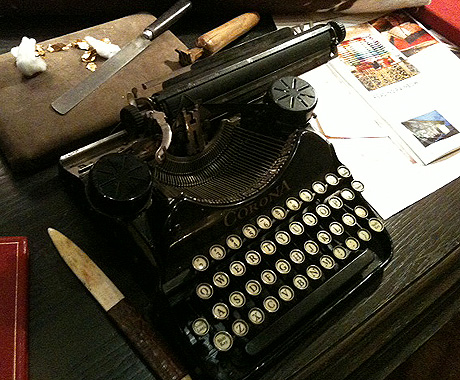
Manual typewriterResearch is one of my favorite parts of the writing process. It’s an intriguing exploration into worlds-yet-unknown, where the story comes to life and becomes real.  I had a few final details to research in Manhattan for my project, which was major reason behind my coast hopping to New York City in early February. (pic by moi)

Yes, I went to NYC to attend the Society of Children’s Book Writers and Illustrators Winter Conference (NY13SCBWI), which was wonderful in all the ways such conferences are. But I had another agenda too… Research.

The Character of Central Park Landmarks…

My project takes place in and around New York City’s Central Park, and a couple of the landmarks played such an important role in the story that they became characters themselves…

Cleopatra’s Needle: The oldest man-made object in Central Park
Image by Central Park Conservancy, the organization responsible for restoring and maintaining Central Park’s historic beauty.

CentralPark_obelisk-l

Belvedere Castle: Built in 1869 by Calvert Vaux
Image by Central Park Conservancy

Belvedere Castle, Central Park NYC

Her Way is the Subway…

Most New Yorkers use public transportation to get around town. My protagonist is no different. She uses the subway, so I followed in her footsteps. There beneath the streets of Manhattan, I discovered the amazing signage from a bygone era (pic by moi)…

86th Street Subway Tile marker

Historical Ruins in the Metropolitan Museum of Art

The Metropolitan Museum of Art is important to my protagonist and her story as well, so I had to experience the collection first-hand. What impressed me most (and I was an art major, so I’ve been to lots of art museums) is that The Met houses reconstructed historical rooms and ruins … not just the typical types of art (pics by moi)…

Metropolitan Museum of Art, NYC

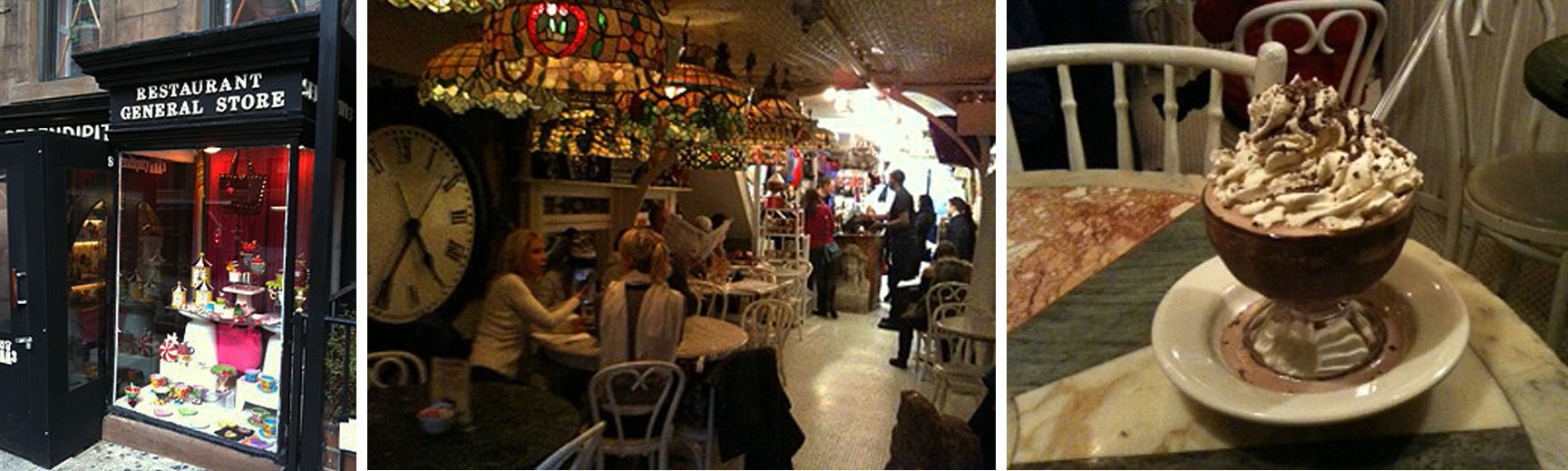
Serendipity 3: Frozen Hot Chocolate

Like many teenagers, my protagonist loves coffee and chocolate. And what better place to meet her friends than Serendipity 3? While conspiring, they consume coffee drinks and Serendipity’s world-famous Frozen Hot Chocolate. Which is to die for, by the way (pics by moi)…

Serendipity 3, NYC

The Plaza … Of course!

My next stop was The Plaza Hotel, where my protagonist’s grandfather owns a private suite. Yes, on the top floor … one with a turret. Eloise does not have anything to do with my story, but I had to take this picture because nothing says “The Plaza” like Eloise. The photo on the right is of The Palm Court restaurant (pics by moi)…

The Plaza Hotel, NYC

Hiding Out at The Waldorf Astoria…

Last but not least was a visit to The Waldorf  Astoria, where my protagonist is forced to go into hiding. Yeah, I know. Tough break sistah. You might wish you had her financial backing … but you don’t want the problems tied to it. Trust me.

The lobby of The Waldorf Astoria is an architectural marvel…

NYC14

How do you discover your character’s world?

Ellen Gregory’s recent post on her “research” experience with beads and braids, inspired me to share this pictorial research tour.

What type of research helps you discover your character’s world?


The Book that Rocked Your World

18 Monday Feb 2013

Posted by Elizabeth Fais in Reading, SCBWI, Story

≈ 11 Comments

Tags

Charlotte's Web, Elizabeth Fais, Emma Walton Hamilton, Favorite Books, It Takes Two, Julie Andrews, Julie Andrews Collection, Mandy, Mary Poppins, NY13SCBWI, SCBWI, SCBWI Winter Conference 2013, The House at Pooh Corner, The Little Gray Men

Young girl reading bookMagic happens at writers’ conferences… So it was no surprise that the air was sparkling with it at the “Practically Perfect” NY13SCBWI Winter Conference. Seriously. How could it not, with Julie Andrews (a.k.a. Mary Poppins) and her amazingly talented daughter Emma Walton Hamilton as keynote speakers?

Julie Andrews has been writing wonderful books for children for forty years–on top of launching the Julie Andrews Collection–and has collaborated with her daughter on 27 titles. To read the SCBWI blog on their presentation, go here: “It Takes Two”. You won’t want to miss it. It’s awesome!

What I wanted to talk about today came from a question asked of Julie Andrews after the presentation…

What book influenced you the most growing up?

A simple enough question … on the surface. But when I peeled back the layers of Open book with sparkles and light swirling outtime and re-experienced the feeling that one book gave me, hooking me on reading for the rest of your life…

Four words: It rocked my world.

That book opened a doorway to magic, imagination, and adventure, and I could go there any time I just by opening the pages. Pretty powerful stuff.

For Julie Andrews, that book was “The Little Gray Men“. She loves that story so much, that she brought it back into print in the Julie Andrews Collection. For the person asking the question, it was Julie Andrews’ first book, “Mandy“.

The House at Pooh CornerFor me it was “The House at Pooh Corner“. I was in the third grade, and the silliness of the story and clever misspelled words, like “rox” and “Wol” won me over instantly. And all the endearing characters were my new BFFs.

My fourth grade teacher read “Charlotte’s Web” to our class, and I fell in love with Wilbur and Charlotte. I’d never really cared much for pigs until then, and I’d been terrified of anything spidery. One story changed all that.

There have been many books since… But “The House at Pooh Corner” will always be my first; the book that was the key to a world of wonder.

How about YOU…

What book rocked your world?

Don’t be shy. You’re among friends here.

And don’t be afraid to tell us about more than one treasured story that changed your life!

Animated Storytelling: The Character of a Walk

10 Saturday Nov 2012

Posted by Elizabeth Fais in Animation, Character, Story, Writing

≈ 1 Comment

Tags

Animated Storytelling, Disney's Nine Old Men, Elizabeth Fais, Frank and Ollie, Frank Thomas, Ichabod Crane, Legend of Sleepy Hollow, Ollie Johnston, Pinocchio, Stacy Stokes, Walt Disney

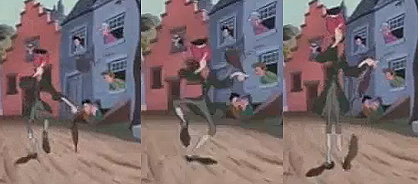
Good animation is based on good storytelling, conveying thoughts, feelings, and emotions by showing rather than telling. One of the principle ways of defining character in animation is “the walk”.

It’s All About the Walk

In animation, “the walk” of a character is everything. That’s because a simple walk isn’t … well … simple. Visually, it is one of the most defining parts of a character. A walk reveals personality and telegraphs mood. You can tell how someone feels by the way they carry themselves, move their arms, and by the quickness or slowness of their step.

Ichabod Crane, in Walt Disney’s “The Legend of Sleepy Hollow”

Walking With Emotion

In short, a walk conveys character and emotion without saying a word, for example:

  • Depressed, discouraged: Head down, shoulders slumped, hands in pockets, slow steps, dragging their feet
  • Happy, elated: Head high, shoulders back, arms swinging, bouncy steps
  • Angry, determined: Leaning forward, chin jutting out, brisk pace
  • In love: Ambling stroll, relaxed, distracted gaze, blissful smile

An extensive resource for conveying emotion through action is The Emotion Thesaurus: A Writer’s Guide to Character Expression. Keep a copy by your side while you are writing and revising. You won’t regret it!

Walk in Your Character’s Shoes … Literally

A great way to internalize a character’s mood is to imitate their walk. The old saying “walk a mile in someone else’s shoes” is too true. Which is why mimicking character movements is a common practice for animators. They physically act out scenes as their character, to study action and emotion.

Savvy writers do this too. Stacy Stokes,  took an improv class to study character first-hand. You can read about her experience in Walking Game (Things I Learned in Improv Class, Volume 4: Getting Into Character).

Tips From a Pro

Ollie Johnston, one of Walt Disney’s “Nine Old Men“, shared the following insights for enhancing character through motion:

  • Show ideas or thoughts, with the attitudes and actions.
  • Let the body attitude echo the facial expression.
  • Show what your character is thinking.
  • The thought and circumstances behind the action are what make the action interesting.  Here’s an example: A man walks up to a mailbox, drops in his letter and walks away. … OR … A man desperately in love with a girl far away rushes to the mailbox, then carefully drops the letter, into which he has poured his heart out, into the mailbox with a sigh.

For more tips on showing emotion through movement, visit the Frank and Ollie web site.

Contrasting Characters and Their Walks

Theory is all well and good, but I’m one of those people who need examples in order to learn. The following two clips show the walks of two opposite-poles characters, Ichabod Crane and Pinocchio. See how much of their characters you can discern just from studying how they walk.

  • Ichabod Crane in Walt Disney’s “The Legend of Sleepy Hollow”…  Ichabod has a walk like no other. It’s one of the most distinctive walks in Disney animation, thanks to legendary animator Frank Thomas. I’d apologize for the “White and Nerdy” song this is set to, if it weren’t so fitting for the character!


  • Then there’s Walt Disney’s “Pinocchio”… You couldn’t find a more different character from ol’ Ichabod, and it’s immediately apparent from Pinocchio’s walk. There’s no music, but something “Short and Bouncy” would have been fun.


What do you notice most about the way someone walks?


Fiction Fatalities: The Serial Plot Killer

13 Saturday Oct 2012

Posted by Elizabeth Fais in Fiction Fatalities, Story

≈ 4 Comments

Tags

Beat Sheet, Blake Snyder, Fiction Fatalities, Serial Plot Killer, Story, Writing

Mistakes that Murder Stories

Sit through enough critique sessions with a group of writers and you’ll soon see that we all make the same mistakes. Eventually.

But here’s the rub…

It’s always easier to spot mistakes in someone else’s story. In fact, it’s the mistakes that jump out at us in someone else’s work that we are most prone to make ourselves. I should know. Been there. Done that. And went back … more than once. And I’m not talking about misplaced commas, either. These mistakes can literally murder a story. Exposing these hooligans for what they are–fiction fatalities–is the only way to stop them.

Today’s smack down is with my own worst offender … The Serial Plot Killer.

When More Isn’t Better…

The old adage that “more is better” doesn’t work so well with fiction. The Serial Plot Killer is proof of that. Multiple main plots competing for the attention of the reader ends up killing the overall story. This happens when each plot is strong enough to be its own solid story, and the results is like a yelling match: “Follow me! Follow me! Follow me!”

No way is this kind of “more” better. It’s just more confusing. Readers won’t be able to figure out who or what to care about. Then you lose them.

An example of a personal plot faux pas was when I pitched a logline to Blake Snyder (in one of his Beat Sheet Workshops), and Blake just shook his head. I was bewildered by his negative reaction until he explained, “It’s Turner & Hooch or Miss Congeniality. You can’t have both.” He was right too. I was trying to tell two stories at once. I wasn’t the only one in that class who made that mistake either. A fellow sitting next to me admitted to adding his extra plot during revision, because he thought it would make his story more interesting. I’ve done that one too. In fact, it’s what I’m fixing in this revision of my current work in progress (WIP), hence this post.

This Fiction Fatality is hard for me to shake, because it dazzles and promises to make the story sparkle like the Emerald City. This is especially true during a second or third revision, when I’m way too familiar with the story. It’s easy to think that a new plot idea will be just the zing the story needs to make it bright shiny again. It might … but watch out. It’s more likely to be the Serial Plot Killer ninja-ing its way into the story to ensure it meets a murderous end.

This is why I feel critiques and beta reads are vitally important. They’ll expose the Serial Plot Killer for what it truly is … fatal confusion.


What story problems keep ninja-ing your writing?

You might be surprised at how many of us encounter the same problems!


Unlikely Heroes ~ and a WINNER!

28 Friday Sep 2012

Posted by Elizabeth Fais in Hero, Remarkable Animals, Story

≈ 10 Comments

Tags

Because of Winn-Dixie, Buffy the Vampire Slayer, Charlotte's Web, Pig saves goat, The One And Only Ivan, Unlikely Heroes

A young pig saves a baby goat

I saw an amazing video clip that touched my heart and made me laugh, all at the same time. You might have seen it too, since I tweeted the YouTube link. It was of a young pig rescuing a baby goat that was flailing in a small pond.

It was remarkable, because of the unlikely friendship (like in the book by that very name), and an even more unlikely hero. Watch the video and see for yourself.

Real-Life can be more amazing than fiction

Since posting this, I’ve seen comments around the web that this video was staged.  Some even pointed out how the video had been altered, Photoshopping out a person who was restraining the goat in the water. Looking at the video more closely, I see this could be true. That said, I don’t doubt that the pig jumped into the water to save the baby goat (as shown) when the original situation arose. This video reenacts the event. Pigs are very smart. It’s a great story no matter what!

Unlikely Heroes in Fiction

That video got me to thinking about unlikely heroes in fiction, and how those stories stayed with me. They were stories I would read again and again. Characters such as:

  • Charlotte the spider from Charlotte’s Web
  • Ivan the silverback gorilla from The One and Only Ivan
  • Winn-Dixie the dog from Because of Winn-Dixie

In wondering why these stories had such an impact, I realized that it was because the heroes were so ordinary. I could relate to them (even though they weren’t human), and their actions. As they grew out of ordinariness and into heroes, I followed. Those stories showed me how live as a hero in the real world.

Animals and spiders aren’t the only unlikely heroes. Buffy the Vampire Slayer is an ordinary teenager at the beginning of her journey, a cheerleader no less. Most all the superhero origin myths begin with an ordinary person who encounters circumstances that change his or her life in extraordinary ways.

Who’s your favorite Unlikely Hero?

Inquiring minds want to know!


Now for the “52 Reasons to Hate My Father” WINNER!!!

I put  the names of everyone who left a comment on the “52 Reasons to Hate My Father” post in a hat, shook it like there was no tomorrow, then reached in and pulled one out…

Maestro, a drum roll please!

*****
*** Tosses copious amounts of sparkly confetti ***

*****
And the winner is…

KIM GRIFFIN

(Happy Dance)

!!!!!!!!!


← Older posts
Newer posts →

Calendar

January 2026
M T W T F S S
 1234
567891011
12131415161718
19202122232425
262728293031  
« Nov    

Enter your email address to have new posts sent directly to your inbox.

Join 236 other subscribers

It's really me!

  • Elizabeth Fais's avatar Elizabeth Fais

Life is Tweet

Follow @elizabethfais

Recent Posts

  • The true POWER of stories
  • Wisdom of Richard Peck ~ Writing for young readers
  • The Writer and Rabbit Who Saved the Countryside
  • 3 TREE-rific Informational Picture Books
  • Musings from the Writing Cave
  • MG Review ~ HOW I BECAME A SPY
  • The “Creative High” is real!

Past Posts

Officially SCBWI

Reading Fun

Advice for Writers

I Write for Apples

Author Photos

Olivia Marshall

Categories

Amazing but true! Animals Animation Blake Snyder Book Reviews Books Cats Character Dancing Disneyland Elizabeth Fais Fiction Fun Facts Funny Videos Giveaway Giving Back Holiday Humor Inspiration Middle Grade Movies Music Mystery Nonfiction Paranormal Reading Romance SCBWI Shakespeare Story Supernatural Thriller Uncategorized Winner! Writing YA YAppiest Young Adult Zombies

Blog at WordPress.com.

  • Subscribe Subscribed
    • Elizabeth Fais
    • Join 236 other subscribers
    • Already have a WordPress.com account? Log in now.
    • Elizabeth Fais
    • Subscribe Subscribed
    • Sign up
    • Log in
    • Report this content
    • View site in Reader
    • Manage subscriptions
    • Collapse this bar
 

Loading Comments...