• About Me
  • Writer’s Corner

Elizabeth Fais

~ Where awesome begins…

Elizabeth Fais

Monthly Archives: June 2018

Moon monikers ~ Why so many names, and what do they mean?

28 Thursday Jun 2018

Posted by Elizabeth Fais in Moon, Nonfiction

≈ 2 Comments

Tags

Algonquin tribes, Astronomy, Beaver Moon, Black Moon, Blue Moon, Buck Moon, Cold Moon, Corn Moon, Flower Moon, full moon, Harvest Moon, Honey Moon, Hot Moon, Hunting Moon, June, Mead Moon, Moon, moon moniker, Native Americans, Pink Moon, Rose Moon, Snow Moon, Strawberry Moon, Sturgeon Moon, Supermoon, Worm Moon

This week’s Strawberry Moon made me wonder: WHAT is a strawberry moon, WHY are there so many names for our moon, WHAT do they all mean, and WHERE did they originate? Alas, the hazards of being a writer.

Moon over lake

What is a Strawberry Moon?

The full moon in June was called a Strawberry Moon by the Algonquin tribes (one of the most widespread North American native tribes), because it signaled the time for harvesting wild strawberries. The June full moon has also been known as the Honey Moon, Mead Moon, Hot Moon, and Rose Moon by other tribes and cultures.

Strawberry moon

WHY so many names for ONE moon?

In the United States, Native Americans created the full moon names—nicknames—we know today to help in tracking the seasons. There’s a nickname for a full moon each month, even though the tribes observed the seasons and lunar months, not calendar months as we do.

Some tribes defined a year as 12 moons, others as 13. Certain tribes added an extra moon every few years, to stay in sync with the seasons. The following is a list of traditional nicknames for the full moons.

  • JANUARY—Wolf Moon—This moon appeared when wolves were hungry and howled in outside villages.
  • FEBRUARY—Snow Moon—This moon appeared when the snowfall was the heaviest. Hunting was most difficult during this time and Native American tribes also called it the Hunger Moon.
  • MARCH—Worm Moon—This moon appeared when the ground softened and earthworms reappeared, bringing the return of robins. This moon was also known as the Sap Moon, because it was time for the annual tapping of maple trees.
  • APRIL—Pink Moon—This moon appeared with the first spring flowers, wild ground phlox. This moon was also known as the Sprouting Grass Moon, the Egg Moon, and the Fish Moon.
  • MAY—Flower Moon—This moon appeared when flowers bloomed in abundance. It was also known as the Corn Planting Moon or the Milk Moon.
  • JUNE—Strawberry Moon—This moon appeared when it was time to gather ripening strawberries.
  • JULY—Buck Moon—This moon appeared when a buck’s antlers were reaching full growth. This full Moon was also known as the Thunder Moon, because of the frequent thunderstorms during this month.
  • AUGUST—Sturgeon Moon—This moon appeared when the sturgeon in the Great Lakes and Lake Champlain were most abundant. This moon was also called the Green Corn Moon.
  • SEPTEMBER—Corn Moon—This moon appeared when it was time to harvest the corn. Likewise known as the Barley Moon, because it was time to harvest barley.
  • OCTOBER—Hunting Moon—This moon appeared when the game was fattest. It was time to hunt and store provisions for winter. This moon was also known as the Travel Moon.
  • NOVEMBER—Beaver Moon—This moon appeared before the swamps froze and it was time to set beaver traps. The colonists and Algonquin tribes depended on the furs of beavers and other animals for warmth during the winter. This full Moon was also called the Frost Moon.
  • DECEMBER—Cold Moon—This moon appeared when the winter cold had set in and the nights were longest. This full Moon was also called the Long Nights Moon.

Moon over sea

Special Moons

Several moon occurrences are extremely rare and therefore have special names:

  • Blue Moon—There is a Blue Moon controversy regarding the true meaning. However, typically this is the second full moon in a calendar month.
  • Black Moon—This is a month in which there is no full Moon. It can also refer to a second new Moon occurring within a calendar month.
  • Harvest Moon—This is the full Moon nearest the start of fall (autumnal) equinox, anywhere from two weeks before to two weeks after the equinox. The moonrise comes soon after sunset bringing in an abundance of bright moonlight, which helped farmers in harvesting their crops.
  • Supermoon—A full Moon is a Supermoon when it is reaches the point in its orbit that is closest to the Earth.
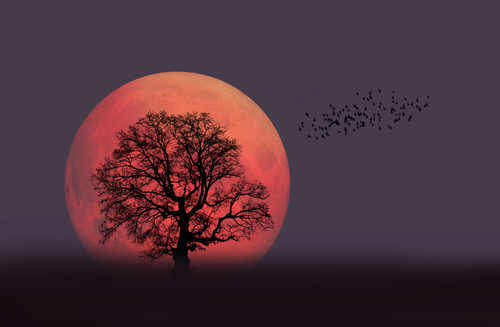
Super moon


Keeping it real ~ Tackling tough topics for the youngest readers

26 Tuesday Jun 2018

Posted by Elizabeth Fais in Books, Middle Grade, Picture Books, Reading

≈ Leave a comment

Tags

Baseball, Coretta Scott King Honor Award, Crenshaw, discrimination, E.B. Lewis, Elizabeth Fais, Gavin Curtis, homelessness, Horn Book, Horn Book Magazine, imaginary friend, Katherine Applegate, Middle Grade, Music, Negro League, Picture Books, segregation, starred review, The Bat Boy and His Violin, Violin

The sweet innocence of childhood should be cherished and preserved for as long as possible, but shielding children entirely from harsh realities doesn’t do them a service. There are levels of truth. The youngest readers shouldn’t be unnecessarily exposed to gritty topics. However, there are plenty of stories that address tough topics in a way that builds empathy and understanding.

The two books I want to focus on here broach the topics of discrimination and homelessness in a gentle way.

The Bat Boy and His Violin, cover

The Bat Boy and His Violin

By Gavin Curtis, Illustrated by E. B. Lewis

The Bat Boy and His Violin, illustration by E.B. LewisReginald loves to create beautiful music on his violin. But Papa, manager of the Dukes, the worst team in the Negro National League, needs a bat boy, not a “fiddler,” and traveling with the Dukes doesn’t leave Reginald much time for practicing. Soon the Dukes’ dugout is filled with Beethoven, Mozart, and Bach — and the bleachers are filled with the sound of the Dukes’ bats. Has Reginald’s violin changed the Dukes’ luck—and can his music pull off a miracle victory against the powerful Monarchs? 

Gavin Curtis’s beautifully told story of family ties and team spirit and E. B. Lewis’s lush watercolor paintings capture a very special period in history. [Synopsis]

The Negro Leagues were United States professional baseball leagues comprised predominantly of African-Americans, beginning in 1920, with a final season in 1951. On the surface, this story is a view into racial discrimination and segregation in the United States prior to the Civil Rights movement.

On a deeper level, this story addresses the all too frequent discrimination of the arts over sports. Reginald serves as a heroic role model, in that he honors his father’s wishes without giving up his true passion. In the end, father and son strengthen their bond through their acceptance and new-found appreciation of one another.

E. B. Lewis won the Coretta Scott King Honor for Illustrations for his rich and nuanced watercolors that enliven this moving, heartfelt story.

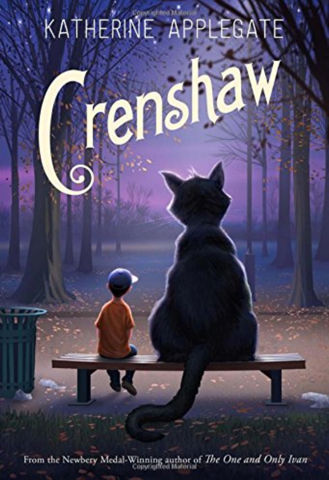
Crenshaw

By Katherine Applegate

Jackson and his family have fallen on hard times. There’s no more money for rent. And Crenshaw, covernot much for food, either. His parents, his little sister, and their dog may have to live in their minivan. Again.

Crenshaw is a cat. He’s large, he’s outspoken, and he’s imaginary. He has come back into Jackson’s life to help him. But is an imaginary friend enough to save this family from losing everything? [Synopsis]

Katherine Applegate tackles a tough topic in Crenshaw, shedding light on the realities of hunger and homelessness. As difficult as this topic is, Applegate artfully infuses the story with empathy and lighthearted humor. I was sold with the opening paragraph:

I noticed several weird things about the surfboarding cat. Thing number one: He as a surfboarding cat. Thing number two: He was wearing a T-shirt. It said CATS RULE, DOGS DROOL. Thing number three: He was holding a closed umbrella, like he was worried about getting wet. Which, when you think about it, is kind of not the point of surfing.

Told from the viewpoint of nine-year-old Jackson, we watch as he shields his younger sister from the terrifying reality of their family’s financial uncertainty, and feel the shame that threatens to cut him off from his best friend. Applegate masterfully shows how the family’s problems play out through Jackson’s eyes, and finally resolve in a safe and satisfying ending that is true to the story’s premise.

The tone is warm and, occasionally, quirkily funny, but it doesn’t sugarcoat the effects of hunger and vulnerability. This novel adds a middle-grade perspective to the literature of imaginary friends and paints a convincing and compassionate portrait of a social class―the working poor―underrepresented in children’s books. ―The Horn Book, starred review


What books that touch on tough topics
would you recommend for young readers?


Wisdom of Richard Peck ~ Writing for young readers

01 Friday Jun 2018

Posted by Elizabeth Fais in Middle Grade, SCBWI, Writing, Young Adult

≈ 1 Comment

Tags

A Long Way From Chicago, A Season of Gifts, A Year Down Yonder, Elizabeth Fais, Fiction, Horn Book, Horn Book Magazine, Masterclass with Richard Peck, Middle Grade, National Book Award Finalist, Newbery Honor, Newbery Medal, Past Perfect Present Tense, Richard Peck, SCBWI, short stories, Society of Children's Book Writers and Illustrators, writing lessons, Young Adult

Richard Peck was an influential voice for me when I started writing for young readers, and with good reason. A Long Way From Chicago, coverHe was a National Book Award finalist TWICE, as well as claiming the Newbery Honor (A Long Way From Chicago) and Newbery Medal (A Year Down Yonder). Richard Peck was nothing short of a master and commander in the art of writing for young readers.

Before becoming an author, Richard Peck was a teacher. His classrooms were filled with the young audience he’d later write for. He admitted that, “Junior-high teaching made a writer out of me.” Peck may have left teaching, but he never stopped sharing his wisdom.

I was fortunate to have heard Richard Peck speak at a couple of Society of Children’s Book Writers and Illustrators (SCBWI) conferences. SCBWI even recorded a video Masterclass with Richard Peck on writing the novel for young readers too, that you can purchase for a reasonable price.

A Year Down Yonder, coverRichard Peck shared his wisdom on craft  through essays, as well. The essay he wrote on importance of beginnings—October/November 2006, Horn Book Magazine sparked a writing epiphany for me. In it he said, “The most important secret of writing . . . you are only as good as your opening line.”

At first I thought that was kind of harsh, so I did extensive research. I went to bookstores and libraries, reading ONLY first lines of books. As it turned out, he was right! The books with great first lines I took home and read.

Don’t confuse a great opening line with over-the-top drama, though. A great opening line shouldn’t be about shock-value. When done right, it sets the tone of the story, reveals character, conflict, and theme. It’s the promise of the premise…distilled into one line. Richard Peck would revise his first chapter 24 times (or more), well after he’d completed the manuscript, to make sure it was right.

A Season of Gifts, cover

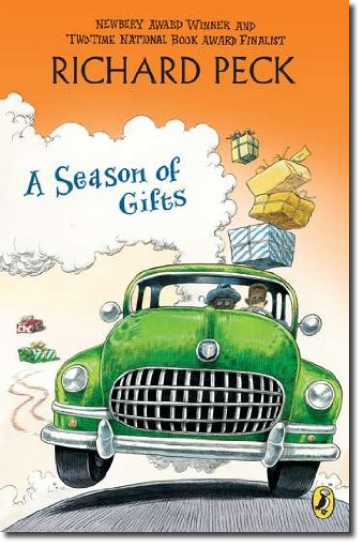
Short stories comprised Richard Peck’s first published works, covering the gamut of comedy, tragedy, historical, and contemporary. In fact, his short story “Shotgun Chentham’s Last Night Above Ground” was the inspiration for his Living in Chicago series: A Long Way From Chicago, A Year Down Yonder, and A Season of Gifts.

Peck’s collection of short stories, Past Perfect, Present Tense includes insights and advice for aspiring writers, along with some of his own notes. In the introduction, Peck reminds us that “fiction isn’t real life with the names changed. It’s an alternate reality to reflect the reader’s own world.” He also warns burgeoning writers that “a short story isn’t easier than a novel.” In truth, short stories require a type of samurai self-editing that is not for the weak of pen or faint of heart.

Writing lessons learned from Richard Peck

  • Before you write a single word, know your audience. Who will want to read the story you have to write?
  • A story isn’t what is. It’s what if?
  • Fiction is never an answer, always a question.
  • A story, of any length, is about change. The characters can’t be the same in the last paragraph as they are in the first. If there’s no change, there’s no story.
  • The essence of the entire story should be encapsulated on the first page.
  • The first chapter is the last chapter in disguise.
  • The story’s beginning should answer each of the following questions with a satisfied “Yes”: Does it intrigue? Does it invite? Does it work?
  • Strong, colorful characters win over readers, like the quirky, audacious, and warm-hearted Grandma Dowdel in a Long Way From Chicago.
  • An outrageous comic outhouse calamity is often the reason a story is recommended, word-of-mouth over and over again. Memorable scenes create loyal audiences and inspire lifetime readers.

Calendar

June 2018
M T W T F S S
 123
45678910
11121314151617
18192021222324
252627282930  
« May   Jul »

Enter your email address to have new posts sent directly to your inbox.

Join 236 other subscribers

It's really me!

  • Elizabeth Fais's avatar Elizabeth Fais

Life is Tweet

Follow @elizabethfais

Recent Posts

  • The true POWER of stories
  • Wisdom of Richard Peck ~ Writing for young readers
  • The Writer and Rabbit Who Saved the Countryside
  • 3 TREE-rific Informational Picture Books
  • Musings from the Writing Cave
  • MG Review ~ HOW I BECAME A SPY
  • The “Creative High” is real!

Past Posts

Officially SCBWI

Reading Fun

Advice for Writers

I Write for Apples

Author Photos

Olivia Marshall

Categories

Amazing but true! Animals Animation Blake Snyder Book Reviews Books Cats Character Dancing Disneyland Elizabeth Fais Fiction Fun Facts Funny Videos Giveaway Giving Back Holiday Humor Inspiration Middle Grade Movies Music Mystery Nonfiction Paranormal Reading Romance SCBWI Shakespeare Story Supernatural Thriller Uncategorized Winner! Writing YA YAppiest Young Adult Zombies

Blog at WordPress.com.

  • Subscribe Subscribed
    • Elizabeth Fais
    • Join 236 other subscribers
    • Already have a WordPress.com account? Log in now.
    • Elizabeth Fais
    • Subscribe Subscribed
    • Sign up
    • Log in
    • Report this content
    • View site in Reader
    • Manage subscriptions
    • Collapse this bar
 

Loading Comments...