• About Me
  • Writer’s Corner

Elizabeth Fais

~ Where awesome begins…

Elizabeth Fais

Tag Archives: Astronomy

Moon monikers ~ Why so many names, and what do they mean?

28 Thursday Jun 2018

Posted by Elizabeth Fais in Moon, Nonfiction

≈ 2 Comments

Tags

Algonquin tribes, Astronomy, Beaver Moon, Black Moon, Blue Moon, Buck Moon, Cold Moon, Corn Moon, Flower Moon, full moon, Harvest Moon, Honey Moon, Hot Moon, Hunting Moon, June, Mead Moon, Moon, moon moniker, Native Americans, Pink Moon, Rose Moon, Snow Moon, Strawberry Moon, Sturgeon Moon, Supermoon, Worm Moon

This week’s Strawberry Moon made me wonder: WHAT is a strawberry moon, WHY are there so many names for our moon, WHAT do they all mean, and WHERE did they originate? Alas, the hazards of being a writer.

Moon over lake

What is a Strawberry Moon?

The full moon in June was called a Strawberry Moon by the Algonquin tribes (one of the most widespread North American native tribes), because it signaled the time for harvesting wild strawberries. The June full moon has also been known as the Honey Moon, Mead Moon, Hot Moon, and Rose Moon by other tribes and cultures.

Strawberry moon

WHY so many names for ONE moon?

In the United States, Native Americans created the full moon names—nicknames—we know today to help in tracking the seasons. There’s a nickname for a full moon each month, even though the tribes observed the seasons and lunar months, not calendar months as we do.

Some tribes defined a year as 12 moons, others as 13. Certain tribes added an extra moon every few years, to stay in sync with the seasons. The following is a list of traditional nicknames for the full moons.

  • JANUARY—Wolf Moon—This moon appeared when wolves were hungry and howled in outside villages.
  • FEBRUARY—Snow Moon—This moon appeared when the snowfall was the heaviest. Hunting was most difficult during this time and Native American tribes also called it the Hunger Moon.
  • MARCH—Worm Moon—This moon appeared when the ground softened and earthworms reappeared, bringing the return of robins. This moon was also known as the Sap Moon, because it was time for the annual tapping of maple trees.
  • APRIL—Pink Moon—This moon appeared with the first spring flowers, wild ground phlox. This moon was also known as the Sprouting Grass Moon, the Egg Moon, and the Fish Moon.
  • MAY—Flower Moon—This moon appeared when flowers bloomed in abundance. It was also known as the Corn Planting Moon or the Milk Moon.
  • JUNE—Strawberry Moon—This moon appeared when it was time to gather ripening strawberries.
  • JULY—Buck Moon—This moon appeared when a buck’s antlers were reaching full growth. This full Moon was also known as the Thunder Moon, because of the frequent thunderstorms during this month.
  • AUGUST—Sturgeon Moon—This moon appeared when the sturgeon in the Great Lakes and Lake Champlain were most abundant. This moon was also called the Green Corn Moon.
  • SEPTEMBER—Corn Moon—This moon appeared when it was time to harvest the corn. Likewise known as the Barley Moon, because it was time to harvest barley.
  • OCTOBER—Hunting Moon—This moon appeared when the game was fattest. It was time to hunt and store provisions for winter. This moon was also known as the Travel Moon.
  • NOVEMBER—Beaver Moon—This moon appeared before the swamps froze and it was time to set beaver traps. The colonists and Algonquin tribes depended on the furs of beavers and other animals for warmth during the winter. This full Moon was also called the Frost Moon.
  • DECEMBER—Cold Moon—This moon appeared when the winter cold had set in and the nights were longest. This full Moon was also called the Long Nights Moon.

Moon over sea

Special Moons

Several moon occurrences are extremely rare and therefore have special names:

  • Blue Moon—There is a Blue Moon controversy regarding the true meaning. However, typically this is the second full moon in a calendar month.
  • Black Moon—This is a month in which there is no full Moon. It can also refer to a second new Moon occurring within a calendar month.
  • Harvest Moon—This is the full Moon nearest the start of fall (autumnal) equinox, anywhere from two weeks before to two weeks after the equinox. The moonrise comes soon after sunset bringing in an abundance of bright moonlight, which helped farmers in harvesting their crops.
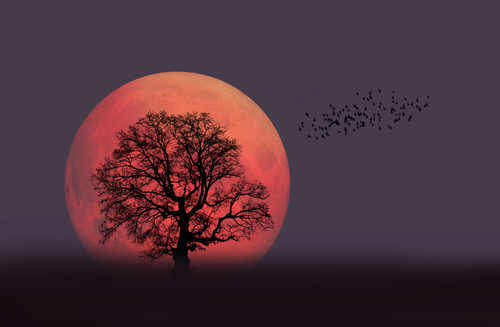
  • Supermoon—A full Moon is a Supermoon when it is reaches the point in its orbit that is closest to the Earth.
Super moon


Total solar eclipse & its influence on fiction

05 Saturday Aug 2017

Posted by Elizabeth Fais in Fiction, Moon, Story

≈ Leave a comment

Tags

A Connecticut Yankee in King Arthur's Court, Astronomy, Boleslaw Prus, Dolores Claiborne, Eclipse, Eclipse of the Sun, Elizabeth Fais, Fiction, Gerald's Game, Isaac Asimov, John Banville, King Lear, Mark Twain, Nightfall, Peter Weir, Pharaoh, Phil Whitaker, Robert Silverberg, SAO, Shakespeare, Shroud, Smithsonian, Smithsonian Astrophysical Observatory, solar eclipse, Stephen King, total solar eclipse, Witness

The primal fear effect

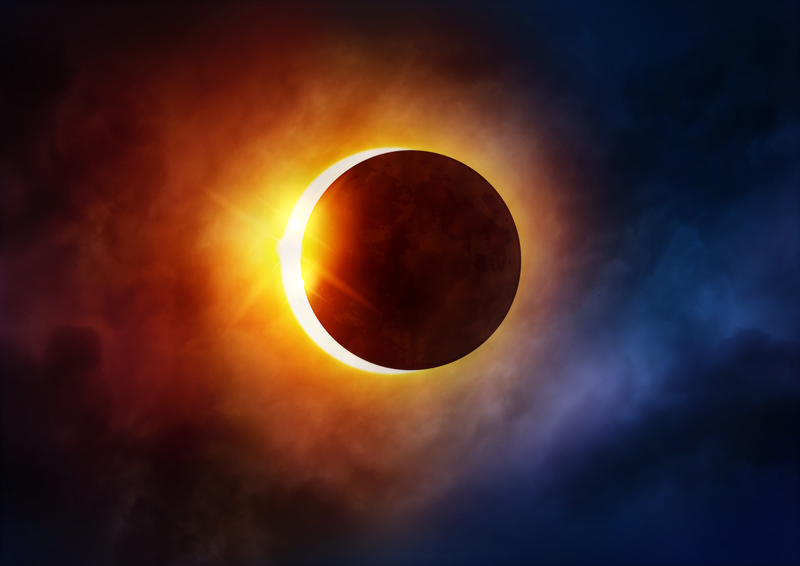
A total solar eclipse is when the moon passes between the sun and earth, and blocks all or part of the sun for up to about three hours from a given location.

Today, a total solar eclipse is an astronomical rarity, an event to be recorded and studied. That was not always the case. It wasn’t all that long ago (in the grand scheme of things) that the sun and sky going dark caused mass hysteria. Which is not a totally irrational response. It triggers a primal fear, because we depend on the sun’s energy for life. Without it, our world would be uninhabitable.

It’s no surprise that a total solar eclipse continues to have a strong effect on us even now, as is evident in fiction: books, film, and television. Stories that resonate most deeply with the human psyche are primal, and survival is about as primal as it gets.

Fictional total eclipses

The earliest known fictional solar eclipse is in Homer‘s Odyssey, which scholars believe was composed near the end of the 8th century BC. There’s probably lesser known fictional references to solar eclipses between the 8th century BC and 1608, when Shakespeare’s tragic play, King Lear was first published, but let’s jump to King Lear’s famous quote:

O insupportable! O heavy hour! / Methinks it should be now a huge eclipse / Of sun and moon; and that the affrighted globe / Should yawn at alteration…

Following Shakespeare, the better known fictional works that feature solar eclipses were published in the late 19th century:

  • A Connecticut Yankee in King Arthur’s Court, by Mark Twain (1889), where the protagonist predicts a solar eclipse in 528 AD.
  • Pharaoh, by Bolesław Prus (1895), a historical novel that culminated in a solar eclipse at the fall of Egypt’s 20th Dynasty, (1085 BC).

You might think that the paranormal intrigue surrounding a total solar eclipse would wane as we entered the 20th century, but no. In fiction, film, and television, it increased. The following are just a few of the works by the more prominent authors:

  • Two Stephen King novels have a murder committed during an eclipse: Dolores Claiborne and Gerald’s Game.
  • Nightfall, by Isaac Asimov and Robert Silverberg (1990 novel based on Asimov’s 1941 short story of the same name).
  • Eclipse of the Sun, by Phil Whitaker (1997), is set in India and centered around a public viewing of the Solar eclipse of October 24, 1995.
  • Eclipse (2000) and Shroud (2002), by John Banville, two interlinked novels that are both set against the backdrop of a solar eclipse.

The list of film and television shows that include solar eclipses in their story is more extensive than in books. For a complete list of title for both fiction, film, and television, go here.

1984 eclipse in Witness

It’s interesting that while filming Witness (1985) in Pennsylvania’s Amish region, a partial solar eclipse occurred on May 30, 1984 (at his location). Director Peter Weir filmed the actors in costume, responding to the eclipse. However, these scenes never made it into the publicly released version of the film.

August 21, 2017 ~ total solar eclipse

August 21, 2017 will be the first total solar eclipse that can be seen in the United States in 38 years, the last one being in 1979. For the 2017 solar eclipse, the longest period the moon completely blocks the sun—from any given location along the path—will be about two minutes and 40 seconds.

If you’re interested in following the solar eclipse as it happens, even if you won’t be in the direct viewing path, check out the Smithsonian Solar Eclipse app from the Smithsonian Astrophysical Observatory (SAO). The app allows you to watch a live NASA stream of the eclipse as it travels across the continental United States. You can calculate your view with their interactive eclipse map, and get a virtual view in our eclipse simulator. Super cool!


Calendar

January 2026
M T W T F S S
 1234
567891011
12131415161718
19202122232425
262728293031  
« Nov    

Enter your email address to have new posts sent directly to your inbox.

Join 236 other subscribers

It's really me!

  • Elizabeth Fais's avatar Elizabeth Fais

Life is Tweet

Follow @elizabethfais

Recent Posts

  • The true POWER of stories
  • Wisdom of Richard Peck ~ Writing for young readers
  • The Writer and Rabbit Who Saved the Countryside
  • 3 TREE-rific Informational Picture Books
  • Musings from the Writing Cave
  • MG Review ~ HOW I BECAME A SPY
  • The “Creative High” is real!

Past Posts

Officially SCBWI

Reading Fun

Advice for Writers

I Write for Apples

Author Photos

Olivia Marshall

Categories

Amazing but true! Animals Animation Blake Snyder Book Reviews Books Cats Character Dancing Disneyland Elizabeth Fais Fiction Fun Facts Funny Videos Giveaway Giving Back Holiday Humor Inspiration Middle Grade Movies Music Mystery Nonfiction Paranormal Reading Romance SCBWI Shakespeare Story Supernatural Thriller Uncategorized Winner! Writing YA YAppiest Young Adult Zombies

Blog at WordPress.com.

  • Subscribe Subscribed
    • Elizabeth Fais
    • Join 236 other subscribers
    • Already have a WordPress.com account? Log in now.
    • Elizabeth Fais
    • Subscribe Subscribed
    • Sign up
    • Log in
    • Report this content
    • View site in Reader
    • Manage subscriptions
    • Collapse this bar
 

Loading Comments...