• About Me
  • Writer’s Corner

Elizabeth Fais

~ Where awesome begins…

Elizabeth Fais

Category Archives: Story

Fictional Time Management & Other Relative Topics

06 Sunday Nov 2016

Posted by Elizabeth Fais in Story, Writing

≈ Leave a comment

Tags

Albert Einstein, Andie MacDowell, Bill Murray, clockpunk, clocks, Daylight Savings Time, Elizabeth Fais, Fantasy, Fiction, Groundhog Day, Pennsylvania, Punxsutawney, Story, Tara Sim, Theory of Relativity, time, Timekeeper, Writing, YA, Young Adult

Einstein Nailed It

When I was in grade school, my parents went away for an hour and it felt like an entire day. Seriously. Later that same year when we went to Disneyland for the first time, one day felt like a minute.

Not unlike when we set our clocks forward an hour in the spring for Daylight Savings Time, and it feels like we lose four hours of sleep instead of just one. Yet when we set our clocks back an hour in the fall, the same hour feels like it’s cut in half. What’s up with that?

Einstein’s Theory of Relativity in four words: Time is funny stuff.
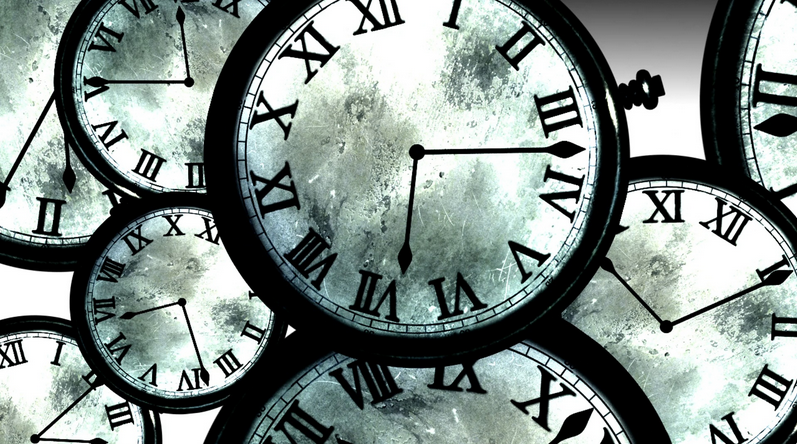
Clock faces

The Perception of Time is Relative

We often perceive time as expanding or contracting based on our emotions, and our perception creates our reality. Authors have used this to their advantage for quite some time. Telling a story in real-time slows the pace down to focus on a character or story element, or maybe to build suspense. Writers have their ways of accelerating the pace to adjust perception and influence emotion too. Further proof that the pen, and the keyboard, are mightier than the sword. And quantum physics…apparently.

Manipulating fictional time, at its best, keeps readers turning the pages. I wrote a post on Time as a Story Element that discusses these techniques in greater detail, if you’re interested.

Lost Time: Timekeeper

What if time didn’t just expand and contract, but could actually be lost? As in disappear. Vanish. Just freaking gone.
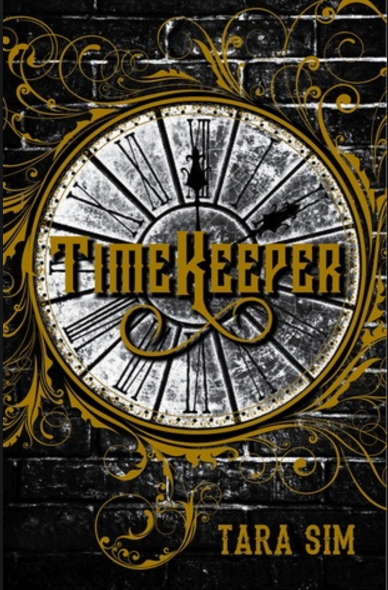
TimekeeperAn intriguing predicament that I hadn’t considered, until I picked up Timekeeper by Tara Sim. The first lines of this alternate Victorian era London run by clock towers cut to the chase:

Two o’clock was missing. Danny wanted it to be a joke. Hours didn’t just disappear.

But they can, and did, in a world where clock towers literally control time. When a clock tower breaks, so does time. And when a clock tower is destroyed, time stops completely. This clockpunk fantasy is infused with magic, woven through with myth, and spiced with mayhem. Danny, our hero, is a clock Mechanic charged with ensuring that time flows according to the natural order. The Mechanics inherit the job, because they can actually feel the strands of time and the weave of its fabric. The existential truths layered throughout the story provide satisfying believability and depth.

Time was everywhere and nowhere at once, making the moment last an eternity.

Stuck in Time: Groundhog Day

There is broken time, and then there is being stuck in time on infinite repeat. A post on fictional time and relativity just isn’t complete without a mention of one of my favorite movies: Groundhog Day.
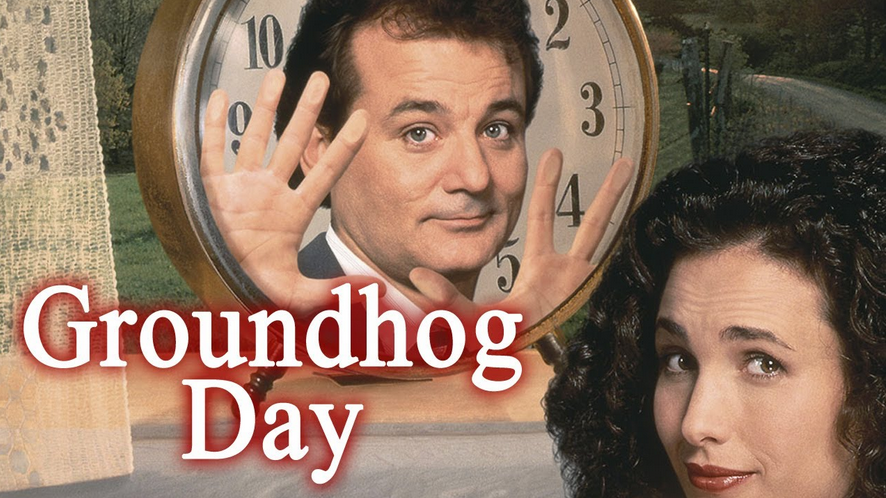
Groundhog Day movie

Phil (Bill Murray), an egotistical curmudgeon of a weatherman, gets stuck living Groundhog Day in Punxsutawney, Pennsylvania over, and over, and over…until he finally gets it right. Which for him, takes some doing. I could go on and on and on about this movie, but you’ll enjoy watching the following trailer much more. May time forever flow in your favor.


The Magic of “GREAT!” Beginnings

13 Monday Jun 2016

Posted by Elizabeth Fais in Books, Story, Writing

≈ 1 Comment

Tags

Also Known As, Elizabeth Fais, Katherine Applegate, Martha Brockenbrough, Mary E. Pearson, Newbery Medal, Richard Peck, Robin Benway, SCBWI, The Game of Love and Death, The Kiss of Deception, The One And Only Ivan

Spellbinding Firsts

Magic of a good bookWhat is it about one book that you can’t put down once you start reading, and another that you can’t get past the first few pages? “Magic?” you say. I’d have to agree, if the magic is that of an intriguing story well told.

How does a writer work that magic into a story? How do we conjure the spell?

Multiple Newbery Medal winner, Richard Peck, shed insight on the magic behind great beginnings in an article in that appeared in the September/October 2006 issue of The Horn Book Magazine. Then, at a SCBWI annual summer conference, he expanded on his theory that, “You are only as good as your first line.” The secret he related was that, “the essence of the entire story should be encapsulated on the first page.” Yes, the entire story…is an expanded reflection of the first page.

No wonder Richard Peck revises his first chapter again and again, and then once more after he’s finished the book. Because…

The first chapter is the last chapter in disguise.

Peck keeps working on the beginning of a story until he can answer each of the following questions with a satisfied “Yes”:

Does it intrigue? Does it invite? Does it work?

He should know. Multiple Newbery Medals don’t lie. Applying concepts to my own writing is always easier when I have quality examples to study for structure. The following books provide insights into how great beginnings work, each in its own way:

  • The Kiss of Deception by Mary E. Pearson
  • The Game of Love and Death by Martha Brockenbrough
  • The One and Only Ivan by Katherine Applegate
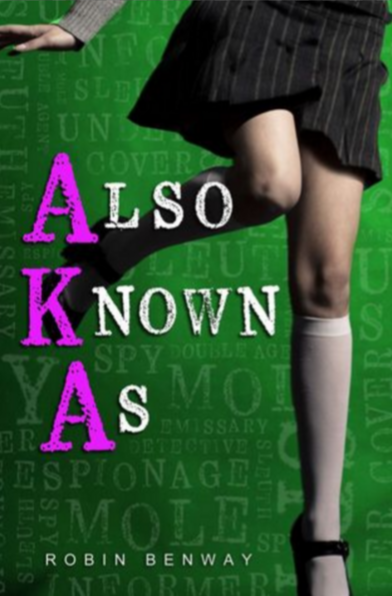
  • Also Known As by Robin Benway

The Kiss of Deception

The Kiss of Deception, the first in The Remnant Chronicles series by Mary. E. The Kiss of DeceptionPearson, is expertly crafted in many ways. The beginning is no exception. The opening paragraphs wrap us in a lyrical voice and language that intrigue, engender suspense, and unfold threads of magic that alight to weave their magic throughout the series:

Today was the day a thousand dreams would die and a single dream would be born.

The wind knew. It was the first of June, but cold gusts bit at the hilltop citadelle as fiercely as deepest winter, shaking the windows with curses and winding through drafty halls with warning whispers. There was no escaping what was to come.

The Game of Love and Death

Game of Love and Death The Game of Love and Death, by Martha Brockenbrough, is an eternal love story staged by the ultimate masters of the game of life: Love and Death.

The masters choose players to unwittingly participate in a romantic dance through a life filled with jazz clubs and airfields. The players’ dance comes to such a poignant and satisfying culmination, that even the arch nemeses are overwhelmed by its divine beauty.

Brockenbrough establishes the fable in entrancing magic from the first paragraph, weaving the lyrical rhythm of language and fully developed characters with expert elegance:

The figure in the fine gray suit materialized in the nursery and stood over the sleeping infant, inhaling the sweet, milky night air. He could have taken any form, really: a sparrow, a snowy owl, even a common house fly. Although he often traveled the world on wings, for this work he always preferred a human guise.

The One and Only Ivan

The One and Only Ivan, by Katherine Applegate, is a fictional story that was inspired by Ivan, aTheOneAndOnlyIvan_cover real gorilla at the Atlanta Zoo. You can read about the real Ivan here.

The One and Only Ivan is both heartbreaking and heartfelt, brimming with the tenacity of true friendship and the beauty of resolute spirit. Ivan’s soulful voice, his big heart, and the simple honesty of his view of the world draw us in and hold us till the well-deserved happy ending:

I am Ivan. I am a gorilla.

It’s not as easy as it looks.

People call me the Freeway Gorilla. The Ape at Exit 8. The One and Only Ivan, Mighty Silverback.

The names are mine, but they are not me. I am Ivan, just Ivan, only Ivan.

Also Known As

Also Known AsGreat beginnings don’t have to be serious. They can be fresh and fun too, like Also Known As by Robin Benway.

Maggie Silver is the safe cracking prodigy of parents who work for the world’s premier spy organization. Maggie’s sass and snark don’t disappoint on this fast-paced caper, rife with international espionage and the unexpected perils of negotiating high school and first love:

I cracked my first safe when I was three.

I know that sounds like I’m bragging, but really, it wasn’t that hard. It was a Master Lock, the same combination lock that you probably have on your locker or bike. Anyone with Internet access and too much time on his or her hands can crack a Master Lock. I’m serious. Google it. I’ll wait.

See? Easy.


For the Love of Character ~ Idiosyncrasies that Build Empathy

09 Monday May 2016

Posted by Elizabeth Fais in Character, Fiction, Story

≈ Leave a comment

Tags

Brenda Leigh Johnson, Character, crime drama, Deputy Chief, FBI, Fiction, Jon Tenny, Kyra Sedgwick, LAPD, Los Angeles Police Department, Mystery, Story, The Closer, Warner Bros. Television

Building Empathy

I’ve written about various facets of character development in the past, mostly in broad-stroke terms, such as quirky characters who dress like Buster Keaton. Such extreme character traits Brenda Leigh Johnsoncomplement some stories. Other stories require a subtler approach. Developing empathy for a character comes from seeing their idiosyncrasies and flaws, which allows us to identify with them.

Let’s face it. No one can relate to a perfect person, because we all have shortcomings of some kind. Which is why a character’s weaknesses inspire empathy, and in turn cause us to fall in love with them. A tough, no-nonsense investigator who stress eats Ding Dongs (and other sweets) becomes instantly more likable.

Creating empathy is a lot like building trust, it happens over time as we get to know the real person from the inside out.

What “The Closer” Taught Me About Character

Research for writing fiction can cover a broad gamut, including watching television. And you wonder why I love this job?

I write for young readers, and initially started watching The Closer — a Warner Bros. Televsion adult crime drama — to analyze the mystery plot structure and well planned plot twists. The series had garnered more than a few Emmy nominations, and at least one win. I figured I could learn something from the writing. I was right in more ways than anticipated. The Closer showed me the power of everyday character idiosyncrasies as a method for building empathy.

For anyone who hasn’t seen The Closer, here’s the synopsis: The Closer is a police procedural series, starring Kyra Sedgwick as Brenda Leigh Johnson, a Los Angeles Police Department Deputy Chief. Brenda moved to Los Angeles from Georgia where she trained in the CIA, and gained a reputation as a Closer — a tough interrogator who solves cases and obtains confessions leading to convictions that “close” the case. Deputy Chief Johnson uses her femininity to disarm and distract, and at times resorts to deceit and intimidation to persuade suspects into confessing.

The Closer -- Cast

Brenda Johnson is an expert in her field, relentless and often intimidating. As perfect as she is when it comes to succeeding at her job, her foibles make her relatable and endearing. Here are a few of her characteristics that won me over and made me root for her:

  • She dresses feminine and understated like the Southern girl she is, rather than embodying the high-power-business-suit-chic of the other women at her job level.
  • She stress eats sweets, especially Ding Dongs, which she keeps stockpiled in her desk drawer.
  • As powerful as she is at work, she is unable to stand up to her father whenever he comes to visit.
  • She has episodes of disorganized absent-mindedness where she can’t find her phone and loses her purse. Hey, we’ve all been there.
  • Her single-minded focus that makes her so good at her job causes friction in her personal relationships — such as her FBI boyfriend (Jon Tenny) who she eventually marries.
  • She has trouble dealing with simple things in everyday life, like remembering the sex of the stray cat that comes with the house she buys. Brenda calls “Kitty” a “he” even after “she” has kittens. This drives Fritz, her then boyfriend, crazy.
  • She is relentless in her pursuit of a criminal, creating loopholes in the system to pursue justice, even when the victims were less than noble when alive.
  • She uses her Southern charm to get what she wants, always ending an unpleasant request with a sweet “Thank you so much” before anyone can object.
  • She stands behind the people on her team, protecting their jobs during budget cuts, and refusing to believe any one of them could be the cause of the information leak in her department.

Every member of the ensemble cast received their share of idiosyncrasies that endeared them to me as well. And the final season closed with all the necessary ingredients for a satisfying ending.

Brenda and Fritz - Final Season of The Closer


The Covenant of the Character Arc ~ Raise the Stakes & Make it Count

31 Sunday Jan 2016

Posted by Elizabeth Fais in Story, Writing

≈ 1 Comment

Tags

All Is Lost, Bad Guys Close In, Beat Sheet, Blake Snyder, BS2, Buffy the Vampire Slayer, Character Arc, Dark Night of the Soul, Elizabeth Fais, Harry Potter, J.K. Rowling, Joss Whedon, Miss Congeniality, Sandra Bullock, Save the Cat!, Tim Stout

Stories help us cope with the chaos of life. They show us how to navigate social situations and overcome adversity. A New York Times article, “Your Brain on Fiction”, by Annie Murphy Paul, discusses studies that prove this.

For a story to fulfill its function and satisfy the human spirit, there has to be change. The covenant of the (character) arc, as Blake Snyder so wisely described it, is the necessity for characters to change. The measure of change is a character’s arc. In the best stories, all characters arc except the bad guy. J.K. Rowling did an excellent job of this throughout the Harry Potter series.

Harry Potter

The Transformation Machine

Shake. Stir. Whip. Frappe. Do whatever it takes to force your characters to confront their frailties and become wiser, stronger, better. Blake Snyder, Mr. Save the Cat! referred to this process as the Transformation Machine.

All stories are about transformation. And seeing this as a good thing is the starting point of writing a successful story of any kind. ― Blake Snyder

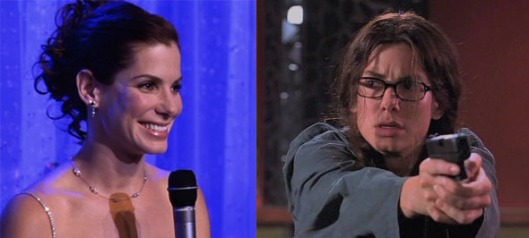
In essence, the hero’s transformation mirrors the process of a caterpillar turning into a butterfly. A type of death and rebirth are required to complete a satisfying character arc. Take Gracie Hart, the unrefined FBI agent (Sandra Bullock) in Miss Congeniality, who must become a polished beauty pageant contender in order to solve the crime and save the lives of her new friends.

Miss Congeniality, Sandra Bullock

Dishing out conflicts for characters isn’t always easy, but  it’s a must. To achieve a great ending—as described in Secret Ingredients of a Satisfying Ending—the characters have to change. A lot.

There are plenty of character arc graphs and charts. I understood the theory, but applying it evaded me until I read Save the Cat! The Last Book on Screenwriting You’ll Ever Need. The Blake Snyder Beat Sheet (BS2) story points, or beats, that push the character arc include: Bad Guys Close In, All Is Lost, and Dark Night of the Soul. Tim Stout provides excellent descriptions for each of these beats here.

Make ‘Em Suffer Till They Shine

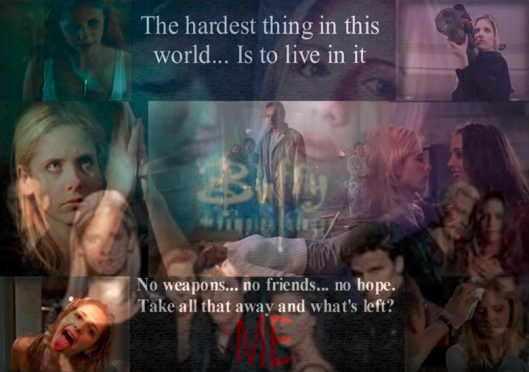
It’s simple. To survive, our hero has to change. Joss Whedon (Buffy the Vampire Slayer) puts characters through hell—literally and figuratively. This pressure has an effect similar to that which transforms a lump of coal into a diamond. It files down the hero’s rough edges and makes him shine.

You take people, you put them on a journey, you give them peril, you find out who they really are.
― Joss Whedon

Buffy the Vampire Slayer

Take it up a notch!

In chemistry, heat accelerates change. The same is true for stories. Here’s a few suggestions for turning up the heat and increasing the transformation process:

  • Make the Bad Guy badder—For the protagonist to be perceived as the hero he is, the Bad Guy has to be as bad as possible. The villain must be an equal match for the hero, but willing to do whatever it takes to win. Beating the villain has to seem impossible, so when the hero wins he shines brighter.
  • Increase internal conflicts—Fear, doubt, jealousy, shame, any and all emotional trauma. Bring it. The pressure makes the hero to face his inner demons, and forces him to realize that what he thinks he wants isn’t what he really needs. Dig Deep for a Story That Resonates shows how this can strengthen the story’s theme.
  • Increase external conflicts with friends and relatives—Betrayal, abandonment, rifts in trust, arguments, even death. Pile it on. These conflicts push the hero to his lowest, forcing him to find strength he didn’t know he had.
  • Throw in a force of nature—Wind, rain, earthquake, snakes, anything to make your character’s goal harder to accomplish. These obstacles can force the hero to overcome his flaws.
  • Blow something up—A couple of authors shared this advice at a conference. The event has to be organic to the story and plausible for the characters. The action must also come from a deep emotional need to force transformation. Extreme times call for extreme measures.

Enhance the Heat

Stories have flavor. And just like a great meal, flavor is enhanced when complimented by an opposite. To strengthen the impact of a transformative moment, pair it with its opposite.

Joss Whedon said it best…

Make it dark, make it grim, make it tough, but then, for the love of God, tell a joke.
― Joss Whedon


Secret Ingredients of a Satisfying Ending

03 Sunday Jan 2016

Posted by Elizabeth Fais in New York City, Story, Writing

≈ Leave a comment

Tags

Elizabeth Burke, Elizabeth Fais, endings, FBI, Mozzie, Neil Caffrey, New York City, NYC, Peter Burke, Story, story elements, White Collar, Writing

A great beginning keeps readers turning the pages. A great ending builds a fan base, because readers will be thinking about the book long after turning the last page. We’ve all experienced the satisfaction of a perfect ending to a book, movie, or television series. But what’s the secret?

What makes the ending of one story great, while another story’s ending leaves us unfulfilled?

The finale of the TV series WHITE COLLAR helped solve this mystery for me. The series ending was so perfect, I couldn’t help breaking it down, analyzing the elements that lead up to a culmination of satisfaction.

But first, an overview of the series for those who may not be familiar with the main characters and premise of the series.

White Collar ~ The Series

Cast of White Collar

The third time turns out to be the charm for criminal Neal Caffrey. He has been eluding FBI agent Peter Burke for years, a run that finally comes to an end with his capture. But after the resourceful prisoner escapes from a maximum-security facility, then is nabbed once again by Burke, Caffrey suggests a different end-game: In return for freedom, he’ll help the Feds catch long-sought criminals. Though skeptical, Burke soon realizes that Caffrey’s instincts and insight are a rare commodity. Caffrey’s trusted friend and co-conspirator with ties to the criminal underworld, Mozzie, also becomes a useful source for Burke and the FBI. [Series Synopsis]

The series was well written with engaging characters and story lines, and plot threads with enough twists to keep the most agile guessing. Mozzie, Neil’s sidekick, added a delightful streak of rebellious quirkiness for comic relief.

Ingredients of a Great Ending

*** SPOILER ALERT ***
If you don’t want to know how White Collar ends, STOP now.

Ingredients for a satisfying ending, with examples from White Collar:

  1. The promise of the premise for the story and the genre is paid off. The FBI promised Neil Caffrey his freedom if he was instrumental in helping them solve their toughest ‘white collar’ cases. To satisfy the promise for this genre, justice had to be served to this end. Neil does go free after making the ultimate sacrifice when pulling off a sting on a treacherous ring of international thieves.
  2. The main character’s arc (Neil Caffrey) is completed in a believable fashion. Neil’s loyalty to Peter (as an FBI representative) and his wife Elizabeth becomes true, when he realizes his freedom ultimately threatens the lives of the couple and their unborn child. Neil also shows deep remorse when his actions hurt an innocent young woman he’s forced to befriend to bring down the thieves. For the first time he questions his life and the role he plays with the FBI. The completion of the character arcs for Peter and Elizabeth Burke, and of course, Mozzie, though less dramatic, are equally rewarding. It would take too long to explain them all here in detail. Trust me. Better yet, watch the series.
  3. The main character earns the payoff, internally as well as externally. In the end, Neil overcomes his inability to trust Peter (as an FBI representative), and puts the safety and well-being of his friends before his own. To ensure their safety, Neil secretly masterminds the final phase of the sting. His selfless actions earn him his freedom and happiness.
  4. There’s a significant sacrifice for the pay off. For Neil to earn his freedom (payoff), he made the ultimate sacrifice. He fakes his own death to ensure the lifelong safety of his friends—sparing them from retaliation by the gang members caught in the sting. Neil can never talk to or see the people who mean the most to him again. The ingenious method he uses to fake his death added to the overall satisfaction.
  5. Enough is left to the imagination without leaving unanswered questions. Everything isn’t tied up neatly, leaving “what happens next” up to the audience’s imagination. In the final scenes, Peter Burke discovers clues leading to the storage locker Neil secretly rented during the initial planning of the sting. What Peter finds gives him insights into how Neil faked his death, thus assuaging his remorse over the loss of his friend. In the final shot, we see Neil strolling down a Parisian side street wearing his fedora, a satisfied smile on his face and a carefree spring in his step.


If you have an a Perfect ending Element to add to the list, Please do!


Food Fiction ~ Culinary Character Elements

23 Monday Nov 2015

Posted by Elizabeth Fais in Fiction, Story

≈ Leave a comment

Tags

Chocolat, culinary, food fiction, Joanne Harris, Johnny Depp, Judi Dench, Juliette Binoche, Laura Esquivel, Like Water for Chocolate, Richard C. Morais, The Hundred-Foot Journey

November is the month of food in the United States, with Thanksgiving…a holiday entirely centered around food. So it’s the perfect time to talk about food fiction. Which apparently is a genre. Who knew?

A writing instructor once suggested that our class “include descriptions of food” to hook the reader and add depth to our stories. I haven’t taken that advice…yet, but I don’t discount its validity either. Many authors use food as a story element, creating an engaging character element in the process.

images of food and spices

I usually limit discussions on this blog to Young Adult (YA) and Middle Grade (MG) fiction. But in this genre, all my favorite stories come from adult fiction. And I don’t think its a coincidence that two of the titles have “chocolate” in them either. These books are all bestsellers that were made into major motion pictures. Proof that my writing instructor’s advice carried more than a little truth…when done right. [PC: morguefile.com]

I hope you enjoy these stories too. Bon appetit!

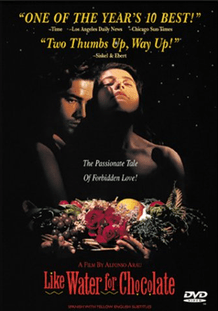
Like Water for Chocolate ~ by Laura Esquivel

Like Water For Chocolate is a tale of love, magic…and recipes.Like Water for Chocolate Earthy and laced with magical realism, this story of family life in turn-of-the-century Mexico centers on the all-female De La Garza family. Tita, the youngest daughter, is forbidden to marry (by Mexican tradition) and must look after her mother for as long as she lives. As fate would have it, Tita falls in love with Pedro and he in turn is seduced by her cooking, which is magically infused with her passionate emotions. Unable to have the woman he loves, Pedro marries her sister, Rosaura, out of desperation to be close to Tita. Over the following twenty-two years, Tita and Pedro circle each other in a dance of unconsummated passion. Only a freakish chain of bad luck and fate can finally set things right, allowing the two lovers to unite at last. 

In Like Water for Chocolate, the food Tita cooks becomes an extension of herself. Her emotions are infused in the food she touches, and anyone who eats her cooking experiences her emotions. Food becomes the vehicle through which Tita and Pedro fall in love, as well as the connection which sustains their passion until they can be together at last. This sensuous novel was made into a tantalizing motion picture of world-wide acclaim.

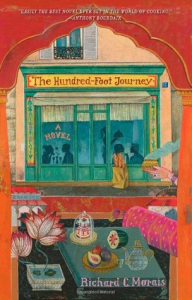
The Hundred-Foot Journey ~ By Richard C. Morais

Hundred-Foot-Journey“That skinny Indian teenager has that mysterious something that comes along once a generation. He is one of those rare chefs who is simply born. He is an artist.”

So begins the illustrious career of Hassan Haji, the unlikely gourmand who recounts his life’s journey in The Hundred-Foot Journey. Lively and brimming with the colors, flavors, and scents of the kitchen, The Hundred-Foot Journey is a succulent tale about family, nationality, and the mysteries of good taste.

This story shows us how the hundred-foot distance between a new Indian kitchen and a traditional French one can represent the gulf between different cultures and desires.

In The Hundred-Foot Journey, food is the character that unites family, directs fate, and bridges the chasms between diverse cultures. Food is also the catalyst that opens closed minds to new ideas, and opens hearts to the humanity within us all no matter the culture. This book was recently made into a delightful feature film, I highly recommend seeing. More than once.

Chocolat ~ by Joanne Harris

In tiny Lansquenet, nothing much has changed in a hundred years. That is, until beautiful Chocolat moive posternewcomer Vianne Rocher and her exquisite chocolate shop arrive. Havoc ensues soon after with the breaking of Lenten vows in a strict Catholic community. It’s more than just chocolate that Vianne delivers. Each box of bonbons comes with a personal gift: Vianne’s uncanny perception of the customer’s private discontents and a clever cure. Taken in by Vianne’s charm…and chocolate…the town folk abandon themselves to the culinary delight and happiness. A dramatic face-off between Easter solemnity and the gaiety of a chocolate festival result in a climatic resolution. Chocolat is a delicious mix of passion, whimsy, and of course, chocolate. 

In Chocolat, food (chocolate) is part of the main character, Vianne. But chocolate plays another major role in this story when it becomes the adversary—the catalyst for change in the small French village. Chocolate forces the strict Christian township to look at its narrow-minded ways and open their hearts and minds, choosing inclusion over exclusion. The Oscar-nominated film of the same name starred Juliette Binoche, Judi Dench, and Johnny Depp.


What’s your favorite food fiction novel?


Time as a Story Element ~ Setting, Tone, Atmosphere, & Urgency

22 Thursday Oct 2015

Posted by Elizabeth Fais in Story, Writing

≈ 2 Comments

Tags

A Long Way From Chicago, Back to the Future, Bruce Willis, Die Hard, Edward V, Elizabeth Fais, Found, Historical Fiction, Home Alone, Margaret Peterson Haddix, Marty McFly, Michael J. Fox, Missing series, NaNoWriMo, Richard of Shrewsbury Duke of York, Richard Peck, seasonal, Sent, Story, story elements, ticking-clock, time, Writing

clockNational Novel Writing Month (NANOWRIMO) is just around the corner—a yearly event in which writers commit to completing a 50,000 word (or more) novel during the month of November. One month. One book. Not a lot of time. So, time as a story element seems like an appropriate blog topic.

Stories unfold over a set interval of time. That’s a given. What I want to discuss is how different types of time can be used as story elements to set mood, further plot, and deepen character. [pc: morguefile.com]

Types of Time

There are four types of time that can be used to add atmosphere, set tone, and increase urgency in a story:

  • Clock time:  Sets mood and creates suspense.
  • Calendar time: Creates a context for events, such as prom, homecoming, and graduation.
  • Seasonal time: Creates atmosphere, as well as providing a backdrop and reason for cultural events and activities.
  • Historical time: Establishes a context for social ideas, behaviors, and attitudes.

These elements can be combined, as you’ll see in the following examples.

Seasonal Atmosphere

Calendar and seasonal time are a natural combination. A season is technicallyCover for A Long Way From Chicago by Richard Peck three months long, allowing the story to unfold during time. Seasonal time can be used to set atmosphere and integrate events particular to the season to further the story. One great example is A Long Way From Chicago by Richard Peck. The story begins in the fall, with a Halloween outhouse scene that is laugh-out-loud hilarious, while also adding depth to the characters.

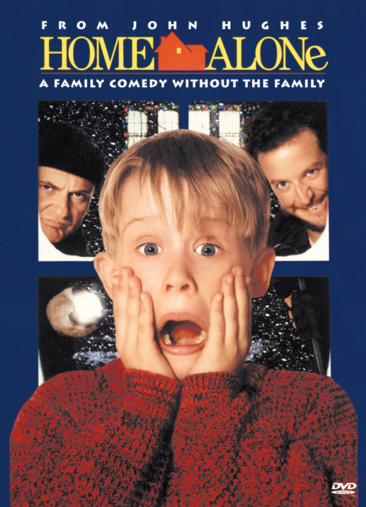
Home Alone movie posterSeasonal events can also introduce urgency that influence characters’ actions. The movie Home Alone is a perfect example.

When a young boy is accidentally left behind at Christmas–while the family travels to Paris–he is forced to defend their house against burglars, with side-splittingly funny results.

Ticking-Clock ~ Urgency and/or Advocate

You don’t really know a person until you see how they react under extreme pressure. DieHardWhich is why a ticking clock—a figurative pressure cooker—is a great way to reveal character strengths and flaws.

The ticking-clock can be combined with seasonal time. The Christmas party setting in the movie Die Hard is the perfect excuse for the entire company to be at the office headquarters at night with minimal security. It also provides a reason for NYC cop John McClane (Bruce Willis)–the estranged husband of a corporate VP, Holly McClane–to be visiting, so he can then take down the bad guys in badass style.

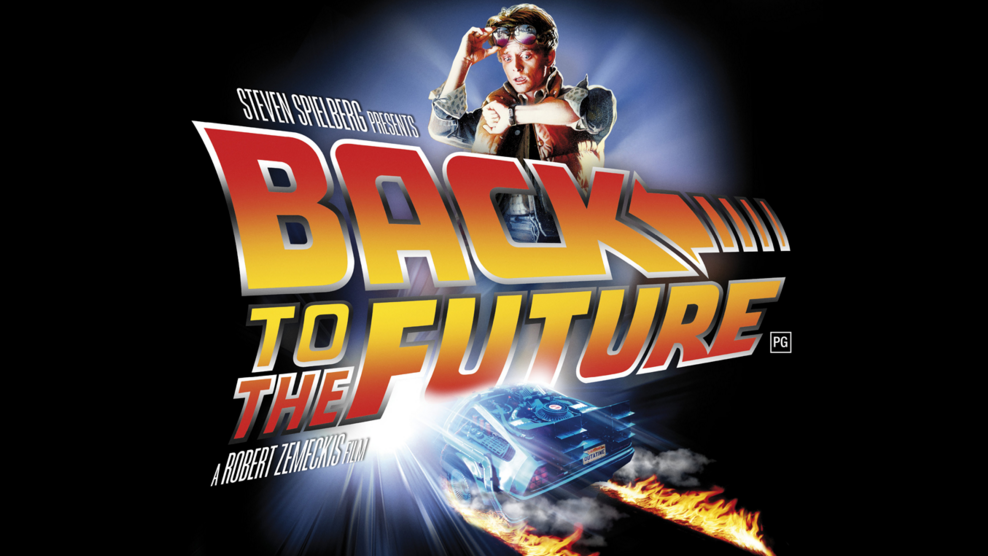
In the movie Back to the Future, time is both an advocate and adversary. Time is the vehicle (no pun intended) by which teenager Marty McFly (Michael J. Fox) travels back into the past to alter the developmental paths of his parents to create a better future for the family. The ticking-clock is BackToTheFuturethe electrical storm required for Marty to escape the past and get back to the future.

As the electrical storm gathers, Marty arrives at the clock tower as a falling branch disconnects the wire from the tower to the street. As Marty races the DeLorean toward the clock tower, Doc climbs across the clock to reconnect the cable. The lightning strikes, sending Marty back to 1985, but not before he sees Doc killed. Marty soon discovers Doc actually survived because of the bullet-proof vest he was wearing. Doc takes Marty home to 1985, then sets off for October 21, 2015 (Back to the Future Day!).

Historical Time

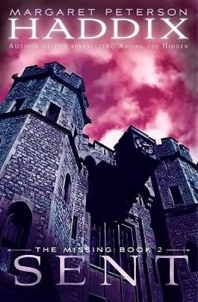
Sent coverHistorical time can define setting, social interactions, attitudes, laws, and mores. There are any number of terrific novels that transport the reader to a different historic time to experience life in another era. What I like about Margaret Haddix‘s Missing series, is the unique spin on historical fiction with a time travel twist.

In Found, the first book in the series, Haddix establishes the plausibility of time travel and the anticipation that the main characters are not who they think they are.  In the second book, Sent, Chip, Alex, Jonah, and Katherine land in 1483 in the Tower of London where the imprisoned Edward and Richard fearfully await their fates. Chip and Alex soon realize that they are princes Edward V and Richard of Shrewsbury, Duke of York–come back from the future. They watch history unfold, trying to save the princes without altering time in a way that would kill them anyway. This book is rich with accurate historical details that bring the setting and characters to life. It also poses a unique possibility regarding the actual fates of Edward and Richard.


Fiction Writing ~ Socially Acceptable Insanity

09 Wednesday Sep 2015

Posted by Elizabeth Fais in Fiction, Story, Writing

≈ 4 Comments

Tags

butter beer, Diagon Alley, Elizabeth Fais, Fiction, Genovia, Hogwarts, J.K. Rowling, Judy Blume, Meg Cabot, Ray Bradbury, Reading, SCBWI, Story, suspension of disbelief, Universal Studios, Wizarding World of Harry Potter, Writing

Kidding … But Only Just

A while back I tweeted, “Fiction writing is a socially acceptable form of insanity.” I was only half-joking, and was surprised by how many people seemed to agree with me. Later I discovered that some famous authors gave credence to that view also.

J.K. Rowling said that she is “perfectly happy sitting alone in a room, making things up in her head all day.” We applaud her because she’s written stories many of us hold dear. If a non-writer type person made the same statement, we’d worry for them.

Then there’s Ray Bradbury, who said pretty much the same thing:

Ray Bradbury quote

Keeping It Real

When fiction is done well, readers suspend disbelief, their world drops away, and the story becomes real…the characters, the setting, everything about the time and place. For an author to create a story that convincing, the world and characters have to become real for them as well. As Robert Frost said:

No tears in the writer, no tears in the reader. No surprise in the writer, no surprise in the reader.

At a Society of Children’s Book Writers and Illustrators (SCBWI) Summer Conference a few years back, Judy Blume made a surprise appearance and added one better to Robert Frost’s quote:Marble statue

“If the author isn’t turned on when writing a love scene, the reader won’t be turned on either.”

The audience hooted, because it’s so true. If you don’t feel the spark when you’re writing a scene, the reader won’t feel it either.

The same standard of realness holds true for any art form, if it is to emotionally move its audience … whether it’s music, the visual or performing arts. To transmit a feeling through their work, the artist must delve into the emotion. One glance at the statue in this image, and it’s obvious the sculptor felt love on a deep, spiritual level. [PC: morguefile.com]

Reading ~ Socially Acceptable Psychosis

I came across the following description of reading and laughed out loud, because it’s a perfect match for psychosis:

…staring at marked slices of trees and hallucinating vividly for hours on end.

When fiction is done right, this is the effect is has on the reader. We become so fully engaged in the story…everything about it becomes real.

The reality a story creates doesn’t cease when a book is finished…for the reader or the writer. The story and its characters take on a life of their own. So much so, that many of us wish fictional characters Happy Birthday on social media (you know you do too, admit it).

The world the characters inhabit becomes equally real. Why else would thousands of people trek to Universal Studios’ Wizarding World of Harry Potter, in Orlando (and soon in Los Angeles) to visit Hogwarts, Diagon Alley, and drink butter beer? Because that world is real to those who love those books.

Meg Cabot recently tweeted about actually googling the weather in Genovia (Princess Mia’s country). I love this. I can so totally relate, after having read the entire Princess Diaries series. This is fiction done right!

Meg Cabot tweet


Remembering Blake Snyder ~ Mr. Save The Cat!

04 Tuesday Aug 2015

Posted by Elizabeth Fais in Blake Snyder, Save the Cat!, Story

≈ 11 Comments

Tags

Blake Snyder, BOLT, Jose Siliero, Save the Cat!, Story, Transformation Machine, Walt Disney Pictures

If  you’re lucky, at least once in your life you meet a teacher who explains things in way that no one else could … and you finally “get it”. Blake Snyder was that teacher for me.

Blake Snyder’s Save the Cat! books and Beat Sheet Workshops on story structure transformed my writing career. He helped hundreds of other writers–screenwriters and novelists alike. Yes, hundreds. The truth is you can have the most eloquent writing style on the planet, but without a compelling story you won’t engage readers.

Blake Snyder passed away on August 4, 2009, but his spirit lives on in the stories Save The Cat! continues to influence.

Why Save The Cat?

I  rewrote my first novel three times, and still didn’t get the story right. Save The Cat!Worse, I didn’t have a clue how to fix it. A little internet intervention changed all that.

Amazon recommended “Save The Cat! The Last Book on Screenwriting You’ll Ever Need” based on past books I’d ordered about (real) cats. I’d never read a book on screenwriting, but since Save the Cat! was the last book I’d ever need, I thought, “Why not?”

Save the Cat! is the term Blake uses to describe the scene–usually early in a story–where the hero does something nice that makes us sympathize with him/her…like saving a cat.

Guidelines for story structure are a lot like the principles of music theory you’d follow to compose a song or symphony. Certain patterns are intrinsically more pleasant, they resonate deeper and are more satisfying.

Save The Cat! explains the basic story types, then breaks each story into the 15 beats (plot points) that will make it satisfying. Following these story sign posts allows me more creative license when it comes to the actual writing. Who knew?

The Transformation Machine

Blake often talked about The Transformation Machine in relation to the hero’s character arc. Every satisfying story is about change, and the Transformation Machine forces the hero to do just that. On the hero’s journey, two stories are told: the external/physical and the internal/emotional. As Blake Snyder put it…

All stories are about transformation. And seeing this as a good thing is the starting point of writing a successful story of any kind. Something has to happen, change has got to occur. That’s why the opening image (the snapshot of the world BEFORE) of a movie script has to be the opposite of the final image (the snapshot of the world AFTER.)

You can hear the Blake himself talk about the Transformation Machine in the following video clip:


Blake – the Pigeon – in “Bolt”

Blake Snyder and Jose Silerio worked as a team, consulting on a number of Hollywood A-List movies. BOLT, the feature animation by Walt Disney Pictures, was one of those films. The following scene is a testament to their contribution. Blake, the screenwriting pigeon, and his writing partner pitch their movie idea. When I saw BOLT in the theater, I almost jumped out of my seat and yelled, “I know Blake!” Simply priceless!


The Quirky Quotient ~ The Secret Ingredient of Memorable Characters

07 Saturday Feb 2015

Posted by Elizabeth Fais in Story, Writing

≈ 11 Comments

Tags

Aidan Quinn, Benny & Joon, Buster Keaton, Character development, Character traits, Elizabeth Fais, I'm Gonna Be (500 Miles), Johnny Depp, Mary Stuart Masterson, Mediator series, Meg Cabot, Princess Diaries, Quirky Quotient, The Proclaimers, Vanished series

I’m in the “first-draft phase” of my current project, so I thought it would be a good idea to blog about the process. To create a log of reminders for myself when the next project rolls along, and hopefully benefit others who are blazing through their first-draft.

For me, the first draft of a novel is as much about discovering the characters as it is about formalizing the plot. Don’t get me wrong, before I write the first sentence I have a list of each character’s traits and flaws. But that’s only a two-dimensional view of the person. Their wholeness comes to life in the writing.

Quirky = interesting

BandJ1The discovering the wholeness of my characters is a process of revealing their quirks. Those little idiosyncrasies that make each character unique.

A person’s quirks are what endear us to them, and make them memorable. Quirks can show up in how they dress, unusual habits, and how they interact with others.

A character’s quirks can affect the choices they make, and indirectly the outcome of the story.

At the beginning of a project,  coming up with new and unique traits for each character can be a bit overwhelming. So I start with one simple rule:

Don’t be boring.

Quirks that Delight and Deepen Character and Story

For fictional characters to not be boring, they have to stretch beyond our every day patterns. To start the idea mill churning, it helps me to review stories where characters surprised and delighted me, and analyse what and how they created that affect.

If you’re looking for an author, Meg Cabot is the queen of quirky characters, secondary as well as main characters. Her Princess Diaries series is classic, as are her Vanished and Mediator series. But don’t stop with just books. Films are also a great resource for character studies.

BennyJoonCollage

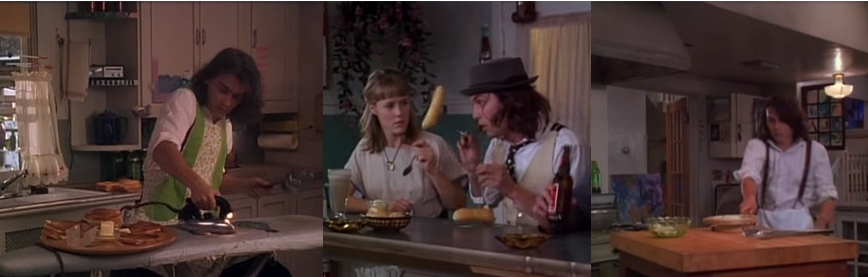
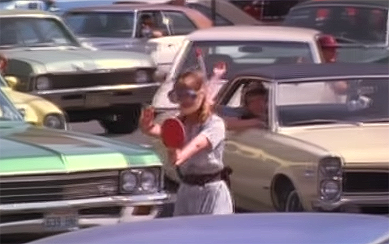
One of my favorite films for quirky characters is the 90’s comedy/drama Benny & Joon. It’s a story about Benny, an older brother (Aidan Quinn) who cares for his mentally disturbed younger sister, Joon (Mary Stuart Masterson). Doesn’t sound like a good time, does it? But wait. Enter eccentric young Sam (Johnny Depp), who models himself after Buster Keaton, and the story lights with genius.

Sam dresses like Buster Keaton and imitates the comedian’s classic sketches, but his BandJ4quirks are much more than a “Keaton copy”.

Sam uses a steam iron to make grilled cheese sandwiches and a tennis racket to mashed potatoes (wish I’d thought of both of those quirks!).

His quirky habits endear him to Joon, helping her break out of her extreme dysfunction that often manifested in alarming ways.

The video below (featuring the song by the Proclaimers) includes some of the classic scenes from Benny & Joon. Johnny Depp’s physical comedy is hilarious.

Making It Fresh

Analyzing the successful quirkiness of characters in other stories is a jumping off point to brainstorming ideas for my own characters. The goal is to make my character’s quirkiness fresh and real. Here’s a few tricks:

  • Turn a trait on its head or switch it around. Do what’s least obvious. Johnny Depp’s impersonation of the pirate captain, Jack Sparrow, is a great example of turning typical pirate traits on their head.
  • Give a character a hobby that clashes with society’s view of their trade or line of work. For example, a welder who creates his own line of feminine bath products under an assumed name, or a concert musician who competes in monster truck rallies.
  • Combine unexpected character traits. Such as a Navy Seal who’s afraid of spiders, but wrestling with bears is a rollicking good time.
  • Cast against type. This comes from the film industry, and is shorthand for “give us something unexpected.” Such as a mail man who’ s actually a recruiter for an intergalactic assassin agency.
  • Get wacky. Have fun with it!

I’m Gonna Be (500 Miles) ~ The Proclaimers


← Older posts
Newer posts →

Calendar

January 2026
M T W T F S S
 1234
567891011
12131415161718
19202122232425
262728293031  
« Nov    

Enter your email address to have new posts sent directly to your inbox.

Join 236 other subscribers

It's really me!

  • Elizabeth Fais's avatar Elizabeth Fais

Life is Tweet

Follow @elizabethfais

Recent Posts

  • The true POWER of stories
  • Wisdom of Richard Peck ~ Writing for young readers
  • The Writer and Rabbit Who Saved the Countryside
  • 3 TREE-rific Informational Picture Books
  • Musings from the Writing Cave
  • MG Review ~ HOW I BECAME A SPY
  • The “Creative High” is real!

Past Posts

Officially SCBWI

Reading Fun

Advice for Writers

I Write for Apples

Author Photos

Olivia Marshall

Categories

Amazing but true! Animals Animation Blake Snyder Book Reviews Books Cats Character Dancing Disneyland Elizabeth Fais Fiction Fun Facts Funny Videos Giveaway Giving Back Holiday Humor Inspiration Middle Grade Movies Music Mystery Nonfiction Paranormal Reading Romance SCBWI Shakespeare Story Supernatural Thriller Uncategorized Winner! Writing YA YAppiest Young Adult Zombies

Blog at WordPress.com.

  • Subscribe Subscribed
    • Elizabeth Fais
    • Join 236 other subscribers
    • Already have a WordPress.com account? Log in now.
    • Elizabeth Fais
    • Subscribe Subscribed
    • Sign up
    • Log in
    • Report this content
    • View site in Reader
    • Manage subscriptions
    • Collapse this bar
 

Loading Comments...