The Walt Disney classic film, Mary Poppins, has been translated into 20 languages. Now Google Translate makes for 21. Don’t get me wrong. Google Translate is an amazing tool! But the translation algorithms have somehow managed to develop a language all their own, that no one else quite understands.
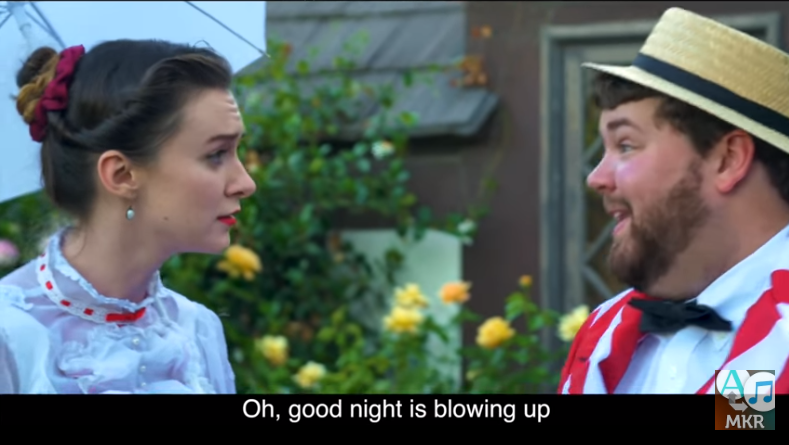
Most everyone can recognize at least one of the Mary Poppins songs in the following medley. Many know the words by heart. But even if you’re not an MP aficionado, you’ll pick up on the oh-so unique (!) Google Translate interpretation of the lyrics.
Compare the original lyrics to the songs (in the banner above the window) with the Google Translate version (in subtitles below), and have a jolly good time watching the brilliant video clip. In the words of Google Translate, “Oh, good night is blowing up!”
If something is fun, we want to repeat the experience as much as possible. Reading is no different. It’s no surprise that for young readers, the key to keeping them reading is humor.
Terban was a school teacher for decades, learning first-hand how to capture children’s interest and keep them engaged. He was adamant:
“It’s no laughing matter if there’s no laughing matter.”
When children were asked what books they liked to read, this is what they said:
My favorite books are the ones I pick myself.
I like books make me laugh.
Recipes for laughter
“That’s great,” you say, “but what’s the secret to making children laugh?” You’re in luck! Terban shared a few of the ingredients from his recipe for humor:
Use funny names, like Ralph Puken or Bob Booggensnot.
Use funny words. Apparently the funniest words for young readers are: fart, poop, and underpants. In that order.
Kids (and adults) laugh the hardest at the unexpected.
Write what makes you laugh. If you think something is funny, someone else will think so too. Young readers know when humor is not authentic.
Write from your own “most embarrassing” moments.
You have to love the character you’re putting in comedic jeopardy, or else it comes off as being mean. You want your audience to laugh with the character, not at him.
Specific details are almost always funnier than generalizations. For example: Principal Zumba has a mole. Or… Principal Zumba has a mole shaped like the statue of liberty that looks like it’s doing the hula whenever he talks.
We might think of the bus-like bookmobiles as modern inventions, but they were not the first mobile libraries…not by a long shot. The first bookmobiles were little more than carts powered by hooves. There has even been a Pony Express style book delivery program known as the Pack Horse Librarians.
Horse-drawn libraries
The first documented mobile libraries were carts filled with books drawn by horses. The perambulating libraries operated in rural England as early as 1857. Warrington, England introduced a horse-drawn van in 1858 that was operated by the Warrington Mechanics’ Institute, to increase the lending of its books. [PC: Wikipedia]
In 1890, Fairfax County, Virginia got on the mobile library wagon (literally) in the northwestern part of their county. But one of the most memorable mobile libraries was a product of the Great Depression.
The library express
The Great Depression threw the entire nation into poverty, and the already poor rural areas suffered the worst. Kentucky was one of the states hardest hit by the paralyzed economy.
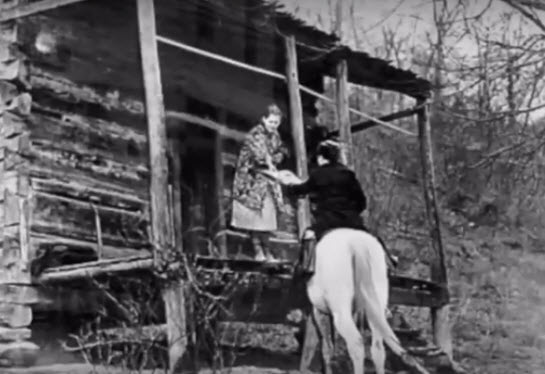
We humans seem to show our best when things are at their worst. Such was the case with the first Pack Horse Library, formed by the Work Progress Administration (WPA) in Leslie county, Kentucky. This new project brought reading materials to those who lived in the remote rural areas of Eastern Kentucky, an area with little electricity and fewer roads.
Unlike most New Deal programs, the Pack Horse Plan was fueled by the support of local communities. The only way to get books to the people living in the remote mountain areas was on horseback, and the Kentucky women didn’t shy away from the challenge. The Pack Horse Librarians mounted mules and horses with panniers filled with books and headed out into the hills.
Each Librarian made deliveries at least twice a month, covering over 100 miles a week on horseback. The Librarians took their jobs as seriously as the mail carriers, riding miles through inclement weather, across backwoods wilderness terrain.
I could go on and on about the great work done by the Pack Horse Librarians, but you’ll enjoy watching the following mini (approx. 3 min.) documentary much more.





 Elizabeth Fais