• About Me
  • Writer’s Corner

Elizabeth Fais

~ Where awesome begins…

Elizabeth Fais

Tag Archives: SCBWI

Fiction Writing ~ Socially Acceptable Insanity

09 Wednesday Sep 2015

Posted by Elizabeth Fais in Fiction, Story, Writing

≈ 4 Comments

Tags

butter beer, Diagon Alley, Elizabeth Fais, Fiction, Genovia, Hogwarts, J.K. Rowling, Judy Blume, Meg Cabot, Ray Bradbury, Reading, SCBWI, Story, suspension of disbelief, Universal Studios, Wizarding World of Harry Potter, Writing

Kidding … But Only Just

A while back I tweeted, “Fiction writing is a socially acceptable form of insanity.” I was only half-joking, and was surprised by how many people seemed to agree with me. Later I discovered that some famous authors gave credence to that view also.

J.K. Rowling said that she is “perfectly happy sitting alone in a room, making things up in her head all day.” We applaud her because she’s written stories many of us hold dear. If a non-writer type person made the same statement, we’d worry for them.

Then there’s Ray Bradbury, who said pretty much the same thing:

Ray Bradbury quote

Keeping It Real

When fiction is done well, readers suspend disbelief, their world drops away, and the story becomes real…the characters, the setting, everything about the time and place. For an author to create a story that convincing, the world and characters have to become real for them as well. As Robert Frost said:

No tears in the writer, no tears in the reader. No surprise in the writer, no surprise in the reader.

At a Society of Children’s Book Writers and Illustrators (SCBWI) Summer Conference a few years back, Judy Blume made a surprise appearance and added one better to Robert Frost’s quote:Marble statue

“If the author isn’t turned on when writing a love scene, the reader won’t be turned on either.”

The audience hooted, because it’s so true. If you don’t feel the spark when you’re writing a scene, the reader won’t feel it either.

The same standard of realness holds true for any art form, if it is to emotionally move its audience … whether it’s music, the visual or performing arts. To transmit a feeling through their work, the artist must delve into the emotion. One glance at the statue in this image, and it’s obvious the sculptor felt love on a deep, spiritual level. [PC: morguefile.com]

Reading ~ Socially Acceptable Psychosis

I came across the following description of reading and laughed out loud, because it’s a perfect match for psychosis:

…staring at marked slices of trees and hallucinating vividly for hours on end.

When fiction is done right, this is the effect is has on the reader. We become so fully engaged in the story…everything about it becomes real.

The reality a story creates doesn’t cease when a book is finished…for the reader or the writer. The story and its characters take on a life of their own. So much so, that many of us wish fictional characters Happy Birthday on social media (you know you do too, admit it).

The world the characters inhabit becomes equally real. Why else would thousands of people trek to Universal Studios’ Wizarding World of Harry Potter, in Orlando (and soon in Los Angeles) to visit Hogwarts, Diagon Alley, and drink butter beer? Because that world is real to those who love those books.

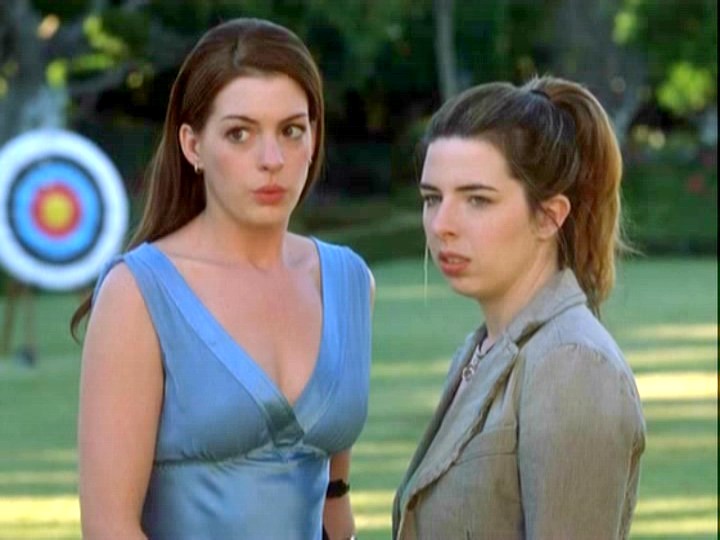
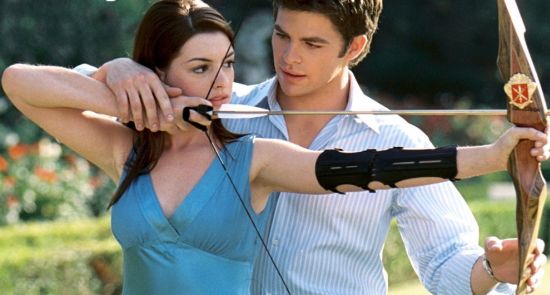
Meg Cabot recently tweeted about actually googling the weather in Genovia (Princess Mia’s country). I love this. I can so totally relate, after having read the entire Princess Diaries series. This is fiction done right!


Meg Cabot tweet


Fanning the Creative Flame ~ Why Conferences Matter

28 Saturday Mar 2015

Posted by Elizabeth Fais in Conferences, Inspiration, SCBWI, Writing

≈ 2 Comments

Tags

Asilomar, E.B. Lewis, Golden Gate Conference, Illustrators, Inspiration, SCBWI, SCBWI San Francisco/South, Society of Children's Book Writers and Illustrators, Writing

Asilomar Conference Grounds, Pacific Grove, CAThe SCBWI San Francisco/South Golden Gate Conference (at Asilomar) was earlier this month, my first conference in over a year. Such an amazing conference! I can’t believe I was so short-sighted, to go that long without attending a writing conference.

Oh sure, I had the standard rational excuses, that made perfect sense. Taking a year off from writing conferences would save time, money, and effort that would further my work in progress.

What I totally forgot, was how invaluable it is to connect with people who share the same passion. Writing can be such a solitary journey. I always come away from a conference with my creative energy renewed, and a feeling of deep kinship with others who are called to the writing journey.

Motivational Milestones & Inspiring Insights

Initially, I think of  conferences as motivational milestones for my current work in progress (WIP). I admit I am motivated by fear. So when I sign up for a professional critique, I am dangling a figurative hatchet over my head. I will work harder than ever to deliver the best possible pages by the submission deadline, out of fear of public humiliation. I put my self through this trial, because feedback from the editor of a major publishing house is invaluable. I always come away from such a critique with tools for improving my craft, and a clear path for strengthening my story.

Just as important as professional level feedback though, are the insights that arise from the talks and workshops given by the conference’s faculty.

Award winning illustrator E.B. Lewis reminded us all, writers and illustrators alike that:

We’re in the business of amazement.

Jodell Sadler, of Sadler Children’s Literary, invited us to see:

Language is music  … music is language.

E.B. Lewis delivered the most profound insight (for me) with his presentation on the language of pictures. He explained the components of an image that make it a story: narrative (plot), emotion, and anticipation (what’s next). A light bulb went on in my head when I realized that these are the same elements that comprise a well crafted scene in fiction.

Stories aren’t bound by format or medium. E.B. Lewis told us of a young boy who said he “writes the pictures”. We writers, paint with words.

E.B. Lewis, profile picture and quote

Synergy Happens

Creativity is contagious, and the Golden Gate Conference Brochure cover synergy at conferences is nothing short of miraculous. Sparkly new ideas dart about like fireflies, lighting new pathways of possibility.

I learn something from everyone I meet at a conference, and the connections forged can blossom into friendships that last years. 

If you’ve ever thought about writing for young readers, join SCBWI now. SCBWI provides extensive professional resources to its members. You won’t find a more welcoming and supportive group.  And they’re super fun.

I feel fortunate to have found the Society of Children’s Book Writers and Illustrators (SCBWI). They are my tribe, my people.

[All images are my own]


“Comedy Comes From the Heart” & Other Tips From the Fabulously Funny

06 Friday Sep 2013

Posted by Elizabeth Fais in Fiction, Humor, SCBWI, Writing

≈ 15 Comments

Tags

Comedy, Ghost Buddy, Hank Zipzer, Henry Winkler, Humor, LA13SCBWI, Lin Oliver, SCBWI, Society of Children's Book Writers and Illustrators, Writing

A Workshop with Henry Winkler and Lin Oliver

This year’s SCBWI Summer Conference in Los Angeles (August 1-5) was the ultimate blend of inspiration, guidance, and professional advice for children’s authors and illustrators. All the workshops were amazing, but one was particularly memorable for its advice and inspiration: Comedy Comes from the Heart, with Henry Winkler and Lin Oliver.

  • Henry Winkler is an actor, producer and director, who is best known for his role as “the Fonz” in the 1970’s television series “Happy Days”. Though he is quick to tell you that he’s most proud of writing books for young readers.
  • Lin Oliver is the co-founder of the Society of Children’s Book Writers and Illustrators, a long-time television writer, and a well published children’s author.

LinOliver_HenryWinkler_LA13SCBWI

Henry Winkler and Lin Oliver are two of the funniest people on the planet. Put them together in the same room and it’s no wonder things spiral virally into the hilarious.

This dynamic duo teamed up to write 17 books in the Hank Zipzer: World’s Greatest Underachiever series, and have completed four books in the Ghost Buddy series. They are both are hilarious, and they know how to translate that humor onto the written page. You can read my review of Ghost Buddy ~ Zero to Hero here.
Hank Zipzer and Ghost Buddy covers

The Do’s and Don’ts of Writing Comedy

Henry Winkler and Lin Oliver earned their Fabulously Funny street creds on the page as well as the screen. They know what works, and what doesn’t, when it comes to comedy. Here are some of the comedic secrets they shared with us:

  1. Write what makes you laugh. If you think something is funny, someone else will think so too.
  2. Write what you know is true. Don’t try to write what you think will be funny for a particular audience. Young readers know when humor is not authentic.
  3. There are different types of humor, such as character humor, physical humor, observational humor. Write the type of humor that works for you, what you think is funny.
  4. What makes you laugh the most, also makes you cry the most. Good comedy always has a cringe-worthy (pathos) moment.
  5. Write from your own experience. Mine your own life for “most embarrassing” moments.
  6. You have to love the character you’re putting in comedic jeopardy, or else it comes off as being mean. You want your audience to laugh with the character, not at him.
  7. Good comedy must have tension, just like good drama.
  8. Specific details are almost always funnier than generalizations. For example: Principal Zumba has a mole. Or… Principal Zumba has a mole shaped like the statue of liberty that looks like it’s doing the hula whenever he talks.
  9. Don’t edit yourself on the first draft. Go with your first impulses. Craft the humor afterward.
  10. Use improv to get into the character’s voice. Henry Winkler showed us how a slouch and a tilt of the head, brought out “the Fonz” in his voice.
  11. Titles are very important to young readers. Take the time to craft a terrific title.
  12. “Trying” to be funny is a formula for death. Write down 25 things that made you laugh, then analyze each instance for the elements that made it funny.

Henry Winkler embellishes an explanation for the audience [photos by moi]…

Henry Winkler acts out advice to writers

The following advice from Henry Winkler was particularly inspiring:

There’s many ways to do things. You have to be courageous enough to do things your way.

For information on some of the other amazing workshops at the LA13 SCBWI Summer Conference, you can read the official SCBWI blog.


0.000000 0.000000

Ghost Buddy ~ Zero to Hero by Henry Winkler & Lin Oliver

26 Monday Aug 2013

Posted by Elizabeth Fais in Book Reviews, Ghosts, Middle Grade, MMGM, Paranormal

≈ 7 Comments

Tags

Book Reviews, Elizabeth Fais, Ghost Buddy, Ghosts, Hank Zipzer, Henry Winkler, LA13SCBWI, Lin Oliver, Marvelous Middle-Grade Monday, Middle Grade, MMGM, Paranormal, SCBWI, Scholastic, World's Best Under-Achiever, Zero to Hero

Ghost Buddy - Zero to HeroBilly Broccoli is starting middle school at the same school where his mother is the principal. As if that’s not bad enough, he’s also dealing with a new step-father, a bratty older step-sister, a new house—that’s really old–a new neighborhood away from his old friends.

What were the chances things could go that wrong? Apparently, a lot. Because they get worse.

His step-sister took the best room in their new-old house, leaving Billy with the lavender and pink bedroom. He soon discovers that the rainbow and pony wallpaper is the least of his worries, when a ghost materializes insisting it’s still his room, and that he’s Billy’s personal ghost.

You can see me because I’m your ghost. To everyone else, I’m invisible.”

“You’re not my ghost!  I never asked for a ghost. I asked for an iPod, I asked for my own cell phone, I asked for a red BMX bike with black trim. But never, on any list, at any time, anywhere, did I ever ask for a ghost,” said Billy.

“Lucky you. I show and you didn’t even have to ask. You hit the jackpot, ducky.

Hoover Porterhouse II is a fourteen year-old ghost—going on 114—with a tweaked sense of humor and a whole lot of attitude. So much ‘tude, he’s failed his celestial progress reports for 99 years. The thing is, if he doesn’t clean up his spirit-ual act fast, he’ll be haunting the same plot of ground for eternity. And the Hoove would rather die again than let that happen.

So when an obnoxious school bully sets out to trash Billy’s reputation, the Hoove swoops in with an action plan for revenge. The Hoove helps Billy find the courage to set things right, and the Billy shows the Hoove the honorable way to stand up to a bully. In the end, the Hoove’s grade in Helping Others shows improvement, Billy rules the school, and it all comes down to the Hoove’s Rule Number Forty-Two: Stay cool.

Wholesome Hilarity & A Lot More…

They had me at Ghost Buddy, and Zero to Hero clinched the deal. I had to read this book. Since I’ve already gushed written a lot about this story, I’ll keep this briefer. Here’s what makes this story special:

  1. The quirky characters: The cast of secondary characters are as quirkily fun as Billy and the Hoove. There’s the geeky dentist step-father with his “teeth ties”, the diva older step-sister with her own rock band, and the school-bully neighbor who has a secret you won’t believe.
  2. The family conflicts: The interactions between Billy, his mother, step-father, and step-sister all ring true. It’s easy to empathize with Billy and his adjustment to the new family dynamics and his new neighborhood, home, and school.
  3. The blast-from-the past culture clash: The colloquial language gap between the Hoove—who turned 14 ninety-nine years ago—and Billy adds an amusing layer of texture.
  4. The gender-neutral fun: Billy’s anxieties and dilemma’s will be as appealing to girls as they are boys. I bought this book for my eight year-old niece, and I know that she’ll love it.
  5. The lesson without a lecture: This story does an amazing job of addressing the topic of bullying—along with the appropriate way to stand up to a bully—with ease and grace.

Luckily, we don’t have to wait to find out what happens next…

  • Ghost Buddy #2: Mind If I Read Your Mind?
  • Ghost Buddy #3: How to Scare the Pants Off Your Pets

About the Authors

Henry Winkler and Lin Olver are the New York Times Bestselling authors of the Hank Zipzer: The World’s Best Under-Achiever series.

LinOliver_HenryWinkler_LA13SCBWI
Lin Oliver and Henry Winkler have accomplished some amazing things in their exceptional careers, but they’re most proud of the books they write for young readers.

They gave a workshop on Writing Humor at the recent Society of Children’s Book Writers and Illustrators Annual Summer Conference, that I’ll do a blog post on soon. Promise! In the mean time, you can read the Official LA13SCBWI conference blog here. [Photo by moi]


Demystifying the Logline with the “ACME Instant Logline Generator”

20 Tuesday Aug 2013

Posted by Elizabeth Fais in Blake Snyder, Save the Cat!, Story, Writing

≈ 4 Comments

Tags

ACME Instant Logline Generator, Blake Snyder, Elevator Ptich, Elizabeth Fais, Hollywood, LA13SCBWI, Logline, Matthew Wright, Save the Cat!, SCBWI, Society of Children's Book Writers and Illustrators, Story

The Illusive, and Often Anxiety Inducing, Logline

We writers spend months, sometimes years, slaving over a novel in order to get the story just right. Then we’re told we have to boil down our labor-of-love—with its three-dimensional characters, intricate plot and subplots, and dynamic dialog—into one sentence (of 25 words or less).

This is known as a logline, or elevator pitch. Some say it is what you have to have to get your dream agent / book deal. Yeah, no pressure there. Right. Tell it to this guy.

Believe it or not, publishing gremlins did not spend months dreaming up loglines as a new and entertaining way to torture writers, both published and pre-published. Hollywood has been using loglines since Hollywood became… well … Hollywood. That’s because, loglines are a quick way to test out story ideas.

The secret, I learned from Blake Snyder’s “Save the Cat!” approach to story structure, is to perfect your logline BEFORE you write your 400 page tome. This is because…

If you don’t have a solid logline, you don’t have a solid story.


Loglines Aren’t Just for Hollywood Anymore

At the Society of Children’s Book Writers and Illustrators Annual Conference in Los Angeles (check out the #LA13SCBWI blog), the topic of loglines came up in several workshops. Children’s authors are not immune from needing a good logline anymore.

Blake Snyder aptly described the value of a good logline:

A good logline is the coin in the realm of Hollywood and can be traded like currency with those who appreciate it.

“How do you grab that illusive gold logline coin for your story?”

Generator with light bulbs and knobsIt’s easy! Use the ACME Instant Logline Generator.

I’ve come across several logline formulas, but the easiest and the most fun is the ACME Instant Logline Generator.

I wish I could take credit for the genius behind the ACME Instant Logline Generator. But this unique and humorous one-from-column-A and one-from-column-B method of demystifying the process for creating a logline was devised by M.J. Wright, an author whose blog I follow. You can view the originial blog post here. Or, read the reblogged version here…

The ACME Instant Logline Generator

All novels need a logline, sometimes also known as a hook line – a single sentence that describes the plot and acts as a sale pitch to agents and publishers.

The form is usually “[Character name], [character description] has to [action] in order to [result].”

The result usually has an emotional content. Hard to winnow your story down to it? Try this. Begin with the logline instead. All you need, in fact, is a six-sided dice. Roll once for each variable and complete the sentence:

1. Roger Dodger the old Codger,
2. Peregrine Hyphen-Hyphen Folderol,
3. Snoot,
4. Adele,
5. Eric,
6. Heinz Dasistwirklicheinesehrdummelangeswortistesnicht von Abernatürlichistesjaabsolutichdenkeso of Sehrgutwerdeichgehenundhöreaufmeinekraftwerkalben,

1. a world-renowned horologist,
2. a rock god,
3. an up-and-coming railway enthusiast,
4. a truck driver specialising in cab-over series Macks,
5. an unemployed random-generator writer,
6. a rodent exterminator,

has to

1. win a challenging drag race
2. build a box-girder bridge with a toothpick
3. write a vampire fan-fic novel
4. learn how to sing and dance
5. cook a souffle
6. defeat the evil Thog monsters from Planet Zil

in order to

1. become the Ruler of the Universe.
2. rescue beloved from certain doom.
3. be home in time for tea.
4. get to Buckingham Palace and receive a knighthood.
5. audition for ‘America’s Got Talent’.
6. finish up at the beginning again, only better for it.

Have fun.

Copyright © Matthew Wright 2013


If you need more intel before tackling a logline, no worries! Nathan Bradford wrote a great post on How to Write a One Sentence Pitch that you can read here.

Easy peasy? You know it!

Your dream agent/book deal is just a logline away.


Discovering Manhattan: A Pictorial Tour of My Protagonist’s World

12 Friday Apr 2013

Posted by Elizabeth Fais in Central Park, New York City, Research, Story, Writing

≈ 9 Comments

Tags

Belvedere Castle, Calvert Vaux, Central Park, Central Park Conservancy, Cleopatra's Needle, Elizabeth Fais, Ellen Gregory, Frozen Hot Chocolate, Manhattan, Metropolitan Museum of Art, New York City, NY13SCBWI, NYC, SCBWI, Serendipity 3, Subway, The Met, The Plaza Hotel, Waldorf Astoria

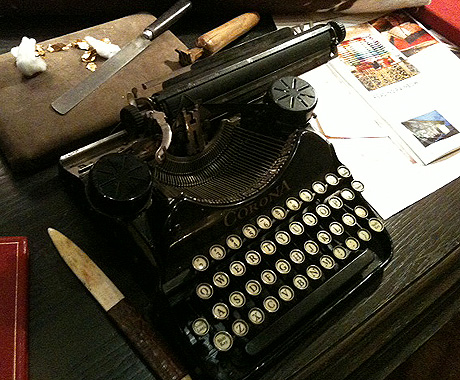
Manual typewriterResearch is one of my favorite parts of the writing process. It’s an intriguing exploration into worlds-yet-unknown, where the story comes to life and becomes real.  I had a few final details to research in Manhattan for my project, which was major reason behind my coast hopping to New York City in early February. (pic by moi)

Yes, I went to NYC to attend the Society of Children’s Book Writers and Illustrators Winter Conference (NY13SCBWI), which was wonderful in all the ways such conferences are. But I had another agenda too… Research.

The Character of Central Park Landmarks…

My project takes place in and around New York City’s Central Park, and a couple of the landmarks played such an important role in the story that they became characters themselves…

Cleopatra’s Needle: The oldest man-made object in Central Park
Image by Central Park Conservancy, the organization responsible for restoring and maintaining Central Park’s historic beauty.

CentralPark_obelisk-l

Belvedere Castle: Built in 1869 by Calvert Vaux
Image by Central Park Conservancy

Belvedere Castle, Central Park NYC

Her Way is the Subway…

Most New Yorkers use public transportation to get around town. My protagonist is no different. She uses the subway, so I followed in her footsteps. There beneath the streets of Manhattan, I discovered the amazing signage from a bygone era (pic by moi)…

86th Street Subway Tile marker

Historical Ruins in the Metropolitan Museum of Art

The Metropolitan Museum of Art is important to my protagonist and her story as well, so I had to experience the collection first-hand. What impressed me most (and I was an art major, so I’ve been to lots of art museums) is that The Met houses reconstructed historical rooms and ruins … not just the typical types of art (pics by moi)…

Metropolitan Museum of Art, NYC

Serendipity 3: Frozen Hot Chocolate

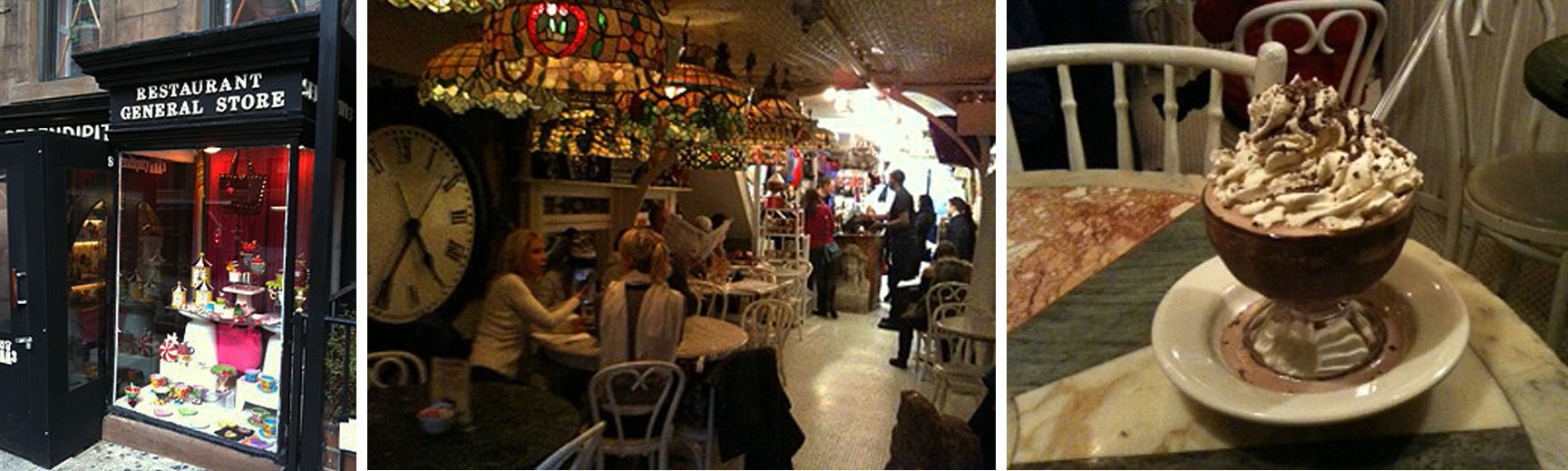
Like many teenagers, my protagonist loves coffee and chocolate. And what better place to meet her friends than Serendipity 3? While conspiring, they consume coffee drinks and Serendipity’s world-famous Frozen Hot Chocolate. Which is to die for, by the way (pics by moi)…

Serendipity 3, NYC

The Plaza … Of course!

My next stop was The Plaza Hotel, where my protagonist’s grandfather owns a private suite. Yes, on the top floor … one with a turret. Eloise does not have anything to do with my story, but I had to take this picture because nothing says “The Plaza” like Eloise. The photo on the right is of The Palm Court restaurant (pics by moi)…

The Plaza Hotel, NYC

Hiding Out at The Waldorf Astoria…

Last but not least was a visit to The Waldorf  Astoria, where my protagonist is forced to go into hiding. Yeah, I know. Tough break sistah. You might wish you had her financial backing … but you don’t want the problems tied to it. Trust me.

The lobby of The Waldorf Astoria is an architectural marvel…

NYC14

How do you discover your character’s world?

Ellen Gregory’s recent post on her “research” experience with beads and braids, inspired me to share this pictorial research tour.

What type of research helps you discover your character’s world?


The Book that Rocked Your World

18 Monday Feb 2013

Posted by Elizabeth Fais in Reading, SCBWI, Story

≈ 11 Comments

Tags

Charlotte's Web, Elizabeth Fais, Emma Walton Hamilton, Favorite Books, It Takes Two, Julie Andrews, Julie Andrews Collection, Mandy, Mary Poppins, NY13SCBWI, SCBWI, SCBWI Winter Conference 2013, The House at Pooh Corner, The Little Gray Men

Young girl reading bookMagic happens at writers’ conferences… So it was no surprise that the air was sparkling with it at the “Practically Perfect” NY13SCBWI Winter Conference. Seriously. How could it not, with Julie Andrews (a.k.a. Mary Poppins) and her amazingly talented daughter Emma Walton Hamilton as keynote speakers?

Julie Andrews has been writing wonderful books for children for forty years–on top of launching the Julie Andrews Collection–and has collaborated with her daughter on 27 titles. To read the SCBWI blog on their presentation, go here: “It Takes Two”. You won’t want to miss it. It’s awesome!

What I wanted to talk about today came from a question asked of Julie Andrews after the presentation…

What book influenced you the most growing up?

A simple enough question … on the surface. But when I peeled back the layers of Open book with sparkles and light swirling outtime and re-experienced the feeling that one book gave me, hooking me on reading for the rest of your life…

Four words: It rocked my world.

That book opened a doorway to magic, imagination, and adventure, and I could go there any time I just by opening the pages. Pretty powerful stuff.

For Julie Andrews, that book was “The Little Gray Men“. She loves that story so much, that she brought it back into print in the Julie Andrews Collection. For the person asking the question, it was Julie Andrews’ first book, “Mandy“.

The House at Pooh CornerFor me it was “The House at Pooh Corner“. I was in the third grade, and the silliness of the story and clever misspelled words, like “rox” and “Wol” won me over instantly. And all the endearing characters were my new BFFs.

My fourth grade teacher read “Charlotte’s Web” to our class, and I fell in love with Wilbur and Charlotte. I’d never really cared much for pigs until then, and I’d been terrified of anything spidery. One story changed all that.

There have been many books since… But “The House at Pooh Corner” will always be my first; the book that was the key to a world of wonder.

How about YOU…

What book rocked your world?

Don’t be shy. You’re among friends here.

And don’t be afraid to tell us about more than one treasured story that changed your life!

Building a Better Character…

08 Tuesday May 2012

Posted by Elizabeth Fais in Characters, Meg Cabot, SCBWI

≈ 7 Comments

Tags

Character traits, Characters, Craft, Elizabeth Fais, Meg Cabot, SCBWI, Writing

…From the inside out

I attended a Society of Children’s Book Writers and Illustrators (SCBWI) writers retreat this past weekend in Southern California. It was a working retreat, where aside from critiques and talking with editors one-on-one, the Young Adult (YA) and Middle Grade (MG) authors participated in hands-on workshops for developing richly layered characters. Something I need to work on, and I learned A LOT!

In the initial stages of defining a character, if you’re like me, you focus on the character’s strengths. What their good at, why people like them, how they affect the people around them in a positive way. That’s all good. But for a character to be fully developed and believable, you can’t gloss over their flaws. That’s because it’s the flaws that make a character likeable. Their faults are what we relate to, why we fall in love with the character. Take Mia Thermopolis‘ klutziness in the Princess Diaries, for example. Her dorkiness is what endears her to us, because we’ve ALL been there. At one time or another. One reason I love Meg Cabot’s books, is that she is a master at developing quirky, well-rounded characters.

But of course, to draw us in so we care about a character we can’t insert a bulleted list of good and bad traits. We have to layer in them so the traits are discovered through actions and reactions to other characters. Just like us, characters won’t interact with everyone in the same way. What a parent says will piss them off.

However, a friend can say the same thing and the character takes the advice to heart, or laughs it off. Defining a character through their interactions with the people around them — their circle of influence (COI) — is what makes them believable.

Another tool for building a character with greater emotional impact is to use traits that go against type.  For example, in one workshop at the retreat we wrote a scene with two characters that showed their flaws. I chose a paranoid, arrogant, and tad superstitious Jiminy Cricket pitted against a perfectionist Pinocchio who was theatrical and self-righteous. So not the Disney classics, but that’s the point.

Dare to be different. Breathe freshness and fun into your characters with unusual or conflicting traits. And it’s important to remember that in many cases …

…characters speak to conceal rather than to reveal.

That’s subtext … and a whole other topic … for another blog.

Implements of Construction

Here are some useful resources for building emotional impact into your characters:

  • Emotion thesaurus
  • Character flaws list
  • Writing for Emotional Impact, by Karl Iglesias

What character is most memorable for you (film or fiction) and why?

Inquiring minds want to know!

Newer posts →

Calendar

December 2025
M T W T F S S
1234567
891011121314
15161718192021
22232425262728
293031  
« Nov    

Enter your email address to have new posts sent directly to your inbox.

Join 236 other subscribers

It's really me!

  • Elizabeth Fais's avatar Elizabeth Fais

Life is Tweet

Follow @elizabethfais

Recent Posts

  • The true POWER of stories
  • Wisdom of Richard Peck ~ Writing for young readers
  • The Writer and Rabbit Who Saved the Countryside
  • 3 TREE-rific Informational Picture Books
  • Musings from the Writing Cave
  • MG Review ~ HOW I BECAME A SPY
  • The “Creative High” is real!

Past Posts

Officially SCBWI

Reading Fun

Advice for Writers

I Write for Apples

Author Photos

Olivia Marshall

Categories

Amazing but true! Animals Animation Blake Snyder Book Reviews Books Cats Character Dancing Disneyland Elizabeth Fais Fiction Fun Facts Funny Videos Giveaway Giving Back Holiday Humor Inspiration Middle Grade Movies Music Mystery Nonfiction Paranormal Reading Romance SCBWI Shakespeare Story Supernatural Thriller Uncategorized Winner! Writing YA YAppiest Young Adult Zombies

Blog at WordPress.com.

  • Subscribe Subscribed
    • Elizabeth Fais
    • Join 236 other subscribers
    • Already have a WordPress.com account? Log in now.
    • Elizabeth Fais
    • Subscribe Subscribed
    • Sign up
    • Log in
    • Report this content
    • View site in Reader
    • Manage subscriptions
    • Collapse this bar
 

Loading Comments...