• About Me
  • Writer’s Corner

Elizabeth Fais

~ Where awesome begins…

Elizabeth Fais

Category Archives: Save the Cat!

Remembering Blake Snyder ~ Mr. Save The Cat!

04 Tuesday Aug 2015

Posted by Elizabeth Fais in Blake Snyder, Save the Cat!, Story

≈ 11 Comments

Tags

Blake Snyder, BOLT, Jose Siliero, Save the Cat!, Story, Transformation Machine, Walt Disney Pictures

If  you’re lucky, at least once in your life you meet a teacher who explains things in way that no one else could … and you finally “get it”. Blake Snyder was that teacher for me.

Blake Snyder’s Save the Cat! books and Beat Sheet Workshops on story structure transformed my writing career. He helped hundreds of other writers–screenwriters and novelists alike. Yes, hundreds. The truth is you can have the most eloquent writing style on the planet, but without a compelling story you won’t engage readers.

Blake Snyder passed away on August 4, 2009, but his spirit lives on in the stories Save The Cat! continues to influence.

Why Save The Cat?

I  rewrote my first novel three times, and still didn’t get the story right. Save The Cat!Worse, I didn’t have a clue how to fix it. A little internet intervention changed all that.

Amazon recommended “Save The Cat! The Last Book on Screenwriting You’ll Ever Need” based on past books I’d ordered about (real) cats. I’d never read a book on screenwriting, but since Save the Cat! was the last book I’d ever need, I thought, “Why not?”

Save the Cat! is the term Blake uses to describe the scene–usually early in a story–where the hero does something nice that makes us sympathize with him/her…like saving a cat.

Guidelines for story structure are a lot like the principles of music theory you’d follow to compose a song or symphony. Certain patterns are intrinsically more pleasant, they resonate deeper and are more satisfying.

Save The Cat! explains the basic story types, then breaks each story into the 15 beats (plot points) that will make it satisfying. Following these story sign posts allows me more creative license when it comes to the actual writing. Who knew?

The Transformation Machine

Blake often talked about The Transformation Machine in relation to the hero’s character arc. Every satisfying story is about change, and the Transformation Machine forces the hero to do just that. On the hero’s journey, two stories are told: the external/physical and the internal/emotional. As Blake Snyder put it…

All stories are about transformation. And seeing this as a good thing is the starting point of writing a successful story of any kind. Something has to happen, change has got to occur. That’s why the opening image (the snapshot of the world BEFORE) of a movie script has to be the opposite of the final image (the snapshot of the world AFTER.)

You can hear the Blake himself talk about the Transformation Machine in the following video clip:


Blake – the Pigeon – in “Bolt”

Blake Snyder and Jose Silerio worked as a team, consulting on a number of Hollywood A-List movies. BOLT, the feature animation by Walt Disney Pictures, was one of those films. The following scene is a testament to their contribution. Blake, the screenwriting pigeon, and his writing partner pitch their movie idea. When I saw BOLT in the theater, I almost jumped out of my seat and yelled, “I know Blake!” Simply priceless!


Demystifying the Logline with the “ACME Instant Logline Generator”

20 Tuesday Aug 2013

Posted by Elizabeth Fais in Blake Snyder, Save the Cat!, Story, Writing

≈ 4 Comments

Tags

ACME Instant Logline Generator, Blake Snyder, Elevator Ptich, Elizabeth Fais, Hollywood, LA13SCBWI, Logline, Matthew Wright, Save the Cat!, SCBWI, Society of Children's Book Writers and Illustrators, Story

The Illusive, and Often Anxiety Inducing, Logline

We writers spend months, sometimes years, slaving over a novel in order to get the story just right. Then we’re told we have to boil down our labor-of-love—with its three-dimensional characters, intricate plot and subplots, and dynamic dialog—into one sentence (of 25 words or less).

This is known as a logline, or elevator pitch. Some say it is what you have to have to get your dream agent / book deal. Yeah, no pressure there. Right. Tell it to this guy.

Believe it or not, publishing gremlins did not spend months dreaming up loglines as a new and entertaining way to torture writers, both published and pre-published. Hollywood has been using loglines since Hollywood became… well … Hollywood. That’s because, loglines are a quick way to test out story ideas.

The secret, I learned from Blake Snyder’s “Save the Cat!” approach to story structure, is to perfect your logline BEFORE you write your 400 page tome. This is because…

If you don’t have a solid logline, you don’t have a solid story.


Loglines Aren’t Just for Hollywood Anymore

At the Society of Children’s Book Writers and Illustrators Annual Conference in Los Angeles (check out the #LA13SCBWI blog), the topic of loglines came up in several workshops. Children’s authors are not immune from needing a good logline anymore.

Blake Snyder aptly described the value of a good logline:

A good logline is the coin in the realm of Hollywood and can be traded like currency with those who appreciate it.

“How do you grab that illusive gold logline coin for your story?”

Generator with light bulbs and knobsIt’s easy! Use the ACME Instant Logline Generator.

I’ve come across several logline formulas, but the easiest and the most fun is the ACME Instant Logline Generator.

I wish I could take credit for the genius behind the ACME Instant Logline Generator. But this unique and humorous one-from-column-A and one-from-column-B method of demystifying the process for creating a logline was devised by M.J. Wright, an author whose blog I follow. You can view the originial blog post here. Or, read the reblogged version here…

The ACME Instant Logline Generator

All novels need a logline, sometimes also known as a hook line – a single sentence that describes the plot and acts as a sale pitch to agents and publishers.

The form is usually “[Character name], [character description] has to [action] in order to [result].”

The result usually has an emotional content. Hard to winnow your story down to it? Try this. Begin with the logline instead. All you need, in fact, is a six-sided dice. Roll once for each variable and complete the sentence:

1. Roger Dodger the old Codger,
2. Peregrine Hyphen-Hyphen Folderol,
3. Snoot,
4. Adele,
5. Eric,
6. Heinz Dasistwirklicheinesehrdummelangeswortistesnicht von Abernatürlichistesjaabsolutichdenkeso of Sehrgutwerdeichgehenundhöreaufmeinekraftwerkalben,

1. a world-renowned horologist,
2. a rock god,
3. an up-and-coming railway enthusiast,
4. a truck driver specialising in cab-over series Macks,
5. an unemployed random-generator writer,
6. a rodent exterminator,

has to

1. win a challenging drag race
2. build a box-girder bridge with a toothpick
3. write a vampire fan-fic novel
4. learn how to sing and dance
5. cook a souffle
6. defeat the evil Thog monsters from Planet Zil

in order to

1. become the Ruler of the Universe.
2. rescue beloved from certain doom.
3. be home in time for tea.
4. get to Buckingham Palace and receive a knighthood.
5. audition for ‘America’s Got Talent’.
6. finish up at the beginning again, only better for it.

Have fun.

Copyright © Matthew Wright 2013


If you need more intel before tackling a logline, no worries! Nathan Bradford wrote a great post on How to Write a One Sentence Pitch that you can read here.

Easy peasy? You know it!

Your dream agent/book deal is just a logline away.


Super Glue Reader Rapport

21 Saturday Jul 2012

Posted by Elizabeth Fais in Blake Snyder, Cowboys, Save the Cat!

≈ 7 Comments

Tags

Blake Snyder, Clint Eastwood, Hang 'Em High, Save the Cat!

Instant Character Bonding … In One Scene

Hooking a reader’s interest starts with the first line. Getting the reader to connect with your character on an emotional level so they stay with the story has to follow immediately. But how? That’s what I wanted to know.

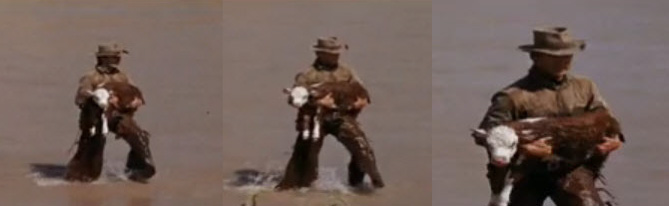
Who knew the answer was in the first sixty seconds of the classic Clint Eastwood film “Hang ‘Em High”?

It’s what Blake Snyder calls a Save the Cat! moment.

In Blake Snyder’s words, a Save the Cat scene is…

…where we meet the hero and he does something — like save a cat — that defines who he is and makes us, the audience, like him.

And OK, so Clint saves a calf, not a cat? It still has the same effect. That one simple act of compassion makes us like him. We instantly care about what happens to him. We’re rooting for him throughout the rest of one of the roughest, toughest, shoot-em-uppest westerns of all time.

We gladly signed on to Team Clint all because he waded out into the river and saved a stranded calf. (Check out the Novel Dog narration of the clip below.)


So… what’s your favorite Save the Cat scene?

In a movie or a book … Inquiring minds want to know!


The Positive Power of Desperation

29 Sunday Apr 2012

Posted by Elizabeth Fais in Blake Snyder, Elizabeth Fais, Save the Cat!, Story

≈ 12 Comments

Tags

Blake Snyder, Hunger Games, Jessica Brody, Positive Power of Desperation, Save the Cat!

The secret universal force

We’ve all been there … trapped in a situation or predicament, barely hanging on. We’re so tired, that we don’t think we can stand it another second. The only problem is, we’re stuck. And someone coming to save us? Yeah, that’s not gonna happen. We’re ready to give up/give in, but some small part of us can’t and won’t. That small voice grows and morphs into a hurricane force of determination that seizes control of the situation/predicament and kicks our butt clean out of the miserable situation/predicament.

That, my friends, is the Positive Power of Desperation in action. Get to know it. It is your friend.

Desperation Transformation … Zero to Hero

The Positive Power of Desperation is as essential to your protagonist as it is to you. This is the secret force that pushes your main character to transform into the heroine she is meant to be.

Blake Snyder (Mr. Save the Cat!) gives a nod to the Positive Power of Desperation when he describes the Dark Night of the Soul moment in a story (Blake Snyder Beat Sheet). The protagonist is worse off than when the story started, plagued with confusion, doubt, and remorse. It’s a scary and painful place. The protagonist is standing on a precipice, and must face an ugly truth about themselves–a deeply buried flaw–for their transformation to happen. The Positive Power of Desperation is what propels the hero through his cocoon, transforming him into a butterfly. This is the heart of every story … what really counts. It’s the hero’s moment.

In the Hunger Games, the All Is Lost moment comes with Rue’s death. Katniss bottoms out in the Dark Night of the Soul as when prepares Rues body and sings her a parting song. Katniss has to face how she’s lived her life being satisfied with mere survival. At the end of her song to Rue, Katniss lifts her hand in a signal of defiance.  She’s done playing by the Capitol’s rules and she’s not afraid to show it. In the words of Master Cat, Jessica Brody, in her Hunger Games Beat Sheet:

She turns to the sky and lifts three fingers upward, a symbol that was established earlier during the catalyst moment as an act of defiance. Katniss’s transformation from survival-obsessed girl who will do anything to win, to the leader of a revolution is nearly complete!

How has the Positive Power of Desperation transformed your life…
Or the lives of your charcaters?

Calendar

January 2026
M T W T F S S
 1234
567891011
12131415161718
19202122232425
262728293031  
« Nov    

Enter your email address to have new posts sent directly to your inbox.

Join 236 other subscribers

It's really me!

  • Elizabeth Fais's avatar Elizabeth Fais

Life is Tweet

Follow @elizabethfais

Recent Posts

  • The true POWER of stories
  • Wisdom of Richard Peck ~ Writing for young readers
  • The Writer and Rabbit Who Saved the Countryside
  • 3 TREE-rific Informational Picture Books
  • Musings from the Writing Cave
  • MG Review ~ HOW I BECAME A SPY
  • The “Creative High” is real!

Past Posts

Officially SCBWI

Reading Fun

Advice for Writers

I Write for Apples

Author Photos

Olivia Marshall

Categories

Amazing but true! Animals Animation Blake Snyder Book Reviews Books Cats Character Dancing Disneyland Elizabeth Fais Fiction Fun Facts Funny Videos Giveaway Giving Back Holiday Humor Inspiration Middle Grade Movies Music Mystery Nonfiction Paranormal Reading Romance SCBWI Shakespeare Story Supernatural Thriller Uncategorized Winner! Writing YA YAppiest Young Adult Zombies

Blog at WordPress.com.

  • Subscribe Subscribed
    • Elizabeth Fais
    • Join 236 other subscribers
    • Already have a WordPress.com account? Log in now.
    • Elizabeth Fais
    • Subscribe Subscribed
    • Sign up
    • Log in
    • Report this content
    • View site in Reader
    • Manage subscriptions
    • Collapse this bar
 

Loading Comments...